Calochortus clavatus var. pallidus
Clubhair mariposa lily
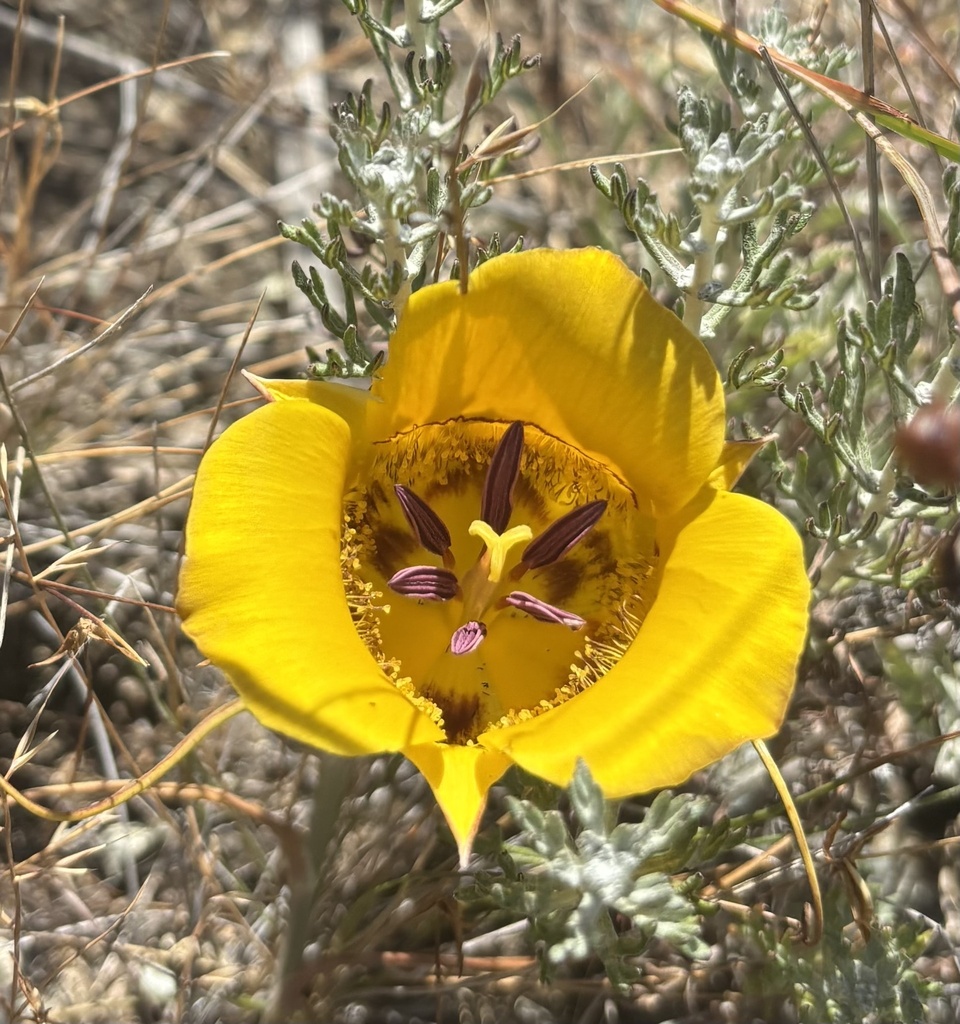
(c) Skyler K, some rights reserved (CC BY), uploaded by Skyler K · licence
Family: Liliaceae · Type: Herb · Native
Calochortus clavatus var. pallidus (Clubhair mariposa lily) is a native California herb in the Liliaceae family, recognized by light yellow petals distinguish from var. clavatus.
Clubhair mariposa lily is a California native perennial found in western San Joaquin Valley, adjacent eastern San Francisco Bay, and northern Western Transverse Ranges in rocky slopes, chaparral, and open forest, often on serpentine at elevations below 1,300 meters. Flowering from April to July, this plant produces light yellow flowers with delicate petals covered in soft, pale hairs. Growing 50 to 100 centimeters tall with elegant, upright stems, it emerges from underground bulbs in open woodland settings. Its leaves are linear and grass-like, typical of mariposa lilies, providing a slender backdrop to its distinctive bloom. The flower's anthers range from yellow to purple, adding subtle complexity to its delicate light yellow petals.
Identification and appearance
Key characters: 17 sympatric species; light yellow petals distinguish from var. clavatus
Habitat and range
Habitat: Rocky slopes, chaparral, open forest, often serpentine
Elevation: < 1300 m
California counties: Kern, San Benito, Santa Barbara, Fresno, San Joaquin, Ventura, Los Angeles, Monterey, San Luis Obispo, Stanislaus
Bloom period
Calochortus clavatus var. pallidus blooms Apr-Jul.
How to tell it apart
vs Clarkia: Calochortus has 6 stamens and grass-like leaves; Clarkia has 8 stamens and broad stem leaves.; vs Fritillaria: Calochortus flowers open upward/outward in cups; Fritillaria flowers hang downward like bells.; vs Thismia: Calochortus has green leaves and open flowers; Thismia is leafless with closed tubular flowers.; vs Eschscholzia: Calochortus has 6 petals and parallel-veined leaves; Eschscholzia has 4 petals and divided leaves.; vs Sidalcea: Calochortus has 6 petals and grass-like leaves; Sidalcea has 5 petals and rounded lobed leaves.
Frequently asked questions
Is Calochortus clavatus var. pallidus native to California?
Yes. Calochortus clavatus var. pallidus is native to California (recorded as native).
When does Calochortus clavatus var. pallidus bloom?
Calochortus clavatus var. pallidus blooms Apr-Jul.
Where in California does Calochortus clavatus var. pallidus grow?
Calochortus clavatus var. pallidus occurs in Kern, San Benito, Santa Barbara, Fresno, San Joaquin, Ventura, Los Angeles, Monterey and other counties, at elevations of < 1300 m.
What plant family does Calochortus clavatus var. pallidus belong to?
Calochortus clavatus var. pallidus is in the Liliaceae family, genus Calochortus.
What habitat does Calochortus clavatus var. pallidus grow in?
Calochortus clavatus var. pallidus grows in Rocky slopes, chaparral, open forest, often serpentine.
Related species
Other California species in the same genus, family, or bioregion.
Sources: Jepson eFlora · Index of California Plant Names · CalPhotos
Last updated 2026-10-07
Data from The California Species Project — 14,000+ California species with verified data from CNPS, CDFW, USFWS, Cal-IPC, and more.