Calyptridium monospermum
One seeded pussypaws
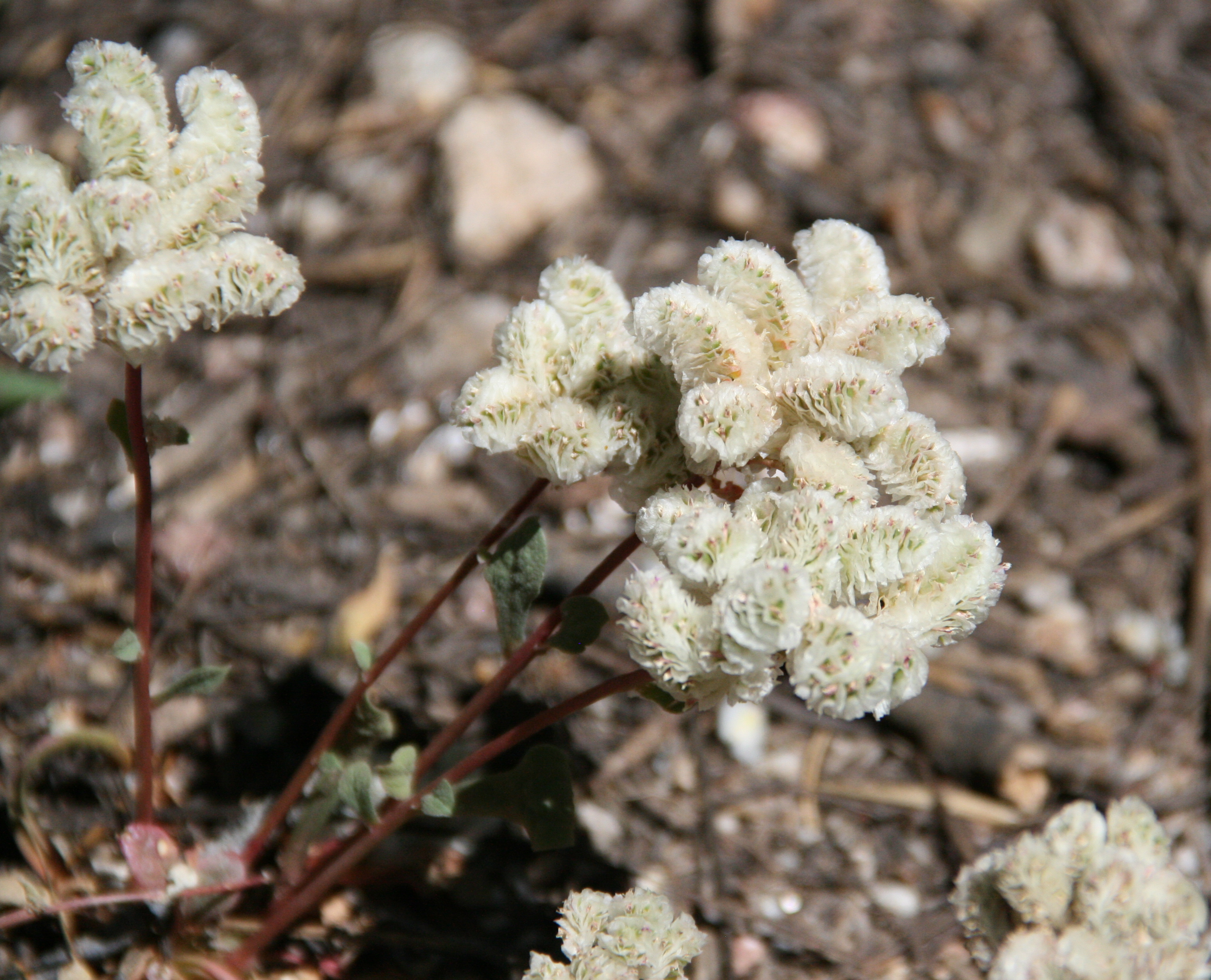
Photo by Chez Brungraber
Family: Montiaceae · Type: Herb · Native
Calyptridium monospermum (One seeded pussypaws) is a native California herb in the Montiaceae family, recognized by . Key features are perennial habit and umbel inflorescence.
One seeded pussypaws is a California native perennial found in the Klamath Ranges, northern Coast Ranges, Cascade Range, Sierra Nevada, San Francisco Bay Area, Transverse Ranges, San Jacinto Mountains, and Great Basin in open areas, sandy or gravelly soils, and conifer forest at elevations of 300 to 3,970 meters. Flowering from April to September, this plant produces delicate rose to white flowers in loose umbels up to 10 centimeters in diameter. Growing with spreading to ascending stems less than 50 centimeters tall, it forms a short, thick caudex with a slender to thick taproot. Its basal leaves form a single rosette 1.5 to 6 centimeters long, with additional smaller cauline leaves 0.8 to 3 centimeters long. The fruit is 2 to 3.5 millimeters wide, widely ovate to nearly round, containing one to four seeds.
Identification and appearance
Key characters: 9 sympatric species. Key features are perennial habit and umbel inflorescence.
Habitat and range
Habitat: Open areas, sandy or gravelly soils, conifer forest
Elevation: 300-3970 m
California counties: El Dorado, Fresno, Riverside, Tulare, Los Angeles, San Bernardino, Alpine, Calaveras, Kern, Mono, Placer, Sierra, Trinity, Amador, Nevada, Shasta, Tuolumne, Lake, Inyo, Plumas, Butte, Siskiyou, Lassen, Tehama, Madera, Mendocino, Yuba, Humboldt, Mariposa, Santa Cruz, Colusa, Ventura, Modoc, Glenn, Del Norte, Napa
Outside California: southern Oregon, Nevada, northern Baja California
Bloom period
Calyptridium monospermum blooms Apr-Sep.
How to tell it apart
vs Eriogonum: Calyptridium has separate petals; Eriogonum flowers are in papery involucres with 6 petal-like tepals.; vs Cistanthe: Calyptridium has 2-4 petals and 1-3 stamens; Cistanthe consistently has 5 petals and 5-10 stamens.; vs Chorizanthe: Calyptridium has distinct petals; Chorizanthe has tubular flowers with papery bracts and no true petals.; vs Camissoniopsis: Calyptridium has 2-4 petals with few stamens; Camissoniopsis has 4 petals with 8 stamens.; vs Claytonia: Calyptridium has only 2-4 petals and dense ground-hugging clusters; Claytonia has 5 petals on upright stems.
Frequently asked questions
Is Calyptridium monospermum native to California?
Yes. Calyptridium monospermum is native to California (recorded as native).
When does Calyptridium monospermum bloom?
Calyptridium monospermum blooms Apr-Sep.
Where in California does Calyptridium monospermum grow?
Calyptridium monospermum occurs in El Dorado, Fresno, Riverside, Tulare, Los Angeles, San Bernardino, Alpine, Calaveras and other counties, at elevations of 300-3970 m.
What plant family does Calyptridium monospermum belong to?
Calyptridium monospermum is in the Montiaceae family, genus Calyptridium.
What habitat does Calyptridium monospermum grow in?
Calyptridium monospermum grows in Open areas, sandy or gravelly soils, conifer forest.
Related species
Other California species in the same genus, family, or bioregion.
Sources: Jepson eFlora · Index of California Plant Names · CalPhotos
Last updated 2026-10-07
Data from The California Species Project — 14,000+ California species with verified data from CNPS, CDFW, USFWS, Cal-IPC, and more.