Calystegia collina subsp. tridactylosa
Three-fingered morning-glory, Three-Fingered Morning-Glory
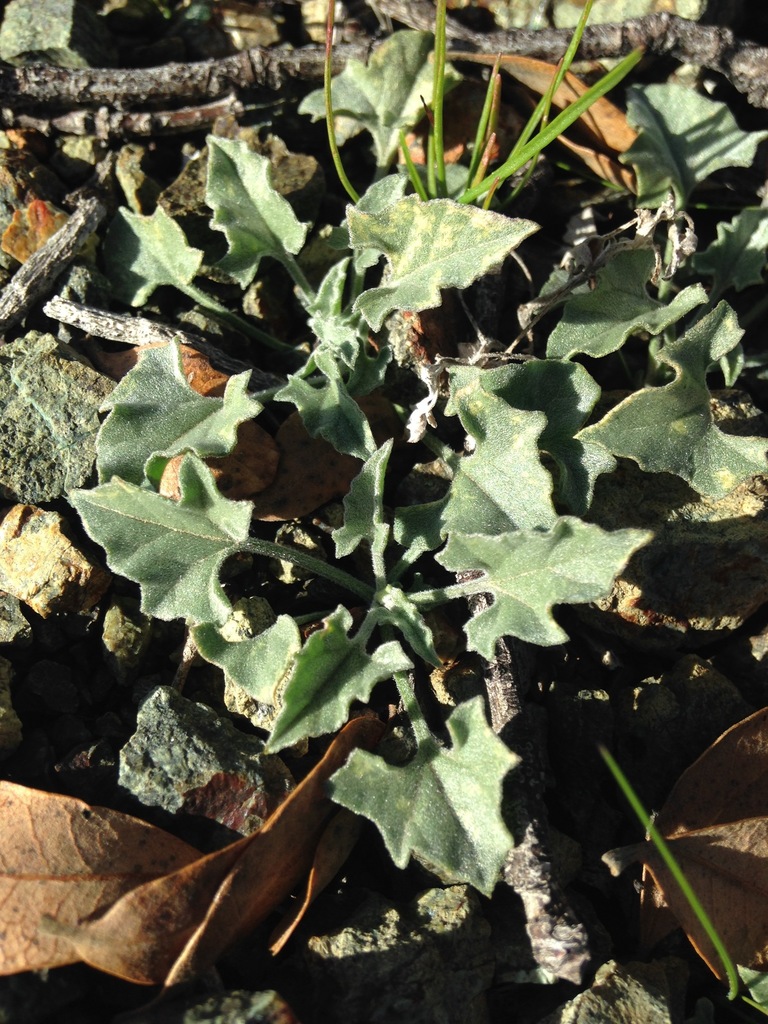
Photo: parent species Calystegia collina · (c) Adam J. Searcy, some rights reserved (CC BY) · licence
Family: Convolvulaceae · Type: Vine · Native
Conservation status: CNPS 1B.2
Calystegia collina subsp. tridactylosa (Three-fingered morning-glory) is a native California vine in the Convolvulaceae family, recognized by longer stems, wavy-margined leaves, and very narrow bracts.
Three-fingered morning-glory is a rare (CNPS 1B.2) California native perennial found in northern coastal ranges and inner north coast ranges, specifically in Mendocino and Lake counties, in open grassy or rocky serpentine places and oak/pine woodlands at elevations below 600 meters. Flowering from April to June, this plant produces white flowers with delicate, slightly wavy-edged petals about 27 to 33 millimeters long. Growing with stems generally 15 to 30 centimeters tall, it develops distinctive three-lobed leaves with gently undulating margins. Its leaves feature distinct lobes that create an intricate, almost sculptural appearance against the landscape. The plant's outer sepals are notably tomentose, giving the flower a soft, textured appearance.
Identification and appearance
Key characters: 10 sympatric species; key features are longer stems, wavy-margined leaves, and very narrow bracts
Habitat and range
Habitat: Open grassy or rocky places or in open oak/pine woodland, often serpentine
Elevation: < 600 m
California counties: Mendocino, Lake
Bloom period
Calystegia collina subsp. tridactylosa blooms Apr-Jun.
Conservation status
CNPS 1B.2
How to tell it apart
vs Convolvulus: Convolvulus has smaller flowers with sharply pointed stigma lobes; Calystegia stigma lobes are blunt.; vs Ipomoea: Ipomoea stigma is a single rounded knob; Calystegia stigma has two distinct flattened lobes.; vs Datura: Datura flowers are upright with pleated edges; Calystegia flowers are smooth funnels.; vs Abronia: Abronia has clusters of small tubular flowers; Calystegia has single large funnel flowers.; vs Oenothera: Oenothera has four separate petals; Calystegia petals are fused into continuous funnel.
Frequently asked questions
Is Calystegia collina subsp. tridactylosa native to California?
Yes. Calystegia collina subsp. tridactylosa is native to California (recorded as native).
When does Calystegia collina subsp. tridactylosa bloom?
Calystegia collina subsp. tridactylosa blooms Apr-Jun.
Where in California does Calystegia collina subsp. tridactylosa grow?
Calystegia collina subsp. tridactylosa occurs in Mendocino, Lake, at elevations of < 600 m.
What plant family does Calystegia collina subsp. tridactylosa belong to?
Calystegia collina subsp. tridactylosa is in the Convolvulaceae family, genus Calystegia.
Is Calystegia collina subsp. tridactylosa rare or endangered?
Calystegia collina subsp. tridactylosa carries California Rare Plant Rank 1B.2, state rank S1S2.
Related species
Other California species in the same genus, family, or bioregion.
Sources: Jepson eFlora · CNPS Rare Plant Inventory · Index of California Plant Names · CalPhotos · CDFW CNDDB
Last updated 2026-10-07
Data from The California Species Project — 14,000+ California species with verified data from CNPS, CDFW, USFWS, Cal-IPC, and more.