Camissonia kernensis subsp. kernensis
Kern county evening-primrose, Kern County Evening-Primrose
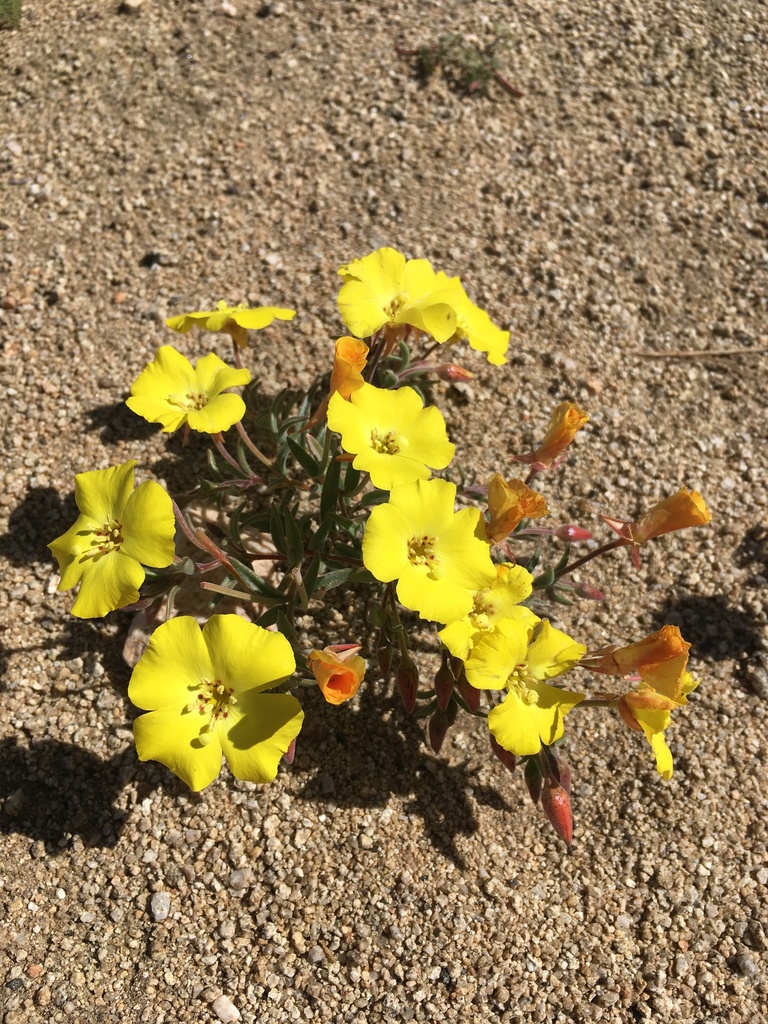
Photo: parent species Camissonia kernensis · (c) Matt Berger, some rights reserved (CC BY) · licence
Family: Onagraceae · Type: Herb · Native
Conservation status: CNPS 4.3
Camissonia kernensis subsp. kernensis (Kern county evening-primrose) is a native California herb in the Onagraceae family, recognized by compact habit, large flowers, and pedicellate fruits.
Kern county evening-primrose is a California native annual herb found in southeastern Sierra Nevada and western Mojave Desert regions, specifically in Piute, El Paso Mountains, Grapevine Canyon, and Kern County in sandy sagebrush scrub and Joshua-tree woodland at elevations of 850 to 1,800 meters. Flowering in May, this plant produces small yellow flowers with delicate petals in compact clusters. Growing with dense, spreading hairs and compact stems 5 to 15 centimeters tall, it forms a tidy low-growing structure. Its leaves are clustered at the base of the plant, creating a rosette-like arrangement. The fruit develops on slender pedicels 3 to 15 millimeters long, adding to its distinctive appearance.
Identification and appearance
Key characters: 4 sympatric species; key features are compact habit, large flowers, and pedicellate fruits
Habitat and range
Habitat: Sandy slopes, flats, generally in sagebrush scrub or Joshua-tree woodland
Elevation: 850-1800 m
California counties: Kern, San Bernardino
Bloom period
Camissonia kernensis subsp. kernensis blooms May.
Conservation status
CNPS 4.3
How to tell it apart
vs Camissoniopsis: Camissonia flowers from top with round fruits; Camissoniopsis flowers from base with four-angled fruits.; vs Eulobus: Camissonia has plain yellow petals; Eulobus has elegant wands with red flecks at petal bases.; vs Chylismia: Camissonia has narrow leaves up the stem; Chylismia has dandelion-like basal leaves.; vs Taraxia: Camissonia flowers from upper stem; Taraxia flowers open from ground level at night.; vs Eschscholzia: Camissonia has four petals and cylindrical fruits; Eschscholzia has dissected leaves and poppy-like flowers.
Frequently asked questions
Is Camissonia kernensis subsp. kernensis native to California?
Yes. Camissonia kernensis subsp. kernensis is native to California (recorded as native).
When does Camissonia kernensis subsp. kernensis bloom?
Camissonia kernensis subsp. kernensis blooms May.
Where in California does Camissonia kernensis subsp. kernensis grow?
Camissonia kernensis subsp. kernensis occurs in Kern, San Bernardino, at elevations of 850-1800 m.
What plant family does Camissonia kernensis subsp. kernensis belong to?
Camissonia kernensis subsp. kernensis is in the Onagraceae family, genus Camissonia.
Is Camissonia kernensis subsp. kernensis rare or endangered?
Camissonia kernensis subsp. kernensis carries California Rare Plant Rank 4.3, state rank S3.
Related species
Other California species in the same genus, family, or bioregion.
Sources: Jepson eFlora · CNPS Rare Plant Inventory · Index of California Plant Names · CalPhotos · CDFW CNDDB
Last updated 2026-10-07
Data from The California Species Project — 14,000+ California species with verified data from CNPS, CDFW, USFWS, Cal-IPC, and more.