Carex aquatilis var. dives
Sitka sedge
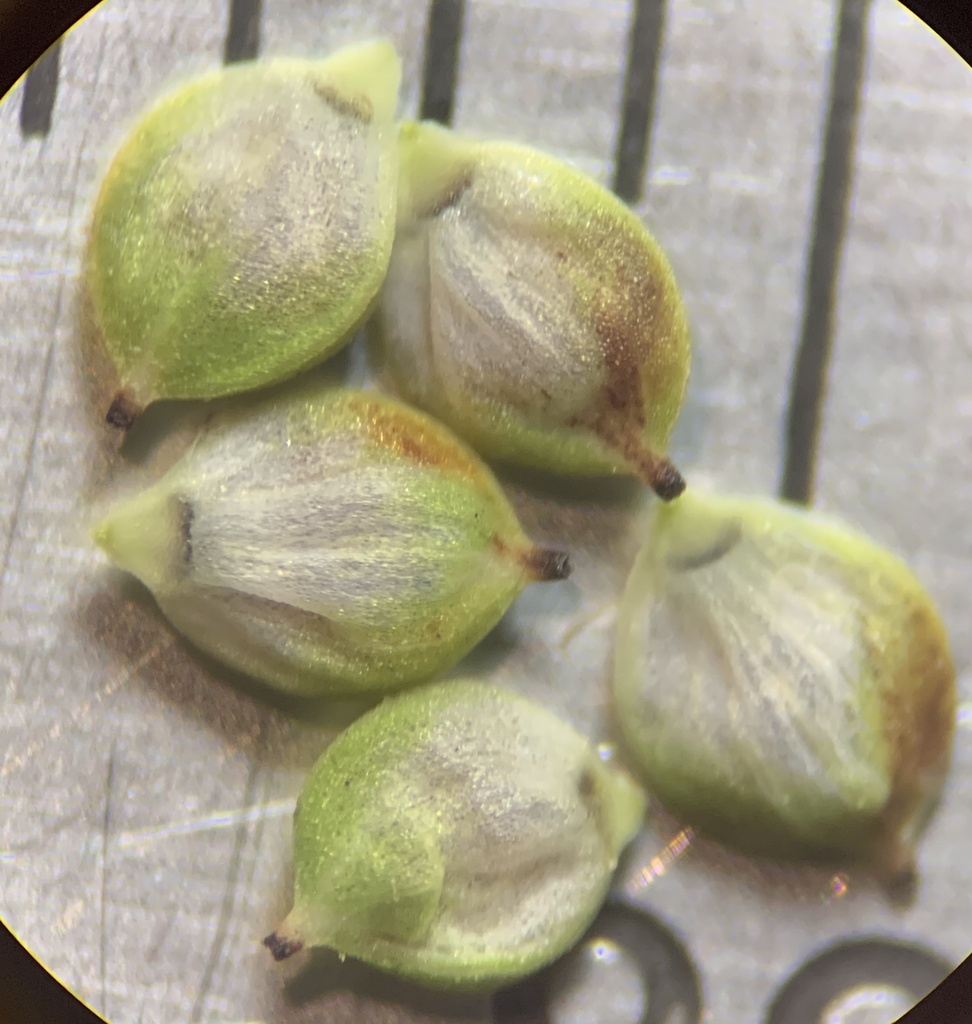
Photo: parent species Carex aquatilis · (c) mark-groeneveld, some rights reserved (CC BY), uploaded by mark-groeneveld · licence
Family: Cyperaceae · Type: Grass · Native
Carex aquatilis var. dives (Sitka sedge) is a native California grass in the Cyperaceae family, recognized by wider leaves and coastal distribution separate from var. aquatilis.
Sitka sedge is a California native perennial found in northern coastal, Klamath Range, northern coastal redwood, and central coastal regions in wet meadows, shores, and fresh water habitats at elevations below 1,100 meters. Flowering spikelets are 4.5 to 11.5 centimeters long with lower stalks generally nodding, producing clusters with staminate tips. Growing with distinctive sedge-like stems, this plant develops leaves 5 to 18 millimeters wide with purple-dotted leaf sheaths and purple-brown mouth openings. Its leaf blades feature intriguing purple-brown details, with leaf sheaths displaying delicate purple dots against green backgrounds. The fruit develops small perigynia 1.9 to 3.5 millimeters long, subtly marked with yellow or purple dots and a short 0.2 to 0.4 millimeter beak.
Identification and appearance
Key characters: 104 sympatric species; wider leaves and coastal distribution separate from var. aquatilis
Habitat and range
Habitat: Wet meadows, shores, fresh water
Elevation: < 1100 m
California counties: Humboldt, Mendocino, Siskiyou, San Luis Obispo, San Bernardino, Del Norte, Contra Costa, Shasta, Santa Clara, Plumas, Napa, Santa Barbara, Inyo, El Dorado
Outside California: to Alaska
How to tell it apart
vs Juncus: Carex stems are triangular when rolled; Juncus stems are round and often hollow with partitions inside.; vs Cyperus: Carex has seeds in individual flasks; Cyperus has umbrella-like flower clusters with flattened ribbon-like spikes.; vs Plantago: Carex has triangular stems and brown/green spikelets; Plantago has round flower stalks and white/brown spike flowers.; vs Eleocharis: Carex has leaves along the stem; Eleocharis is nearly leafless with just one spikelet per stem.; vs Schoenoplectus: Carex has leafy stems and flask-enclosed seeds; Schoenoplectus has leafless round stems with exposed seeds.
Frequently asked questions
Is Carex aquatilis var. dives native to California?
Yes. Carex aquatilis var. dives is native to California (recorded as native).
Where in California does Carex aquatilis var. dives grow?
Carex aquatilis var. dives occurs in Humboldt, Mendocino, Siskiyou, San Luis Obispo, San Bernardino, Del Norte, Contra Costa, Shasta and other counties, at elevations of < 1100 m.
What plant family does Carex aquatilis var. dives belong to?
Carex aquatilis var. dives is in the Cyperaceae family, genus Carex.
What habitat does Carex aquatilis var. dives grow in?
Carex aquatilis var. dives grows in Wet meadows, shores, fresh water.
Related species
Other California species in the same genus, family, or bioregion.
Sources: Jepson eFlora · Index of California Plant Names · CalPhotos
Last updated 2026-10-07
Data from The California Species Project — 14,000+ California species with verified data from CNPS, CDFW, USFWS, Cal-IPC, and more.