Carpenteria californica
Tree-anemone, Tree-Anemone
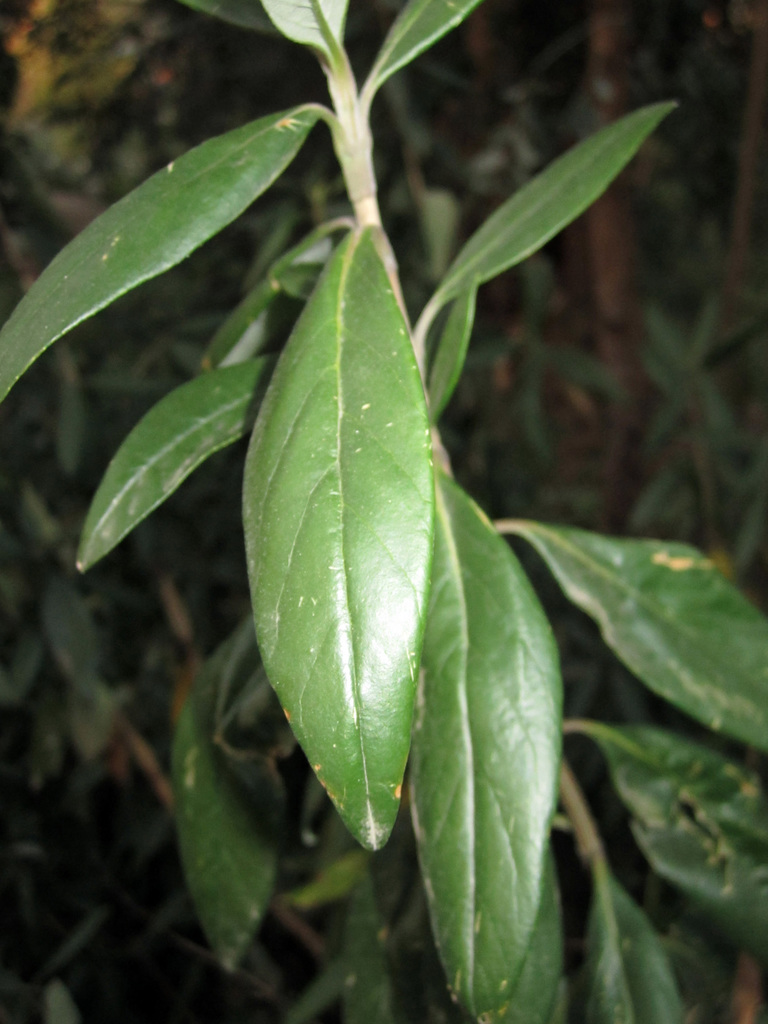
(c) Bri Weldon, some rights reserved (CC BY) · licence
Family: Hydrangeaceae · Type: Shrub · Native
Conservation status: CNPS 1B.2
Carpenteria californica (Tree-anemone) is a native California shrub in the Hydrangeaceae family, recognized by Monotypic genus endemic to a very small area of the central Sierra Nevada foothills.
Tree-anemone is a rare California native shrub ranked 1B.2 by CNPS, found in the central Sierra Nevada Foothills between the Kings and San Joaquin rivers in Fresno County, inhabiting streambanks, chaparral, and oak woodland at elevations of 340 to 1,340 meters. Flowering from May to July, this plant produces large white flowers 3 to 6 centimeters wide with delicate, nearly round petals that are profoundly fragrant. Growing as a compact shrub less than 3 meters tall with bark that peels in thin, wide gray sheets, it develops a distinctive branching structure. Its persistent leaves are leathery and narrowly elliptic, 4 to 10 centimeters long, with a green upper surface and pale, short-woolly undersides that have margins slightly rolled under. The fruit develops as a small conical capsule 0.6 to 1.2 centimeters wide, containing fusiform seeds in shades of red-brown.
Identification and appearance
Key characters: Monotypic genus endemic to a very small area of the central Sierra Nevada foothills
Habitat and range
Habitat: Streambanks, chaparral, oak woodland
Elevation: 340-1340 m
California counties: Fresno, San Luis Obispo, Los Angeles, Butte, Alameda, Contra Costa, San Diego, Santa Clara, Madera, Santa Barbara
Bloom period
Carpenteria californica blooms May-Jul.
Conservation status
CNPS 1B.2
How to tell it apart
vs Rosa: Carpenteria leaves are simple and opposite with smooth edges; roses have alternate pinnate leaves with leaflets.; vs Camellia: Carpenteria leaves have a single prominent vein from the base; Camellias have pinnate venation.; vs Philadelphus: Carpenteria has thick evergreen leaves with one vein; Philadelphus has deciduous three-veined leaves.; vs Cistus: Carpenteria has opposite leaves and numerous stamens; Cistus has alternate leaves and crinkled petals.; vs Nerium: Carpenteria leaves are in opposite pairs; oleander leaves are in whorls of three.
Frequently asked questions
Is Carpenteria californica native to California?
Yes. Carpenteria californica is native to California (recorded as native).
When does Carpenteria californica bloom?
Carpenteria californica blooms May-Jul.
Where in California does Carpenteria californica grow?
Carpenteria californica occurs in Fresno, San Luis Obispo, Los Angeles, Butte, Alameda, Contra Costa, San Diego, Santa Clara and other counties, at elevations of 340-1340 m.
What plant family does Carpenteria californica belong to?
Carpenteria californica is in the Hydrangeaceae family, genus Carpenteria.
Is Carpenteria californica rare or endangered?
Carpenteria californica carries California Rare Plant Rank 1B.2, state rank S1S2.
Related species
Other California species in the same genus, family, or bioregion.
Sources: Jepson eFlora · CNPS Rare Plant Inventory · Index of California Plant Names · CalPhotos · CDFW CNDDB
Last updated 2026-10-07
Data from The California Species Project — 14,000+ California species with verified data from CNPS, CDFW, USFWS, Cal-IPC, and more.