Castilleja ambigua subsp. insalutata
pink Johnny-nip
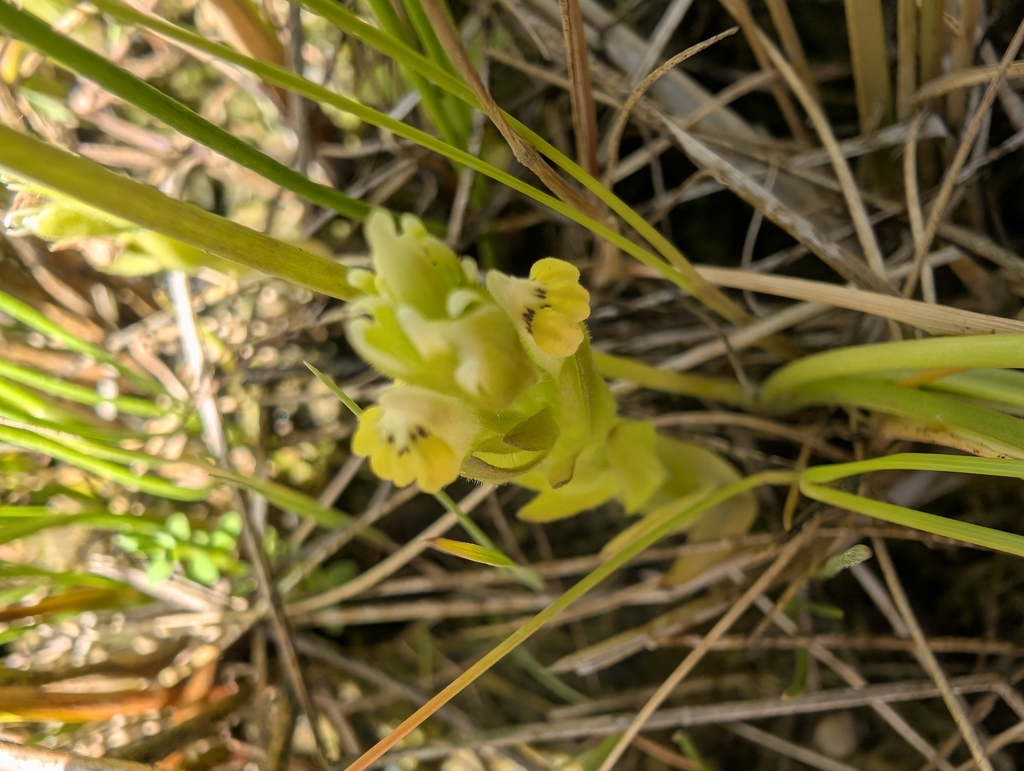
Photo: parent species Castilleja ambigua · (c) Simone Littledale, some rights reserved (CC BY) · licence
Family: Orobanchaceae · Type: Herb · Native
Conservation status: CNPS 1B.1
Castilleja ambigua subsp. insalutata (pink Johnny-nip) is a native California herb in the Orobanchaceae family, recognized by coastal range and color distinctive.
Pink Johnny-nip is a rare (CNPS 1B.1) California native annual found in central Coast Ranges of Monterey and San Luis Obispo counties on grassy coastal bluffs at elevations below 100 meters. Flowering from May to July, this plant produces rose-purple flowers with distinctive bract tips in soft, delicate clusters. Growing as a much-branched plant from its base, it forms compact, intricate stems rising from the coastal landscape. Its bracts are particularly notable for their acute or rounded rose-purple tips, creating an elegant visual texture against the grassland background. The small flowers have lower lip teeth measuring 1.5 to 2 millimeters long, adding subtle architectural detail to its overall delicate structure.
Identification and appearance
Key characters: 11 sympatric species, coastal range and color distinctive
Habitat and range
Habitat: Grassy coastal bluffs
Elevation: < 100 m
California counties: Monterey, San Luis Obispo
Bloom period
Castilleja ambigua subsp. insalutata blooms May-Jul.
Conservation status
CNPS 1B.1
How to tell it apart
vs Triphysaria: Castilleja lacks the sharp fold in flower throat; Triphysaria has abrupt crease above lower lip.; vs Trifolium: Castilleja has tubular flowers with colorful bracts; Trifolium has round heads of pea-like flowers and three leaflets.; vs Pedicularis: Castilleja has open forward beak and colorful bracts; Pedicularis has closed hood and fern-like leaves.; vs Orthocarpus: Castilleja has open beak you can see into; Orthocarpus has closed hood covering stamens completely.; vs Epilobium: Castilleja has tubular two-lipped flowers and colorful bracts; Epilobium has four separate petals arranged in cross.
Frequently asked questions
Is Castilleja ambigua subsp. insalutata native to California?
Yes. Castilleja ambigua subsp. insalutata is native to California (recorded as native).
When does Castilleja ambigua subsp. insalutata bloom?
Castilleja ambigua subsp. insalutata blooms May-Jul.
Where in California does Castilleja ambigua subsp. insalutata grow?
Castilleja ambigua subsp. insalutata occurs in Monterey, San Luis Obispo, at elevations of < 100 m.
What plant family does Castilleja ambigua subsp. insalutata belong to?
Castilleja ambigua subsp. insalutata is in the Orobanchaceae family, genus Castilleja.
Is Castilleja ambigua subsp. insalutata rare or endangered?
Castilleja ambigua subsp. insalutata carries California Rare Plant Rank 1B.1, state rank S2.
Related species
Other California species in the same genus, family, or bioregion.
Sources: Jepson eFlora · CalPhotos · CDFW CNDDB
Last updated 2026-10-08
Data from The California Species Project — 14,000+ California species with verified data from CNPS, CDFW, USFWS, Cal-IPC, and more.