Castilleja plagiotoma
Mojave paintbrush, Mojave Paintbrush
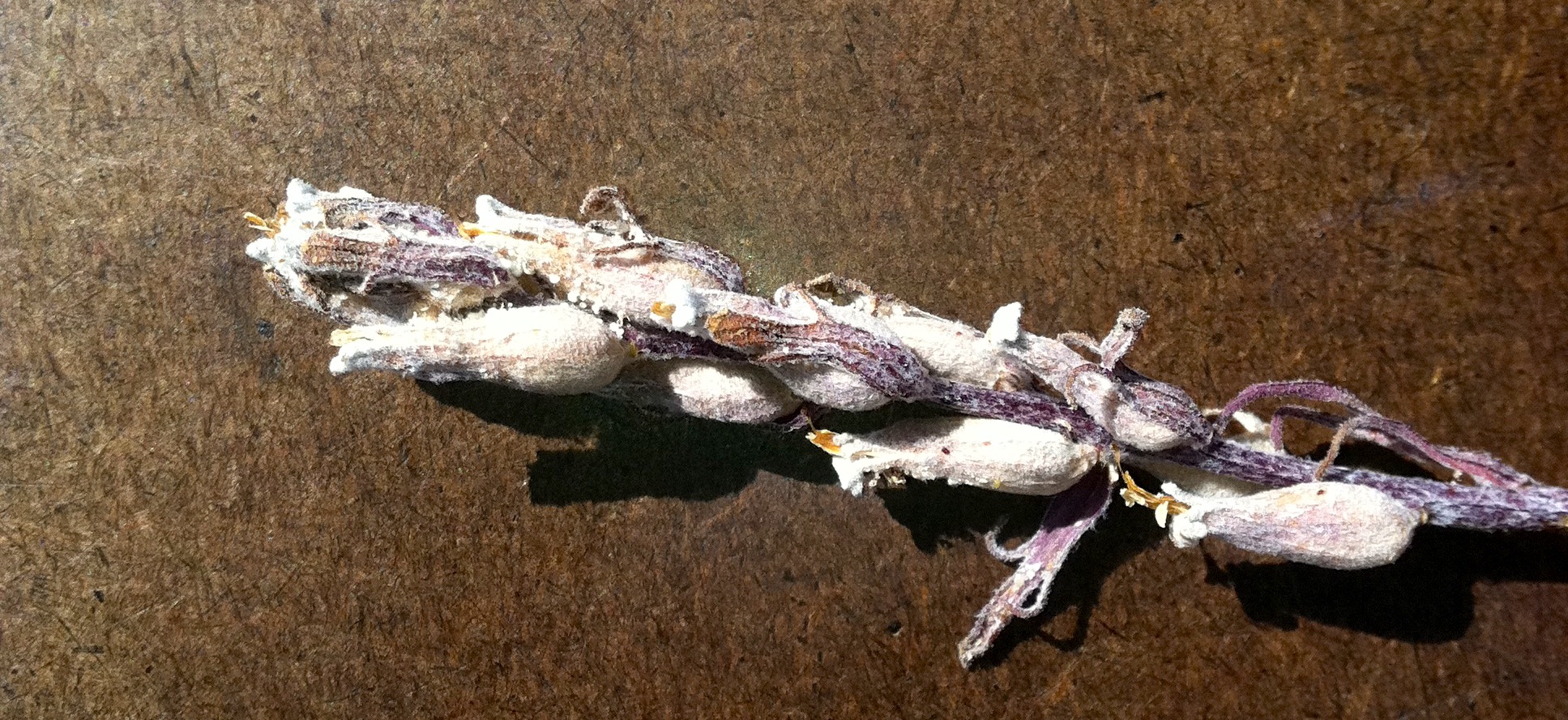
Photo by Chez Brungraber
Family: Orobanchaceae · Type: Herb · Native
Conservation status: CNPS 4.3
Castilleja plagiotoma (Mojave paintbrush) is a native California herb in the Orobanchaceae family, recognized by white-woolly bracts and branched hairs.
Mojave paintbrush is a California native perennial herb found in southern Sierra Nevada, Tehachapi, south Coast Ranges, Transverse Ranges, and Mojave Desert in dry sagebrush scrub and pinyon woodland at elevations of 300 to 2,500 meters. Flowering from April to June, this plant produces white and pale yellow flowers with white-woolly bracts and distinctive broad, truncate green central lobes. Growing 30 to 60 centimeters tall with gray-green stems that turn dark red, it develops branched hairs and a puberulent texture. Its leaves are linear with 3 to 5 narrow lobes, each 20 to 50 millimeters long, creating a delicate, structured appearance. The fruit measures approximately 10 millimeters long with seeds featuring a deeply netted, ladder-like coat.
Identification and appearance
Key characters: 39 sympatric species; white-woolly bracts and branched hairs are diagnostic
Habitat and range
Habitat: Dry sagebrush scrub, pinyon woodland
Elevation: 300-2500 m
California counties: Los Angeles, San Luis Obispo, Kern, San Bernardino, Riverside, San Benito, Santa Barbara, Fresno, Mono, Ventura
Bloom period
Castilleja plagiotoma blooms Apr-Jun.
Conservation status
CNPS 4.3
How to tell it apart
vs Triphysaria: Castilleja lacks the sharp fold in flower throat; Triphysaria has abrupt crease above lower lip.; vs Trifolium: Castilleja has tubular flowers with colorful bracts; Trifolium has round heads of pea-like flowers and three leaflets.; vs Pedicularis: Castilleja has open forward beak and colorful bracts; Pedicularis has closed hood and fern-like leaves.; vs Orthocarpus: Castilleja has open beak you can see into; Orthocarpus has closed hood covering stamens completely.; vs Epilobium: Castilleja has tubular two-lipped flowers and colorful bracts; Epilobium has four separate petals arranged in cross.
Frequently asked questions
Is Castilleja plagiotoma native to California?
Yes. Castilleja plagiotoma is native to California (recorded as native).
When does Castilleja plagiotoma bloom?
Castilleja plagiotoma blooms Apr-Jun.
Where in California does Castilleja plagiotoma grow?
Castilleja plagiotoma occurs in Los Angeles, San Luis Obispo, Kern, San Bernardino, Riverside, San Benito, Santa Barbara, Fresno and other counties, at elevations of 300-2500 m.
What plant family does Castilleja plagiotoma belong to?
Castilleja plagiotoma is in the Orobanchaceae family, genus Castilleja.
Is Castilleja plagiotoma rare or endangered?
Castilleja plagiotoma carries California Rare Plant Rank 4.3, state rank S4.
Related species
Other California species in the same genus, family, or bioregion.
Sources: Jepson eFlora · CNPS Rare Plant Inventory · Index of California Plant Names · CalPhotos · CDFW CNDDB
Last updated 2026-10-07
Data from The California Species Project — 14,000+ California species with verified data from CNPS, CDFW, USFWS, Cal-IPC, and more.