Ceanothus prostratus var. prostratus
Mahala mat
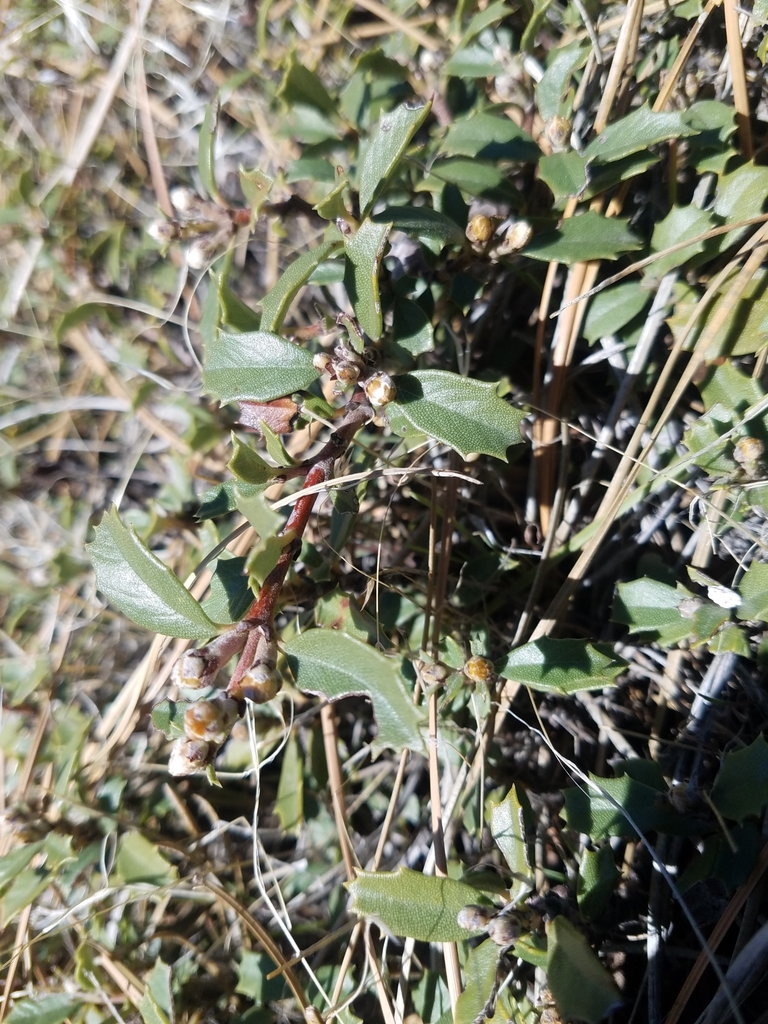
Photo: parent species Ceanothus prostratus · no rights reserved · CC0
Family: Rhamnaceae · Type: Shrub · Native
Ceanothus prostratus var. prostratus (Mahala mat) is a native California shrub in the Rhamnaceae family, recognized by distinguishing features are flat leaves and erect fruit horns.
Mahala mat is a California native shrub found in the Klamath Ranges, northern Coast Ranges, high Cascade Range, and northern and central Sierra Nevada Mountains in conifer forest, on flats and ridges at elevations of 800 to 2,700 meters. Flowering from April to June, this plant produces small white to pale blue flowers in clusters typical of the ceanothus family. Growing as a distinctive mat-like ground cover with spreading branches, it forms low-growing clusters typically 10 to 30 centimeters tall. Its leaves have small, flat blades with 3 to 5 teeth along the upper two-thirds of the margin, appearing dark green and somewhat leathery. The fruit develops with characteristic erect horns, helping distinguish this unique ground-covering shrub in its mountain habitats.
Identification and appearance
Key characters: 34 sympatric species; distinguishing features are flat leaves and erect fruit horns
Habitat and range
Habitat: Flats, ridges, conifer forest
Elevation: 800-2700 m
Outside California: to Washington, western Idaho, western Nevada
Bloom period
Ceanothus prostratus var. prostratus blooms Apr-Jun.
How to tell it apart
vs Rhamnus: Ceanothus has showy blue/white/pink flowers in dense clusters; Rhamnus has tiny inconspicuous greenish flowers.; vs Quercus: Ceanothus has showy flower clusters and small leaves; Quercus has acorns and distinctive lobed or toothed oak leaves.; vs Baccharis: Ceanothus has individual flowers with 5 separate petals; Baccharis has composite flower heads with tiny disc flowers.; vs Cercocarpus: Ceanothus has blue/white/pink flowers in clusters; Cercocarpus has tiny flowers with no petals and feathery fruiting tails.; vs Adenostoma: Ceanothus flowers have 5 distinct colored petals; Adenostoma has tiny white flowers and needle-like clustered leaves.
Frequently asked questions
Is Ceanothus prostratus var. prostratus native to California?
Yes. Ceanothus prostratus var. prostratus is native to California (recorded as native).
When does Ceanothus prostratus var. prostratus bloom?
Ceanothus prostratus var. prostratus blooms Apr-Jun.
What plant family does Ceanothus prostratus var. prostratus belong to?
Ceanothus prostratus var. prostratus is in the Rhamnaceae family, genus Ceanothus.
What habitat does Ceanothus prostratus var. prostratus grow in?
Ceanothus prostratus var. prostratus grows in Flats, ridges, conifer forest.
Related species
Other California species in the same genus, family, or bioregion.
Sources: Jepson eFlora · CalPhotos
Last updated 2026-09-30
Data from The California Species Project — 14,000+ California species with verified data from CNPS, CDFW, USFWS, Cal-IPC, and more.