Centaurea jacea subsp. jacea
Brown knapweed, Brown Knapweed
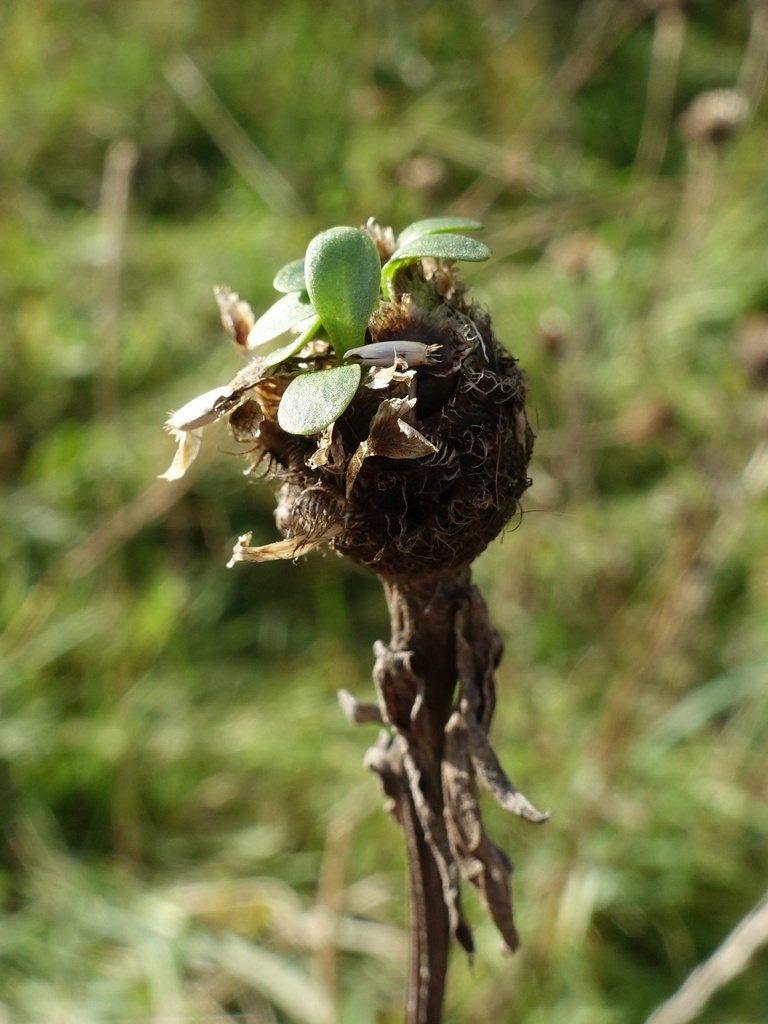
Photo: parent species Centaurea jacea · (c) Jamie O'Neill, some rights reserved (CC BY) · licence
Family: Asteraceae · Type: Perennial · Not Native
Centaurea jacea subsp. jacea (Brown knapweed) is a non-native California perennial in the Asteraceae family, recognized by radiant heads, light brown appendages, and non-swollen peduncles distinguish from other C. jacea taxa.
Brown knapweed is a naturalized perennial found in northern Coast Ranges and Cascade Range in grasslands, disturbed places, and montane forest at elevations of 150 to 1,100 meters. Flowering from August to October, this plant produces light brown to purple flowers in radiant heads with scarious phyllary tips that are concave and sometimes coarsely dentate. Growing with multiple stems that can spread across grassland areas, it develops clusters of distinctive flower heads with complex layered appendages. Its leaves vary from basal to stem-level, typically lance-shaped with slightly serrated edges that blend into the surrounding grassland vegetation. The flower heads feature disk flowers approximately 15 to 22 millimeters long with delicate white or tan pappus bristles barely extending half a millimeter from the flower base.
Identification and appearance
Key characters: 11 sympatric species; radiant heads, light brown appendages, and non-swollen peduncles distinguish from other C. jacea taxa
Habitat and range
Habitat: Grassland, disturbed places, montane forest
Elevation: 150-1100 m
Outside California: to southern Canada, eastern United States, native to Europe
Bloom period
Centaurea jacea subsp. jacea blooms Aug-Oct.
How to tell it apart
vs Cirsium: Cirsium bracts taper to simple spines; Centaurea bract tips expanded with fringed/toothed edges; vs Carduus: Carduus bracts spine-tipped but not fringed; Centaurea bract appendages distinctly fringed or toothed; vs Jacobaea: Jacobaea has obvious yellow ray flowers; Centaurea lacks true rays (all tubular flowers); vs Silybum: Silybum has white-veined leaves and simple spine-tipped bracts; Centaurea bracts ornately fringed; vs Eriophorum: Eriophorum is a sedge with grass-like leaves and cottony heads; Centaurea is a branched herb
Frequently asked questions
Is Centaurea jacea subsp. jacea native to California?
No. Centaurea jacea subsp. jacea is not native to California (recorded as not native).
When does Centaurea jacea subsp. jacea bloom?
Centaurea jacea subsp. jacea blooms Aug-Oct.
What plant family does Centaurea jacea subsp. jacea belong to?
Centaurea jacea subsp. jacea is in the Asteraceae family, genus Centaurea.
What habitat does Centaurea jacea subsp. jacea grow in?
Centaurea jacea subsp. jacea grows in Grassland, disturbed places, montane forest.
Related species
Other California species in the same genus, family, or bioregion.
Sources: Jepson eFlora · CalPhotos
Last updated 2026-04-09
Data from The California Species Project — 14,000+ California species with verified data from CNPS, CDFW, USFWS, Cal-IPC, and more.