Cercocarpus traskiae
Catalina island mountain-mahogany, Catalina Island Mountain-Mahogany
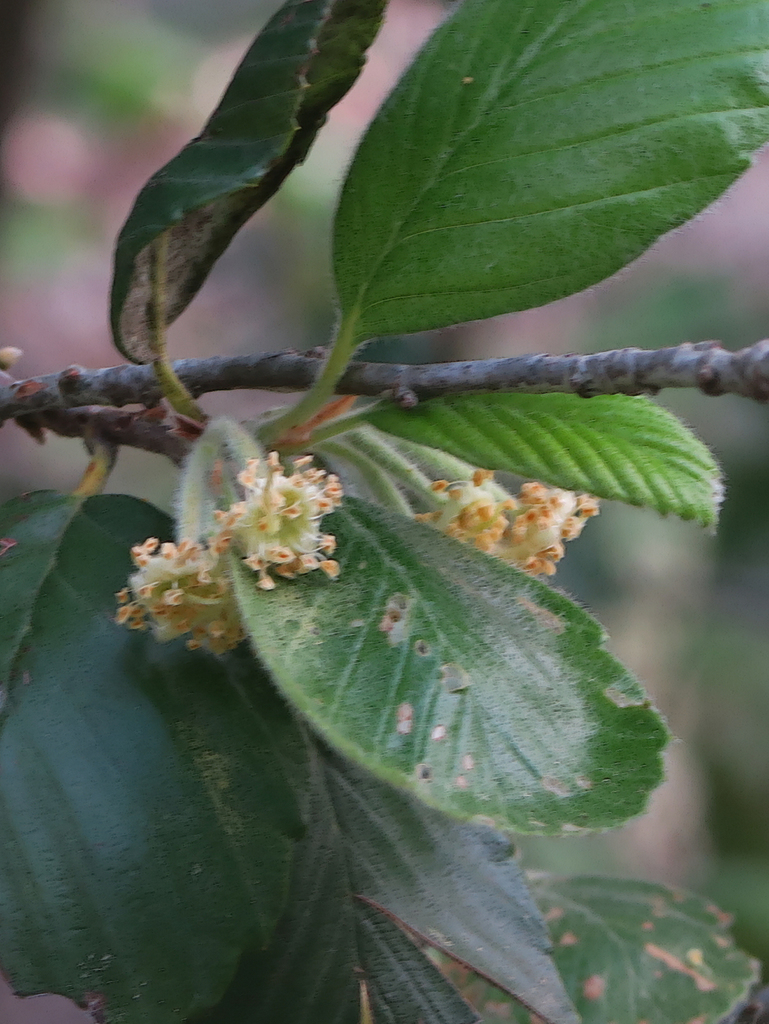
(c) John Rusk, some rights reserved (CC BY) · licence
Family: Rosaceae · Type: Shrub / Tree · Native
Conservation status: CNPS 1B.1 · Endangered
Cercocarpus traskiae (Catalina island mountain-mahogany) is a native California shrub / tree in the Rosaceae family, recognized by but geographically isolated on Santa Catalina Island; distinguished by tree habit and island endemism.
Catalina island mountain-mahogany is a rare (CNPS 1B.1) California native tree found in southern Channel Islands on Santa Catalina Island in dry, rocky soils at elevations of 100 to 250 meters. Flowering in March, this plant produces white flowers in clusters of 3 to 16 blossoms with stamens ranging from 20 to 40. Growing 3 to 8 meters tall with a distinctive leathery texture, it has erect branching and a robust, woody structure. Its leaves are elliptic to obovate, 2 to 6 centimeters long, with 5 to 7 lateral veins and a distinctive white-woolly undersurface that appears softly textured. The fruit is accompanied by an impressive 4 to 6 centimeter long style, creating an elegant silhouette against the island landscape.
Identification and appearance
Key characters: 3 sympatric species but geographically isolated on Santa Catalina Island; distinguished by tree habit and island endemism
Habitat and range
Habitat: Dry, rocky soils
Elevation: 100-250 m
Bloom period
Cercocarpus traskiae blooms Mar.
Conservation status
CNPS 1B.1 · Endangered
How to tell it apart
vs Ceanothus: Cercocarpus has no petals and feathery-tailed fruits; Ceanothus has tiny cupped petals and berry-like capsules.; vs Holodiscus: Cercocarpus flowers lack petals entirely; Holodiscus has tiny white petals in showy foam-like panicles.; vs Quercus: Cercocarpus has feathery-tailed fruits; oaks have acorns in cups.; vs Rhamnus: Cercocarpus has feathery-tailed dry fruits; Rhamnus has smooth berry-like drupes.; vs Alnus: Cercocarpus has feathery-tailed single fruits; Alnus has woody cone-like catkins.
Frequently asked questions
Is Cercocarpus traskiae native to California?
Yes. Cercocarpus traskiae is native to California (recorded as native).
When does Cercocarpus traskiae bloom?
Cercocarpus traskiae blooms Mar.
What plant family does Cercocarpus traskiae belong to?
Cercocarpus traskiae is in the Rosaceae family, genus Cercocarpus.
Is Cercocarpus traskiae rare or endangered?
Cercocarpus traskiae carries California Rare Plant Rank 1B.1, state rank S1.
What habitat does Cercocarpus traskiae grow in?
Cercocarpus traskiae grows in Dry, rocky soils.
Related species
Other California species in the same genus, family, or bioregion.
- Cercocarpus betuloides — Birch leaf mountain mahogany
- Cercocarpus betuloides var. betuloides — Birch-leaf mountain-mahogany
- Cercocarpus betuloides var. blancheae — Island mountain-mahogany
- Cercocarpus betuloides var. macrourus — Few flowered mountain mahogany
- Cercocarpus ledifolius — Curl-leaf mountain-mahogany
- Cercocarpus ledifolius var. intermontanus — Curl leaf mountain mahogany
- Chamaebatia australis — Southern mountain misery
- Chamaebatia foliolosa — Mountain misery
- Chamaebatia sp.
- Chamaebatiaria millefolium — Desertsweet
Sources: Jepson eFlora · CalPhotos · CDFW CNDDB
Last updated 2026-10-07
Data from The California Species Project — 14,000+ California species with verified data from CNPS, CDFW, USFWS, Cal-IPC, and more.