Chaenactis douglasii var. alpina
Alpine dusty-maidens
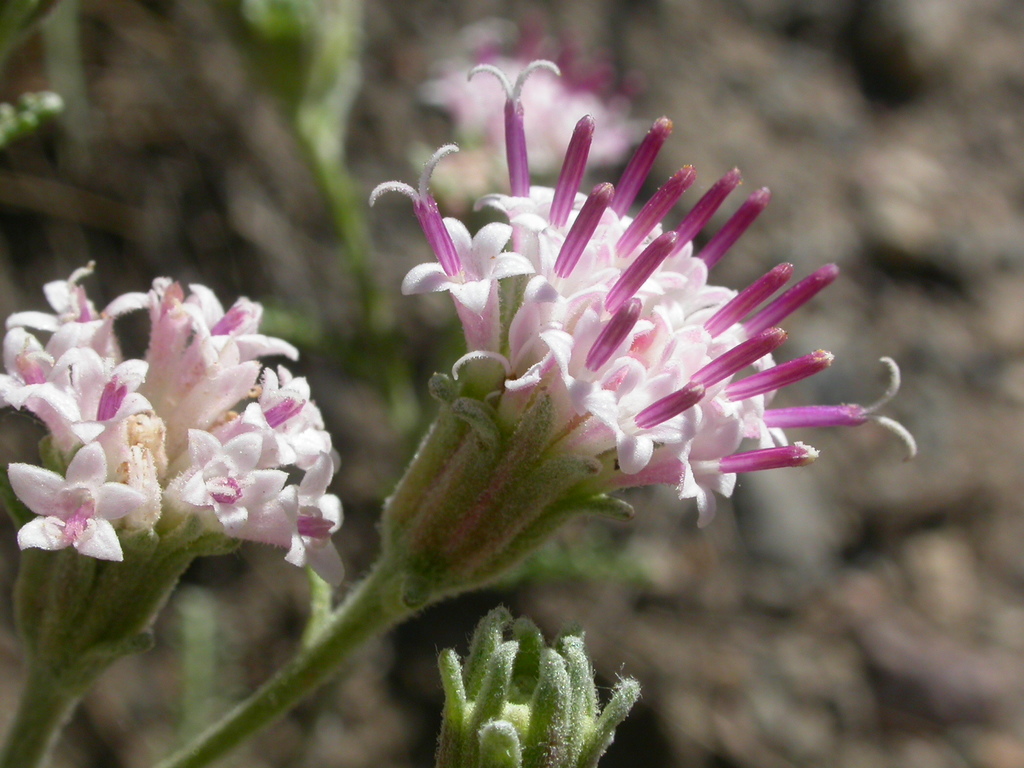
(c) Matt Lavin, some rights reserved (CC BY-SA) · licence
Family: Asteraceae · Type: Herb · Native
Conservation status: CNPS 2B.3
Chaenactis douglasii var. alpina (Alpine dusty-maidens) is a native California herb in the Asteraceae family, recognized by cushion form and scapose heads.
Alpine dusty-maidens is a rare (CNPS 2B.3) California native perennial found in northern Sierra Nevada and northern Death Mountains (Panamint Range) on rocky or gravelly ridges and talus slopes at elevations of 3,000 to 3,400 meters. Flowering from July to September, this plant produces white flowers in heads solitary or paired on stems. Growing in dense or mat-like clusters with stems 10 to 25 centimeters tall, it forms compact ground-hugging clumps. Its basal leaves are persistent, 1 to 6 centimeters long, sometimes becoming smooth as they mature. These delicate alpine plants create tight, resilient clusters in harsh high-elevation environments, allowing them to survive in challenging rocky terrain.
Identification and appearance
Key characters: 14 sympatric species; key features are cushion form and scapose heads
Habitat and range
Habitat: Rocky or gravelly ridges, talus, fell-fields, crevices
Elevation: 3000-3400 m
Outside California: to Oregon, Montana, Colorado (except Nevada)
Bloom period
Chaenactis douglasii var. alpina blooms Jul-Sep.
Conservation status
CNPS 2B.3
How to tell it apart
vs Eriophyllum: Eriophyllum has obvious yellow ray flowers; Chaenactis completely lacks rays; vs Lasthenia: Lasthenia has bright yellow rays; Chaenactis rayless with white/purple tubular flowers only; vs Malacothrix: Malacothrix has all strap-shaped flowers and milky sap; Chaenactis all tubular, clear sap; vs Eriogonum: Eriogonum flowers have 6 segments in ball-like clusters; Chaenactis typical composite heads; vs Uropappus: Uropappus has all strap-shaped yellow flowers; Chaenactis all tubular white/purple flowers
Frequently asked questions
Is Chaenactis douglasii var. alpina native to California?
Yes. Chaenactis douglasii var. alpina is native to California (recorded as native).
When does Chaenactis douglasii var. alpina bloom?
Chaenactis douglasii var. alpina blooms Jul-Sep.
What plant family does Chaenactis douglasii var. alpina belong to?
Chaenactis douglasii var. alpina is in the Asteraceae family, genus Chaenactis.
Is Chaenactis douglasii var. alpina rare or endangered?
Chaenactis douglasii var. alpina carries California Rare Plant Rank 2B.3, state rank S2.
What habitat does Chaenactis douglasii var. alpina grow in?
Chaenactis douglasii var. alpina grows in Rocky or gravelly ridges, talus, fell-fields, crevices.
Related species
Other California species in the same genus, family, or bioregion.
- Chaenactis douglasii var. douglasii — Dusty-maidens; false yarrow
- Chaenactis fremontii — Fremont pincushion
- Chaenactis glabriuscula — Yellow pincushion
- Chaenactis glabriuscula var. glabriuscula — Common yellow chaenactis
- Chaenactis glabriuscula var. heterocarpha — Inner coast range pincushion
- Chaenactis glabriuscula var. lanosa — Sand buttons
Sources: Jepson eFlora · CNPS Rare Plant Inventory · Index of California Plant Names · CalPhotos · CDFW CNDDB
Last updated 2026-10-07
Data from The California Species Project — 14,000+ California species with verified data from CNPS, CDFW, USFWS, Cal-IPC, and more.