Chaenactis douglasii var. douglasii
Dusty-maidens; false yarrow, Dusty-Maidens; False Yarrow
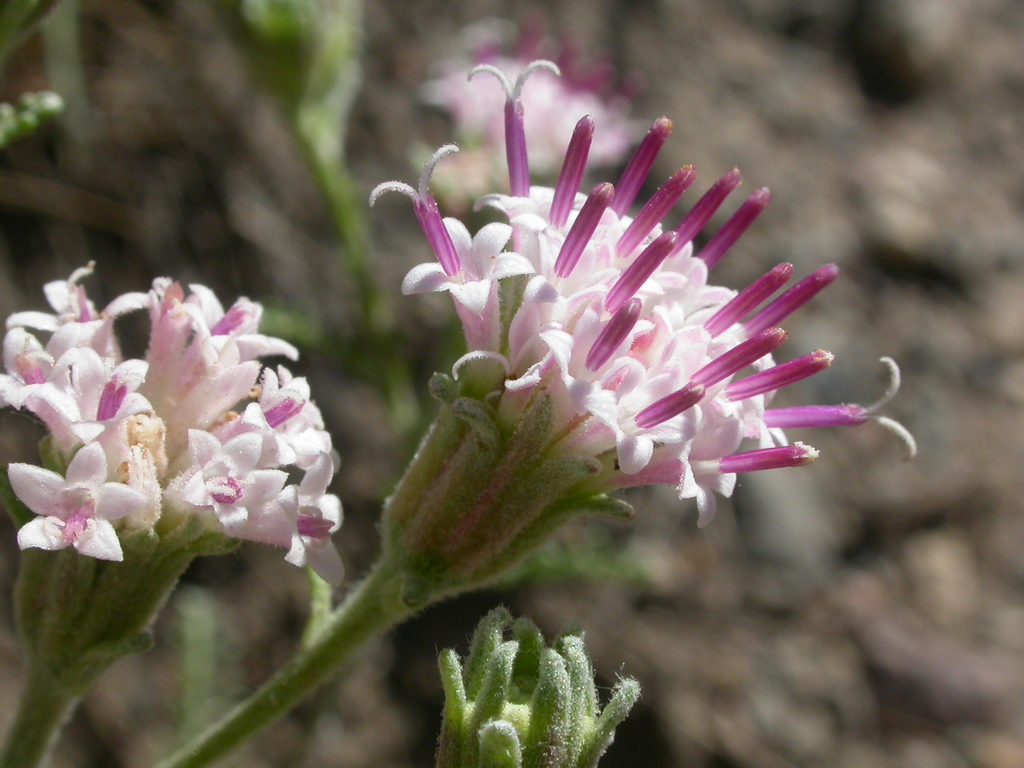
(c) Matt Lavin, some rights reserved (CC BY-SA) · licence
Family: Asteraceae · Type: Herb · Native
Chaenactis douglasii var. douglasii (Dusty-maidens; false yarrow) is a native California herb in the Asteraceae family, recognized by multiple heads per stem and recurved bract tips.
Dusty-maidens is a California native perennial found in the Klamath Ranges, northern Coast Ranges, high Cascades, Sierra Nevada, Great Basin, and northern Desert Mountains in rocky or gravelly habitats at elevations of 900 to 3,500 meters. Flowering from May to September, this plant produces white to pale pink flowers in heads 1 to 2.5 centimeters wide, typically arranged in clusters of 2 to 25 on each stem. Growing 8 to 50 centimeters tall with generally 1 to 5 slender stems, it forms an upright, sparse herb with persistent hairy stems. Its leaves are finely divided, ranging from 1.5 to 12 centimeters long, with basal leaves sometimes withering as the plant matures. The fruit is a small, dry achene typical of its daisy family relatives.
Identification and appearance
Key characters: 15 sympatric species; key features are multiple heads per stem and recurved bract tips
Habitat and range
Habitat: Common. Rocky or gravelly ridges, talus, fell-fields, crevices
Elevation: (400)900-3500 m
Outside California: to southern British Columbia, southern Alberta, western North Dakota, Colorado, northwestern New Mexico
Bloom period
Chaenactis douglasii var. douglasii blooms May-Sep.
How to tell it apart
vs Eriophyllum: Eriophyllum has obvious yellow ray flowers; Chaenactis completely lacks rays; vs Lasthenia: Lasthenia has bright yellow rays; Chaenactis rayless with white/purple tubular flowers only; vs Malacothrix: Malacothrix has all strap-shaped flowers and milky sap; Chaenactis all tubular, clear sap; vs Eriogonum: Eriogonum flowers have 6 segments in ball-like clusters; Chaenactis typical composite heads; vs Uropappus: Uropappus has all strap-shaped yellow flowers; Chaenactis all tubular white/purple flowers
Frequently asked questions
Is Chaenactis douglasii var. douglasii native to California?
Yes. Chaenactis douglasii var. douglasii is native to California (recorded as native).
When does Chaenactis douglasii var. douglasii bloom?
Chaenactis douglasii var. douglasii blooms May-Sep.
What plant family does Chaenactis douglasii var. douglasii belong to?
Chaenactis douglasii var. douglasii is in the Asteraceae family, genus Chaenactis.
What habitat does Chaenactis douglasii var. douglasii grow in?
Chaenactis douglasii var. douglasii grows in Common. Rocky or gravelly ridges, talus, fell-fields, crevices.
Related species
Other California species in the same genus, family, or bioregion.
- Chaenactis fremontii — Fremont pincushion
- Chaenactis glabriuscula — Yellow pincushion
- Chaenactis glabriuscula var. glabriuscula — Common yellow chaenactis
- Chaenactis glabriuscula var. heterocarpha — Inner coast range pincushion
- Chaenactis glabriuscula var. lanosa — Sand buttons
- Chaenactis glabriuscula var. megacephala — Big headed yellow chaenactis
Sources: Jepson eFlora · Index of California Plant Names · CalPhotos
Last updated 2026-10-07
Data from The California Species Project — 14,000+ California species with verified data from CNPS, CDFW, USFWS, Cal-IPC, and more.