Chenopodium leptophyllum
Narrowleaf goosefoot
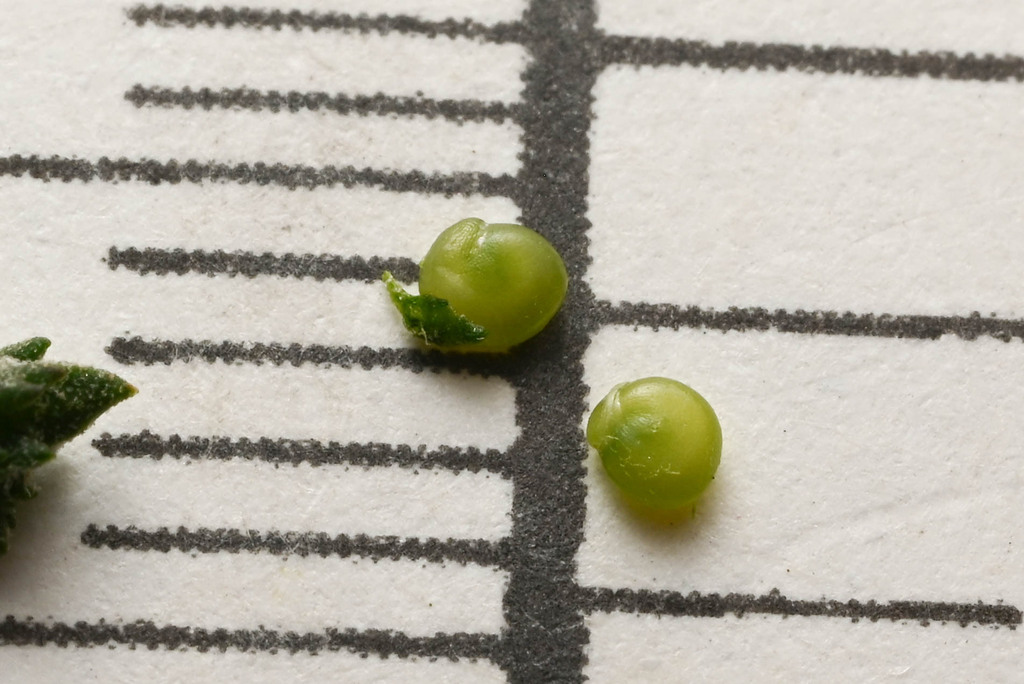
(c) Anders Hastings, some rights reserved (CC BY) · licence
Family: Chenopodiaceae · Type: Herb · Native
Chenopodium leptophyllum (Narrowleaf goosefoot) is a native California herb in the Chenopodiaceae family, recognized by distinctive narrow linear leaves <3.5mm wide, entire margins.
Narrowleaf goosefoot is a California native annual found in southern North Coast Ranges, central and southern Sierra Nevada, White and Inyo Mountains, and northern Mojave Desert in open, gravelly scrub habitats at elevations of 300 to 3,200 meters. Flowering from July to September, this plant produces small, inconspicuous flowers in widely spaced clusters. Growing with branched stems 10 to 40 centimeters tall, it develops from the base with a delicate, open structure. Its leaves are distinctive, featuring narrow linear blades 8 to 25 millimeters long, typically less than 3.5 millimeters wide, with a powdery appearance on the underside. The tiny fruits are white or yellowish, approximately 0.5 to 0.7 millimeters in diameter, with a loosely attached wall and a black, finely netted seed.
Identification and appearance
Key characters: 17 sympatric species - distinctive narrow linear leaves <3.5mm wide, entire margins
Habitat and range
Habitat: Open, gravelly soils, scrub
Elevation: 300-3200 m
California counties: San Bernardino, Imperial, Kern, Los Angeles, Inyo, Mono, Modoc, Tulare, Stanislaus, Lassen, Madera, Siskiyou, Riverside, Sierra, San Joaquin, Santa Barbara
Outside California: to eastern United States, northern Mexico
Bloom period
Chenopodium leptophyllum blooms Jul-Sep.
How to tell it apart
vs Chenopodiastrum: Chenopodium has mealy coating; Chenopodiastrum is smooth to slightly hairy without mealy texture.; vs Atriplex: Chenopodium has perfect flowers; Atriplex has separate male/female flowers with paired bracts on fruits.; vs Blitum: Chenopodium has dry fruits; Blitum has fleshy, berry-like fruiting calyxes.; vs Amaranthus: Chenopodium has mealy coating; Amaranthus is smooth with dense bristly flower spikes.; vs Rumex: Chenopodium has 5-parted flowers in clusters; Rumex has 6-parted flowers in whorls.
Frequently asked questions
Is Chenopodium leptophyllum native to California?
Yes. Chenopodium leptophyllum is native to California (recorded as native).
When does Chenopodium leptophyllum bloom?
Chenopodium leptophyllum blooms Jul-Sep.
Where in California does Chenopodium leptophyllum grow?
Chenopodium leptophyllum occurs in San Bernardino, Imperial, Kern, Los Angeles, Inyo, Mono, Modoc, Tulare and other counties, at elevations of 300-3200 m.
What plant family does Chenopodium leptophyllum belong to?
Chenopodium leptophyllum is in the Chenopodiaceae family, genus Chenopodium.
What habitat does Chenopodium leptophyllum grow in?
Chenopodium leptophyllum grows in Open, gravelly soils, scrub.
Related species
Other California species in the same genus, family, or bioregion.
Sources: Jepson eFlora · Index of California Plant Names · CalPhotos
Last updated 2026-10-07
Data from The California Species Project — 14,000+ California species with verified data from CNPS, CDFW, USFWS, Cal-IPC, and more.