Chloracantha spinosa var. spinosa
Spiny goldenbush
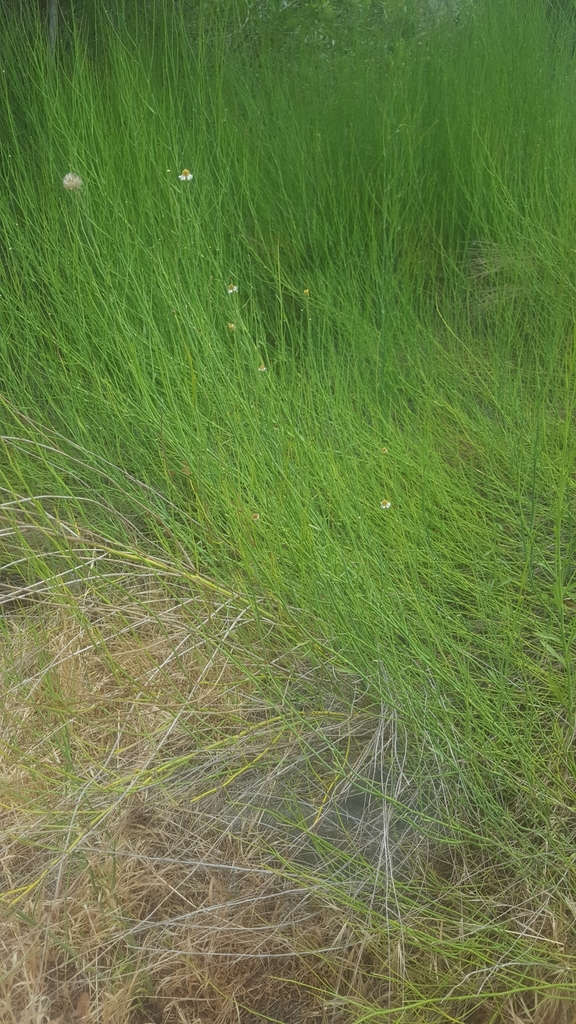
no rights reserved, uploaded by Elizabeth · CC0
Family: Asteraceae · Type: Perennial · Native
Chloracantha spinosa var. spinosa (Spiny goldenbush) is a native California perennial in the Asteraceae family, recognized by Spiny desert composite adapted to alkaline wetlands, unique combination of traits in California sunflower family.
Spiny goldenbush is a California native perennial found in southern coastal, Peninsular, and desert regions in seeps, moist streamsides, and often saline or arid sites at elevations below 1,300 meters. Flowering from May to December, this plant produces white ray flowers with yellow disk centers in radiate heads, with delicate white rays that curl when dry. Growing 5 to 15 decimeters tall with erect stems that are sometimes fleshy and armed with thorns, it develops from a stout rhizome. Its alternate leaves are oblanceolate, 10 to 50 millimeters long, generally entire, and early-deciduous. The fruit features white to golden-brown seeds with distinctive barbed bristles arranged in two series.
Identification and appearance
Key characters: Spiny desert composite adapted to alkaline wetlands, unique combination of traits in California sunflower family
Habitat and range
Habitat: Seeps, moist streamsides, often saline or arid sites
Elevation: < 1300 m
California counties: Imperial, San Bernardino, Riverside, Kern, Santa Barbara, San Diego
Outside California: to Utah, south-central United States, Mexico
Bloom period
Chloracantha spinosa var. spinosa blooms May-Dec.
How to tell it apart
vs Erigeron: Erigeron never has thorny stems and lacks orange resin-filled veins in bracts; vs Lepidospartum: Lepidospartum has scale-like leaves and broom-like stems, not thorny branches with normal leaves; vs Chaetopappa: Chaetopappa is a tiny delicate plant without thorns; vs Xylorhiza: Xylorhiza has large showy heads and no thorns on stems; vs Corethrogyne: Corethrogyne lacks thorns and has brown pappus, not orange-veined bracts
Frequently asked questions
Is Chloracantha spinosa var. spinosa native to California?
Yes. Chloracantha spinosa var. spinosa is native to California (recorded as native).
When does Chloracantha spinosa var. spinosa bloom?
Chloracantha spinosa var. spinosa blooms May-Dec.
Where in California does Chloracantha spinosa var. spinosa grow?
Chloracantha spinosa var. spinosa occurs in Imperial, San Bernardino, Riverside, Kern, Santa Barbara, San Diego, at elevations of < 1300 m.
What plant family does Chloracantha spinosa var. spinosa belong to?
Chloracantha spinosa var. spinosa is in the Asteraceae family, genus Chloracantha.
What habitat does Chloracantha spinosa var. spinosa grow in?
Chloracantha spinosa var. spinosa grows in Seeps, moist streamsides, often saline or arid sites.
Related species
Other California species in the same genus, family, or bioregion.
Sources: Jepson eFlora · Index of California Plant Names · CalPhotos
Last updated 2026-09-30
Data from The California Species Project — 14,000+ California species with verified data from CNPS, CDFW, USFWS, Cal-IPC, and more.