Chlorogalum pomeridianum
Amole
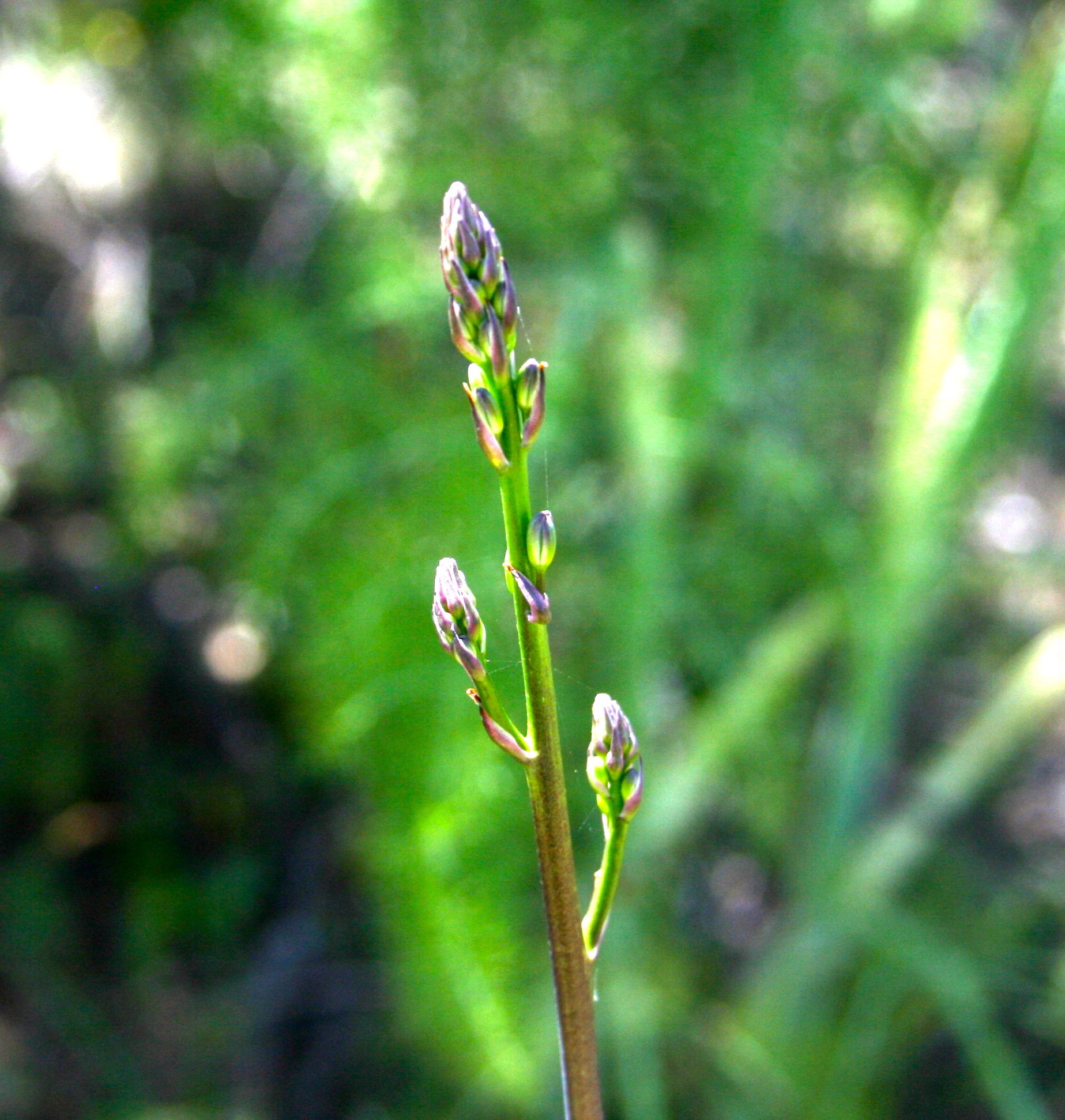
Photo by Chez Brungraber
Family: Agavaceae · Type: Herb · Native
Chlorogalum pomeridianum (Amole) is a native California herb in the Agavaceae family, recognized by 5 congeners; large bulb (7-15 cm) with coarse-fibrous coat, broad wavy leaves 6-25 mm, huge much-branched (to 250 cm) white infl.,….
Amole is a California native perennial found in coastal and interior regions in grasslands, oak woodlands, and chaparral at elevations from sea level to 1,200 meters. Flowering from May to June, this plant produces white flowers with green or purple midveins, 15 to 25 millimeters long, opening in the late afternoon. Growing with tall, much-branched flowering stalks 30 to 250 centimeters high emerging from a small underground bulb, it develops slender stems with delicate branching. Its long leaves are 20 to 70 centimeters in length, 6 to 25 millimeters wide, with distinctively wavy margins that undulate along the leaf edge. The fruit is a small spherical capsule 5 to 7 millimeters long, containing the plant's seeds.
Identification and appearance
Key characters: 5 congeners; large bulb (7-15 cm) with coarse-fibrous coat, broad wavy leaves 6-25 mm, huge much-branched (to 250 cm) white infl., flowers not heterostylous
Habitat and range
California counties: Los Angeles, Tulare, Riverside, Ventura, San Bernardino, Orange, Placer, Monterey, Santa Barbara, San Diego, Alameda, Contra Costa, Madera, Sonoma, Kern, Colusa, El Dorado, San Mateo, Amador, Calaveras, Napa, Siskiyou, Solano, Mariposa, Sutter, Butte, Fresno, Humboldt, Lake, Marin, Mendocino, Nevada, San Francisco, San Luis Obispo, Santa Clara, Santa Cruz, Tuolumne, Glenn, Tehama, Trinity, Del Norte, Yolo, Sacramento, Stanislaus
How to tell it apart
vs Hooveria: Chlorogalum has branching flower clusters; Hooveria has unbranched racemes.; vs Toxicoscordion: Chlorogalum petals twist together after flowering; death camas petals remain separate.; vs Iris: Chlorogalum has small white flowers in branching clusters; iris has large showy flowers with three drooping petals.; vs Yucca: Chlorogalum has thin wavy-edged leaves and open branching clusters; yucca has stiff sword-leaves and dense clusters.; vs Asparagus: Chlorogalum has wavy-edged leaves from a bulb; asparagus has needle-like leaf scales on branching stems.
Frequently asked questions
Is Chlorogalum pomeridianum native to California?
Yes. Chlorogalum pomeridianum is native to California (recorded as native).
Where in California does Chlorogalum pomeridianum grow?
Chlorogalum pomeridianum occurs in Los Angeles, Tulare, Riverside, Ventura, San Bernardino, Orange, Placer, Monterey and other counties.
What plant family does Chlorogalum pomeridianum belong to?
Chlorogalum pomeridianum is in the Agavaceae family, genus Chlorogalum.
Related species
Other California species in the same genus, family, or bioregion.
- Chlorogalum pomeridianum var. divaricatum — Coastal soap plant
- Chlorogalum pomeridianum var. minus — Dwarf soaproot
- Chlorogalum pomeridianum var. pomeridianum — Common soap plant
- Chlorogalum sp. — Soap plant
- Chlorogalum angustifolium — Narrow-leaved soap plant
- Chlorogalum grandiflorum — Red hills soaproot
Sources: Jepson eFlora · Index of California Plant Names · CalPhotos
Last updated 2026-10-07
Data from The California Species Project — 14,000+ California species with verified data from CNPS, CDFW, USFWS, Cal-IPC, and more.