Chrysolepis chrysophylla var. chrysophylla
Giant chinquapin
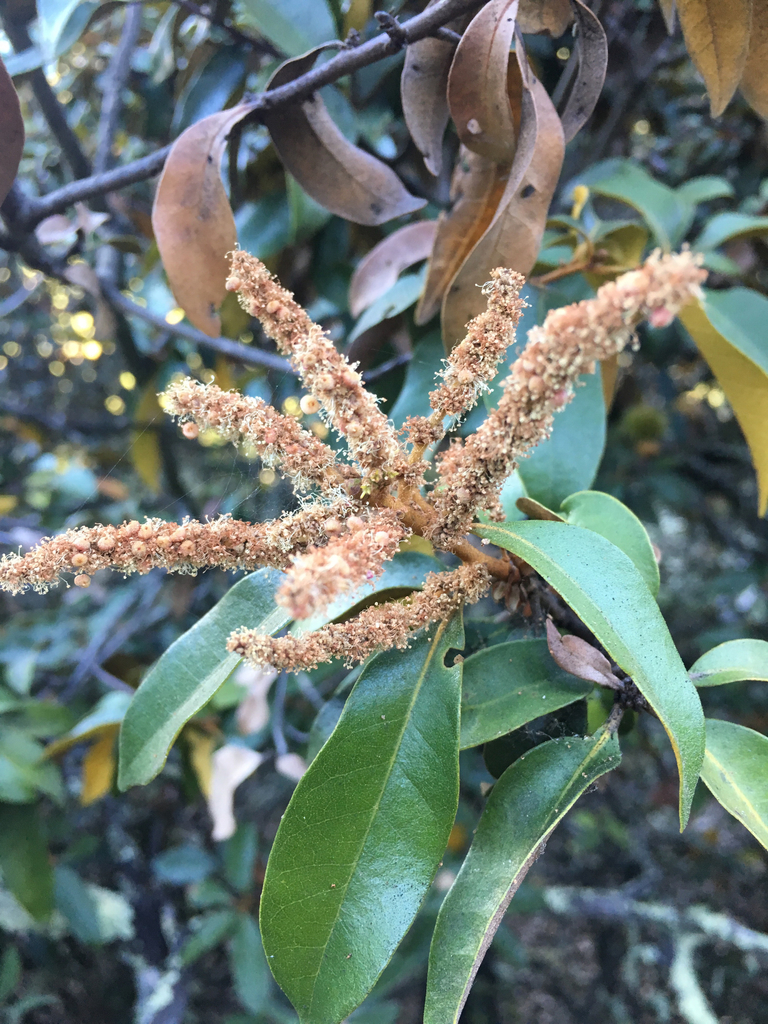
(c) Stephen Sikes, some rights reserved (CC BY), uploaded by Stephen Sikes · licence
Family: Fagaceae · Type: Tree · Native
Chrysolepis chrysophylla var. chrysophylla (Giant chinquapin) is a native California tree in the Fagaceae family, recognized by tree habit and flat leaves vs shrub forms.
Giant chinquapin is a California native tree found in northwestern California, northern California Ranges, northern Sierra Nevada foothills, central coastal California, and San Francisco Bay regions in conifer forest at elevations below 2,000 meters. Flowering from June to September, this tree produces creamy white to yellow flowers in small clusters. Growing 15 to 30 meters tall with occasional specimens reaching 45 meters, it develops a broad, spreading canopy with thick, sturdy branches. Its leaves are approximately flat, leathery, and dark green, typically 5 to 10 centimeters long with a distinctive glossy surface. The tree produces large, spiny fruit capsules that protect its edible nuts, which are an important food source for wildlife in its native forest habitats.
Identification and appearance
Key characters: 2 sympatric species; distinguished by tree habit and flat leaves vs shrub forms
Habitat and range
Habitat: Conifer forest
Elevation: < 2000 m
California counties: Del Norte, Marin, Siskiyou, Sonoma, San Mateo, Mendocino, Humboldt, El Dorado, Trinity, Santa Cruz
Outside California: to Washington
Bloom period
Chrysolepis chrysophylla var. chrysophylla blooms Jun-Sep.
How to tell it apart
vs Quercus: Chrysolepis nuts are completely enclosed in spiny burs; oak acorns sit in open cups.; vs Notholithocarpus: Chrysolepis has spiny burs enclosing nuts; tanoak has cup-scaled acorns like oaks.; vs Frangula: Chrysolepis has spiny burrs with nuts; Frangula has smooth berry-like fruits.; vs Castanopsis: Both have spiny burs, but Castanopsis doesn't occur wild in California.; vs Heteromeles: Chrysolepis has spiny burs; toyon has clusters of red berries.
Frequently asked questions
Is Chrysolepis chrysophylla var. chrysophylla native to California?
Yes. Chrysolepis chrysophylla var. chrysophylla is native to California (recorded as native).
When does Chrysolepis chrysophylla var. chrysophylla bloom?
Chrysolepis chrysophylla var. chrysophylla blooms Jun-Sep.
Where in California does Chrysolepis chrysophylla var. chrysophylla grow?
Chrysolepis chrysophylla var. chrysophylla occurs in Del Norte, Marin, Siskiyou, Sonoma, San Mateo, Mendocino, Humboldt, El Dorado and other counties, at elevations of < 2000 m.
What plant family does Chrysolepis chrysophylla var. chrysophylla belong to?
Chrysolepis chrysophylla var. chrysophylla is in the Fagaceae family, genus Chrysolepis.
What habitat does Chrysolepis chrysophylla var. chrysophylla grow in?
Chrysolepis chrysophylla var. chrysophylla grows in Conifer forest.
Related species
Other California species in the same genus, family, or bioregion.
Sources: Jepson eFlora · Index of California Plant Names · CalPhotos
Last updated 2026-10-07
Data from The California Species Project — 14,000+ California species with verified data from CNPS, CDFW, USFWS, Cal-IPC, and more.