Cissus antarctica
Kangaroo ivy
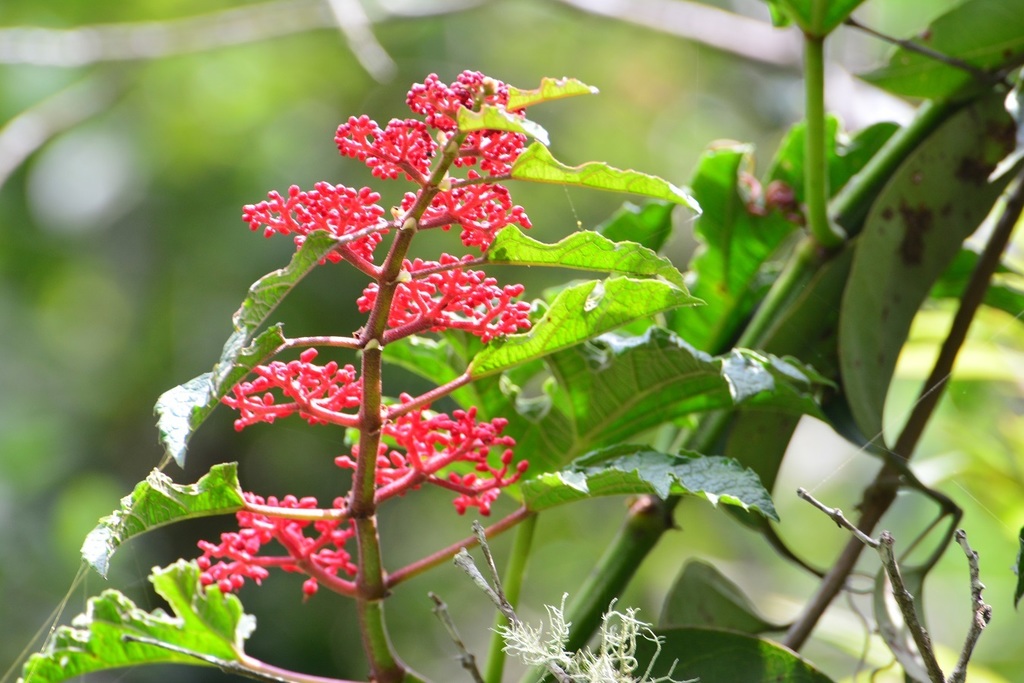
(c) Neptalí Ramírez Marcial, some rights reserved (CC BY), uploaded by Neptalí Ramírez Marcial · licence
Family: Vitaceae · Type: Vine · Not Native
Cissus antarctica (Kangaroo ivy) is a non-native California vine in the Vitaceae family, recognized by Australian genus; very limited naturalization in California represents the genus's only presence in the state.
Kangaroo ivy is a naturalized shrub found in southern California coastal regions, typically growing along roadsides at elevations below 500 meters. Flowering from April to June, this plant produces small white flowers with four petals. Growing with distinctive unbranched tendrils, it develops a sprawling habit with stems that are initially covered in soft hair and become smoother with age. Its leaves are tomentose when young, becoming generally glabrous as the plant matures. The fruit develops as a black berry measuring 8 to 15 millimeters long.
Identification and appearance
Key characters: Australian genus; very limited naturalization in California represents the genus's only presence in the state
Habitat and range
Habitat: Uncommon. Roadsides
Elevation: < 500 m
Outside California: native to Australia, exotic worldwide
Bloom period
Cissus antarctica blooms Apr-Jun.
How to tell it apart
vs Hedera: Cissus has simple unlobed leaves with toothed margins; Hedera has lobed leaves with distinct pointed sections.; vs Parthenocissus: Cissus has simple unlobed leaves; Parthenocissus has compound leaves divided into separate leaflets.; vs Vitis: Cissus has simple smooth-margined leaves without lobes; Vitis has deeply lobed leaves with rounded indentations.
Frequently asked questions
Is Cissus antarctica native to California?
No. Cissus antarctica is not native to California (recorded as not native).
When does Cissus antarctica bloom?
Cissus antarctica blooms Apr-Jun.
What plant family does Cissus antarctica belong to?
Cissus antarctica is in the Vitaceae family, genus Cissus.
What habitat does Cissus antarctica grow in?
Cissus antarctica grows in Uncommon. Roadsides.
Related species
Other California species in the same genus, family, or bioregion.
Sources: Jepson eFlora · CalPhotos
Last updated 2026-10-07
Data from The California Species Project — 14,000+ California species with verified data from CNPS, CDFW, USFWS, Cal-IPC, and more.