Cladium californicum
California sawgrass
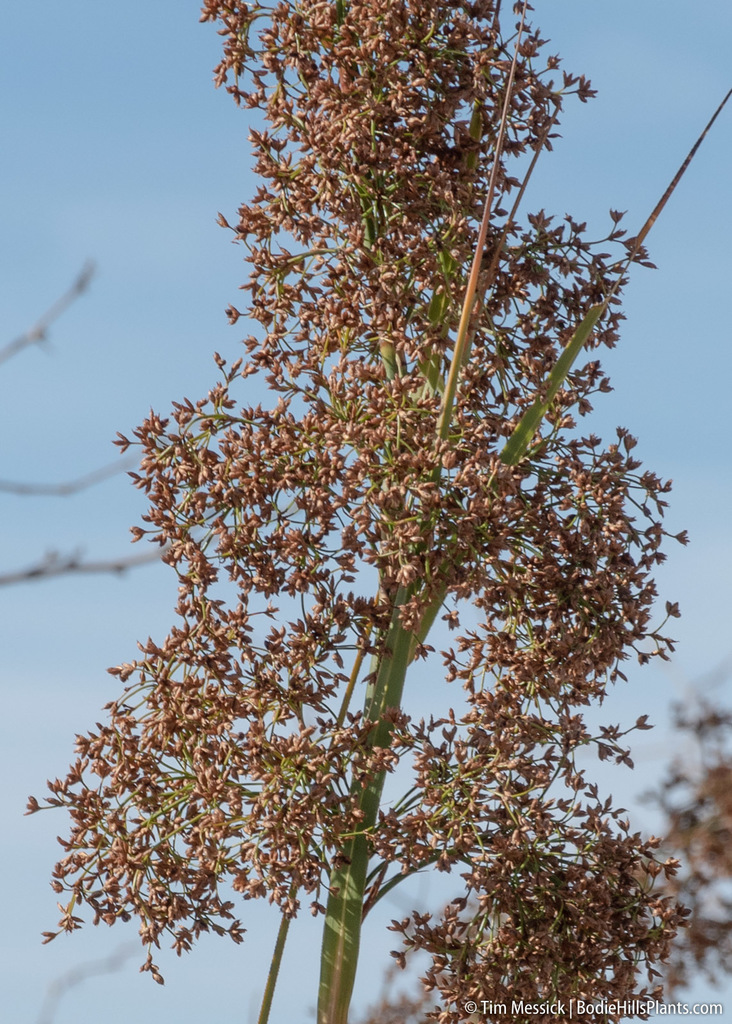
(c) Tim Messick, some rights reserved (CC BY), uploaded by Tim Messick · licence
Family: Cyperaceae · Type: Grass · Native
Conservation status: CNPS 2B.2
Cladium californicum (California sawgrass) is a native California grass in the Cyperaceae family, recognized by Small genus of large sedges; California sawgrass represents the genus's only species reaching California.
California sawgrass is a rare (CNPS 2B.2) California native perennial found in southern California Coast Ranges, southern California, western Transverse Ranges, and desert regions in alkaline marshes and swamps at elevations up to 2,150 meters. Flowering from June to September, this plant produces small brown fruits in dense clusters atop stout stems. Growing up to 2 meters tall with thick stems 5 to 10 millimeters in diameter, it spreads through underground rhizomes less than 20 centimeters long. Its long leaves measure 1 to 2 meters in length, are 5 to 10 millimeters wide, and feature distinctively saw-toothed margins that give the plant its "sawgrass" name. In marshy environments, its robust form creates dense stands that provide critical habitat for wetland ecosystems.
Identification and appearance
Key characters: Small genus of large sedges; California sawgrass represents the genus's only species reaching California
Habitat and range
Habitat: Generally alkaline marshes, swamps
Elevation: 2150 m
California counties: Inyo, San Bernardino, Imperial, Riverside, Santa Barbara, San Luis Obispo
Outside California: to Utah, Arizona, Texas, northern Mexico
Bloom period
Cladium californicum blooms Jun-Sep.
Conservation status
CNPS 2B.2
How to tell it apart
vs Fimbristylis: Cladium is robust with thick stems and cutting leaf edges, Fimbristylis is delicate with harmless leaves.; vs Bulbostylis: Cladium leaves have sharp saw-teeth that cut skin, Bulbostylis leaves are thin and harmless.; vs Bolboschoenus: Cladium has dangerously saw-toothed leaf margins, Bolboschoenus leaves have smooth edges.; vs Scirpus: Cladium is robust with broad cutting leaves, Scirpus is more delicate with narrow harmless leaves.; vs Calliscirpus: Cladium has multiple flower clusters and saw-toothed leaves, Calliscirpus has one tight head and smooth leaves.
Frequently asked questions
Is Cladium californicum native to California?
Yes. Cladium californicum is native to California (recorded as native).
When does Cladium californicum bloom?
Cladium californicum blooms Jun-Sep.
Where in California does Cladium californicum grow?
Cladium californicum occurs in Inyo, San Bernardino, Imperial, Riverside, Santa Barbara, San Luis Obispo, at elevations of 2150 m.
What plant family does Cladium californicum belong to?
Cladium californicum is in the Cyperaceae family, genus Cladium.
Is Cladium californicum rare or endangered?
Cladium californicum carries California Rare Plant Rank 2B.2, state rank S2.
Related species
Other California species in the same genus, family, or bioregion.
Sources: Jepson eFlora · CNPS Rare Plant Inventory · Index of California Plant Names · CalPhotos · CDFW CNDDB
Last updated 2026-10-07
Data from The California Species Project — 14,000+ California species with verified data from CNPS, CDFW, USFWS, Cal-IPC, and more.