Clarkia amoena
Farewell-to-spring
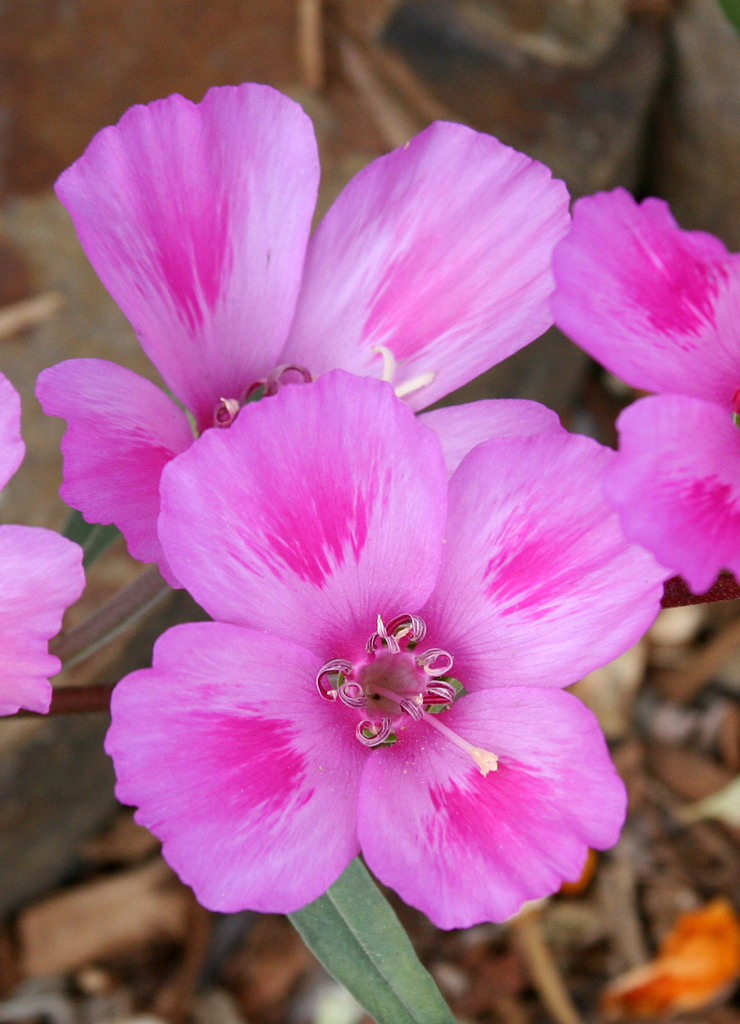
(c) Annie's Annuals & Perennials, some rights reserved (CC BY) · licence
Family: Onagraceae · Type: Herb · Native
Clarkia amoena (Farewell-to-spring) is a native California herb in the Onagraceae family.
Farewell-to-spring is a California native annual wildflower found in coastal and central California habitats, growing in open grasslands and meadows. Flowering from April to June, this delicate plant produces bowl-shaped pink to lavender flowers, occasionally white, with a distinctive red spot near the flower's center. Growing up to one meter tall with decumbent to erect stems that are softly puberulent, it develops slender linear to lanceolate leaves 1 to 6 centimeters long. Its petals are broadly obovate to fan-shaped, creating an elegant and softly colored bloom that characterizes California's spring wildflower displays. The flowers feature eight symmetrical stamens with matching anthers and a stigma that extends beyond the anthers, adding to its delicate botanical structure.
Habitat and range
California counties: Mendocino, Los Angeles, Kern, Marin, San Benito, San Luis Obispo, Sonoma, Humboldt, San Mateo, Lake, Napa, Del Norte, Trinity, Siskiyou, Mariposa, Santa Cruz, Santa Barbara, Monterey, Contra Costa, Alameda
Frequently asked questions
Is Clarkia amoena native to California?
Yes. Clarkia amoena is native to California (recorded as native).
Where in California does Clarkia amoena grow?
Clarkia amoena occurs in Mendocino, Los Angeles, Kern, Marin, San Benito, San Luis Obispo, Sonoma, Humboldt and other counties.
What plant family does Clarkia amoena belong to?
Clarkia amoena is in the Onagraceae family, genus Clarkia.
Related species
Other California species in the same genus, family, or bioregion.
Sources: Jepson eFlora · Index of California Plant Names · CalPhotos
Last updated 2026-10-07
Data from The California Species Project — 14,000+ California species with verified data from CNPS, CDFW, USFWS, Cal-IPC, and more.