Clematis pauciflora
Southern california clematis, few-flowered clematis, Few-Flowered Clematis
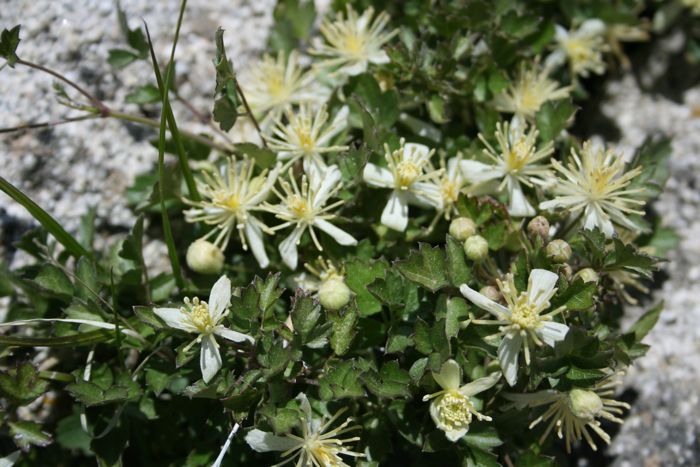
Photo by Chez Brungraber
Family: Ranunculaceae · Type: Vine · Native
Clematis pauciflora (Southern california clematis) is a native California vine in the Ranunculaceae family, recognized by fruit hairiness, geographic restriction, and dry habitat preference.
Southern california clematis is a California native perennial found in southwestern California, particularly in the Little San Bernardino Mountains, in dry chaparral habitats at elevations below 1,300 meters. Flowering from January to June, this plant produces delicate flowers with sepals 7 to 12 millimeters long, creating a subtle botanical display. Growing with slender vines, it develops distinctive leaves with 3 to 5 leaflets that are roughly three-lobed and often toothed. Its leaves feature leaflets measuring 1 to 3.5 centimeters long, with a delicate, intricate structure typical of its genus. The plant produces numerous stamens and pistils, with 30 to 50 stamens surrounding multiple pistils in each flower.
Identification and appearance
Key characters: 2 sympatric species; key features are fruit hairiness, geographic restriction, and dry habitat preference
Habitat and range
Habitat: dry chaparral
Elevation: < 1300 m
California counties: San Diego, Imperial, Los Angeles, Riverside, Orange, San Bernardino, Madera, Calaveras, Ventura, Santa Barbara, Tuolumne
Outside California: Baja California
Bloom period
Clematis pauciflora blooms Jan-Jun.
How to tell it apart
vs Toxicodendron: Clematis has opposite leaves and four showy sepals; Toxicodendron has alternate leaves with three leaflets and tiny greenish flowers.; vs Thalictrum: Clematis is a woody vine with opposite leaves; Thalictrum is an upright herb with alternate compound leaves.; vs Rhus: Clematis is a climbing vine with opposite leaves; Rhus is a shrub with alternate pinnately compound leaves.; vs Baccharis: Clematis has opposite compound leaves and showy white sepals; Baccharis has simple alternate leaves and small fuzzy flower heads.; vs Marah: Clematis has opposite leaves and individual four-sepaled flowers; Marah has alternate palmate leaves, tendrils, and small clustered flowers.
Frequently asked questions
Is Clematis pauciflora native to California?
Yes. Clematis pauciflora is native to California (recorded as native).
When does Clematis pauciflora bloom?
Clematis pauciflora blooms Jan-Jun.
Where in California does Clematis pauciflora grow?
Clematis pauciflora occurs in San Diego, Imperial, Los Angeles, Riverside, Orange, San Bernardino, Madera, Calaveras and other counties, at elevations of < 1300 m.
What plant family does Clematis pauciflora belong to?
Clematis pauciflora is in the Ranunculaceae family, genus Clematis.
What habitat does Clematis pauciflora grow in?
Clematis pauciflora grows in dry chaparral.
Related species
Other California species in the same genus, family, or bioregion.
Sources: Jepson eFlora · Index of California Plant Names · CalPhotos
Last updated 2026-10-07
Data from The California Species Project — 14,000+ California species with verified data from CNPS, CDFW, USFWS, Cal-IPC, and more.