Cleomella oxystyloides
Spiny caper
(c) Tim Messick, some rights reserved (CC BY), uploaded by Tim Messick · licence
Family: Cleomaceae · Type: Herb · Native
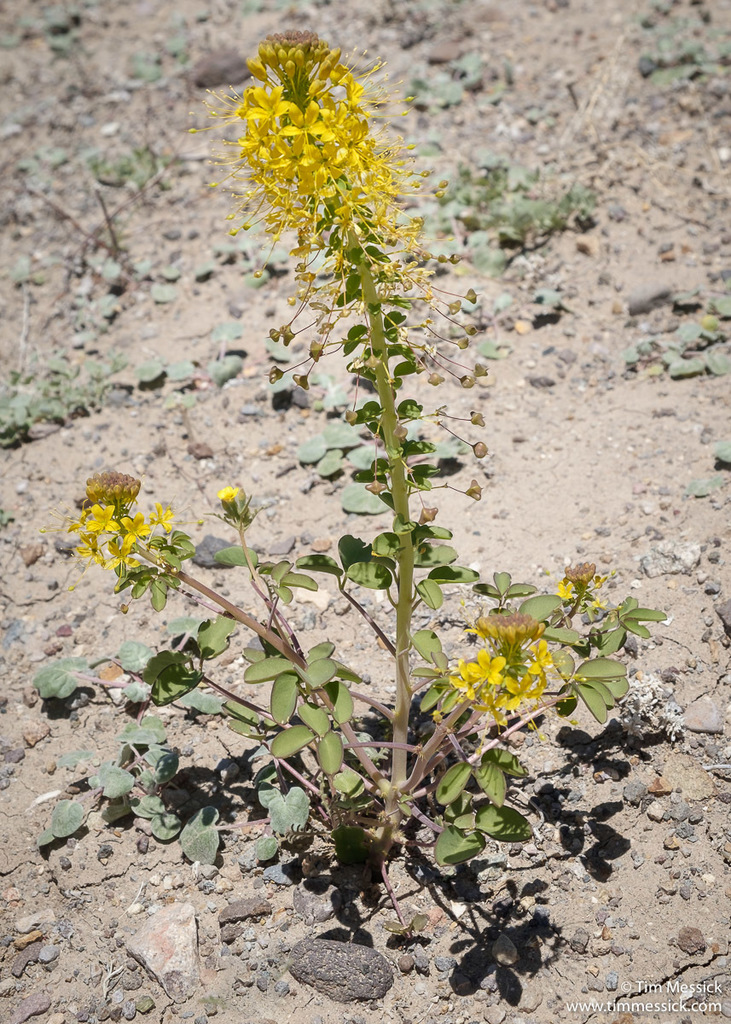
Cleomella oxystyloides (Spiny caper) is a native California herb in the Cleomaceae family, recognized by unique spine-like persistent styles.
Spiny caper is a California native annual found in the northern and eastern Mojave Desert in desert washes, alkaline sink scrub, and alkaline flats at elevations below 945 meters. Flowering from March to October, this plant produces straw-yellow flowers 2 to 3 millimeters long with delicate petals in small spherical clusters. Growing 50 to 150 centimeters tall with branches emerging from the base, it develops a robust structure with thick, firm leaflets arranged in groups of three. Its leaves feature elliptic leaflets 2 to 6 centimeters long, with a petiole extending 2.5 to 7 centimeters. The fruit consists of two distinctive nutlets, each 2.5 millimeters long, ranging from white to deep purple in color, topped with a stout, spine-like style 4 to 11 millimeters long.
Identification and appearance
Key characters: Geographically isolated; unique spine-like persistent styles
Habitat and range
Habitat: Desert wash, alkaline sink scrub, alkaline flats, in sandy or alkaline soil
Elevation: < 945 m
California counties: San Bernardino, Inyo
Outside California: western Nevada (Amargosa Desert)
Bloom period
Cleomella oxystyloides blooms Mar-Oct.
How to tell it apart
vs Physaria: Physaria has inflated bladder-like pods and 4 petals; Cleomella has small flat round capsules and variable petals.; vs Astragalus: Astragalus has compound leaves and pea-shaped flowers; Cleomella has palmately divided leaves and regular flowers.; vs Sesbania: Sesbania has pinnately compound leaves and large pea flowers; Cleomella has palmate leaves and small regular flowers.; vs Atriplex: Atriplex has tiny greenish flowers and simple leaves; Cleomella has showy flowers and palmately divided leaves.; vs Isocoma: Isocoma has yellow composite flower heads; Cleomella has individual flowers with separate petals and prominent stamens.
Frequently asked questions
Is Cleomella oxystyloides native to California?
Yes. Cleomella oxystyloides is native to California (recorded as native).
When does Cleomella oxystyloides bloom?
Cleomella oxystyloides blooms Mar-Oct.
Where in California does Cleomella oxystyloides grow?
Cleomella oxystyloides occurs in San Bernardino, Inyo, at elevations of < 945 m.
What plant family does Cleomella oxystyloides belong to?
Cleomella oxystyloides is in the Cleomaceae family, genus Cleomella.
What habitat does Cleomella oxystyloides grow in?
Cleomella oxystyloides grows in Desert wash, alkaline sink scrub, alkaline flats, in sandy or alkaline soil.
Related species
Other California species in the same genus, family, or bioregion.
Sources: Jepson eFlora · Index of California Plant Names · CalPhotos
Last updated 2026-10-07
Data from The California Species Project — 14,000+ California species with verified data from CNPS, CDFW, USFWS, Cal-IPC, and more.