Cleomella serrulata
Rocky mountain bee plant, Rocky Mountain Bee Plant
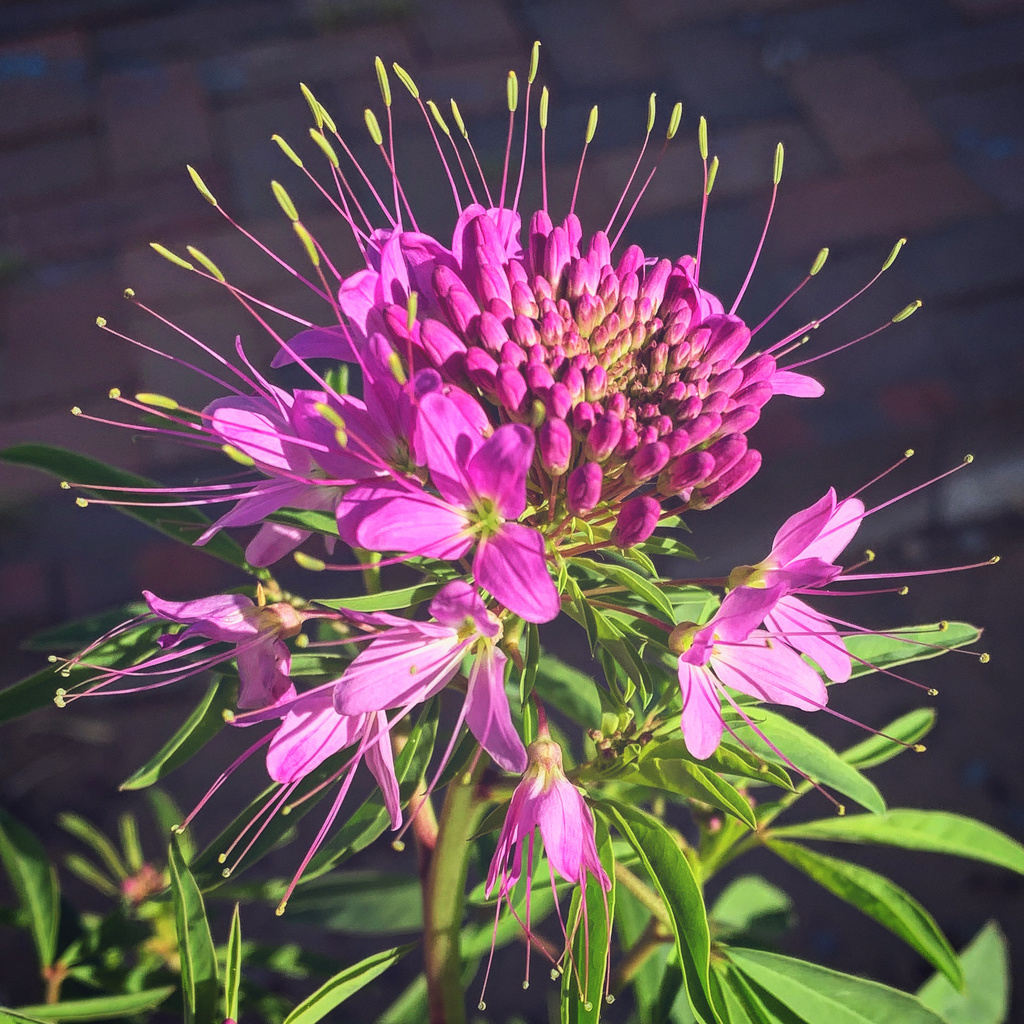
no rights reserved · CC0
Family: Cleomaceae · Type: Herb · Not Native
Cleomella serrulata (Rocky mountain bee plant) is a non-native California herb in the Cleomaceae family, recognized by unique purple flowers distinguish from yellow-flowered natives.
Rocky mountain bee plant is a naturalized annual herb found in northern Sierra Nevada, San Joaquin Valley, Central Coast, Southern California, San Gabriel Mountains, Peninsular Ranges, and Great Basin at elevations of 305 to 1,700 meters in roadsides and disturbed areas. Flowering from May to July, this plant produces purple to white flowers 7 to 12 millimeters long with distinctive bilateral arrangement. Growing 3 to 8 decimeters tall with openly branched stems, the plant has a relatively open and airy structure. Its leaves consist of three elliptic leaflets 2 to 6 centimeters long, arranged with an open, delicate form. The fruit develops as a linear capsule 30 to 55 millimeters long, nearly round in cross-section, which persists after flowering.
Identification and appearance
Key characters: 12 sympatric species; unique purple flowers distinguish from yellow-flowered natives
Habitat and range
Habitat: Roadsides, disturbed areas
Elevation: 305-1700 m
California counties: Modoc, El Dorado, Inyo, Mono, San Bernardino, San Mateo, Siskiyou, Kings
Outside California: southern British Columbia, Great Plains
Bloom period
Cleomella serrulata blooms May-Jul.
How to tell it apart
vs Physaria: Physaria has inflated bladder-like pods and 4 petals; Cleomella has small flat round capsules and variable petals.; vs Astragalus: Astragalus has compound leaves and pea-shaped flowers; Cleomella has palmately divided leaves and regular flowers.; vs Sesbania: Sesbania has pinnately compound leaves and large pea flowers; Cleomella has palmate leaves and small regular flowers.; vs Atriplex: Atriplex has tiny greenish flowers and simple leaves; Cleomella has showy flowers and palmately divided leaves.; vs Isocoma: Isocoma has yellow composite flower heads; Cleomella has individual flowers with separate petals and prominent stamens.
Frequently asked questions
Is Cleomella serrulata native to California?
No. Cleomella serrulata is not native to California (recorded as not native).
When does Cleomella serrulata bloom?
Cleomella serrulata blooms May-Jul.
Where in California does Cleomella serrulata grow?
Cleomella serrulata occurs in Modoc, El Dorado, Inyo, Mono, San Bernardino, San Mateo, Siskiyou, Kings, at elevations of 305-1700 m.
What plant family does Cleomella serrulata belong to?
Cleomella serrulata is in the Cleomaceae family, genus Cleomella.
What habitat does Cleomella serrulata grow in?
Cleomella serrulata grows in Roadsides, disturbed areas.
Related species
Other California species in the same genus, family, or bioregion.
Sources: Jepson eFlora · Index of California Plant Names · CalPhotos
Last updated 2026-10-07
Data from The California Species Project — 14,000+ California species with verified data from CNPS, CDFW, USFWS, Cal-IPC, and more.