Cneoridium dumosum
Bushrue
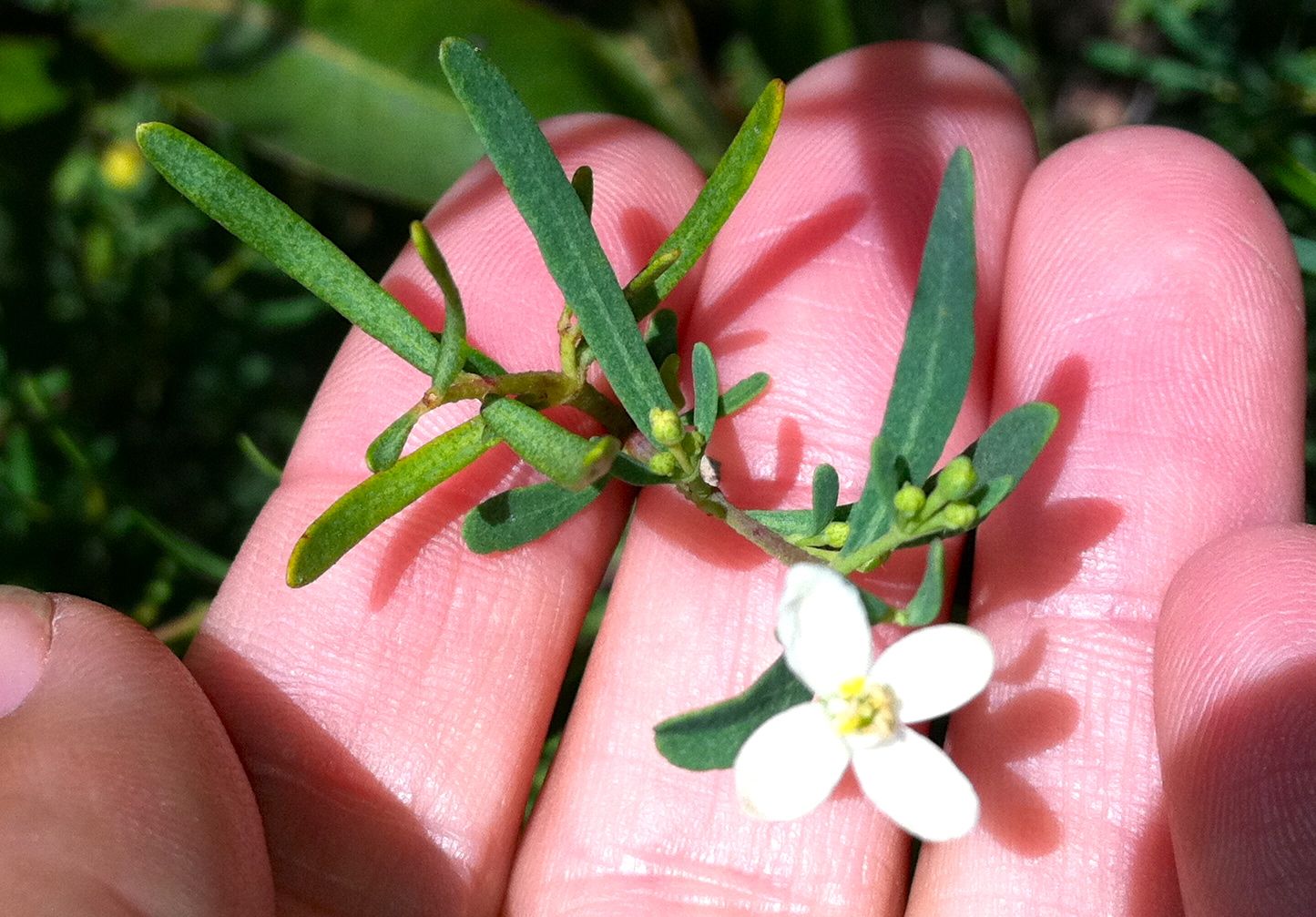
Photo by Chez Brungraber
Family: Rutaceae · Type: Shrub · Native
Cneoridium dumosum (Bushrue) is a native California shrub in the Rutaceae family, recognized by Endemic genus to Baja California region; bushrue represents the genus's only species and its northernmost extent.
Bushrue is a California native shrub found in southern California Coast, San Clemente Island, and the Peninsular Ranges in coastal bluff and mesa habitats at elevations below 1,000 meters. Flowering from February to May, this plant produces delicate white flowers in small clusters with 1 to 3 blooms, each petal approximately 5 to 6 millimeters long. Growing as an evergreen shrub generally less than 1.5 meters tall, it has an intricately branched, rounded form with dense compact growth. Its simple, opposite leaves are narrow and linear, measuring 1 to 2.5 centimeters in length, contributing to its dense and compact appearance. The fruit develops as a gland-dotted drupe approximately 5 to 6 millimeters in diameter, initially green and turning reddish with age.
Identification and appearance
Key characters: Endemic genus to Baja California region; bushrue represents the genus's only species and its northernmost extent
Habitat and range
Habitat: Mesas, coastal bluffs
Elevation: < 1000 m
California counties: San Diego, Orange, Stanislaus, Alpine
Outside California: Baja California
Bloom period
Cneoridium dumosum blooms Feb-May.
How to tell it apart
vs Tetracoccus: Cneoridium has opposite simple leaves and berry fruits; Tetracoccus has alternate leaves and dry capsules that split into four parts.; vs Lycium: Cneoridium has opposite leaves and citrus-scented foliage; Lycium has alternate leaves, often spiny stems, and no citrus scent.; vs Eriogonum: Cneoridium has opposite simple leaves and berry fruits; Eriogonum has alternate/basal leaves and small clustered flowers with papery bracts.; vs Xylococcus: Cneoridium has opposite leaves and berry-like fruits; Xylococcus has alternate leaves and urn-shaped flowers.; vs Lindera: Cneoridium has opposite leaves; Lindera has alternate leaves and produces drupes on bare branches before leaves emerge.
Frequently asked questions
Is Cneoridium dumosum native to California?
Yes. Cneoridium dumosum is native to California (recorded as native).
When does Cneoridium dumosum bloom?
Cneoridium dumosum blooms Feb-May.
Where in California does Cneoridium dumosum grow?
Cneoridium dumosum occurs in San Diego, Orange, Stanislaus, Alpine, at elevations of < 1000 m.
What plant family does Cneoridium dumosum belong to?
Cneoridium dumosum is in the Rutaceae family, genus Cneoridium.
What habitat does Cneoridium dumosum grow in?
Cneoridium dumosum grows in Mesas, coastal bluffs.
Related species
Other California species in the same genus, family, or bioregion.
Sources: Jepson eFlora · Index of California Plant Names · CalPhotos
Last updated 2026-10-07
Data from The California Species Project — 14,000+ California species with verified data from CNPS, CDFW, USFWS, Cal-IPC, and more.