Coincya monensis subsp. recurvata
Star mustard, Star Mustard
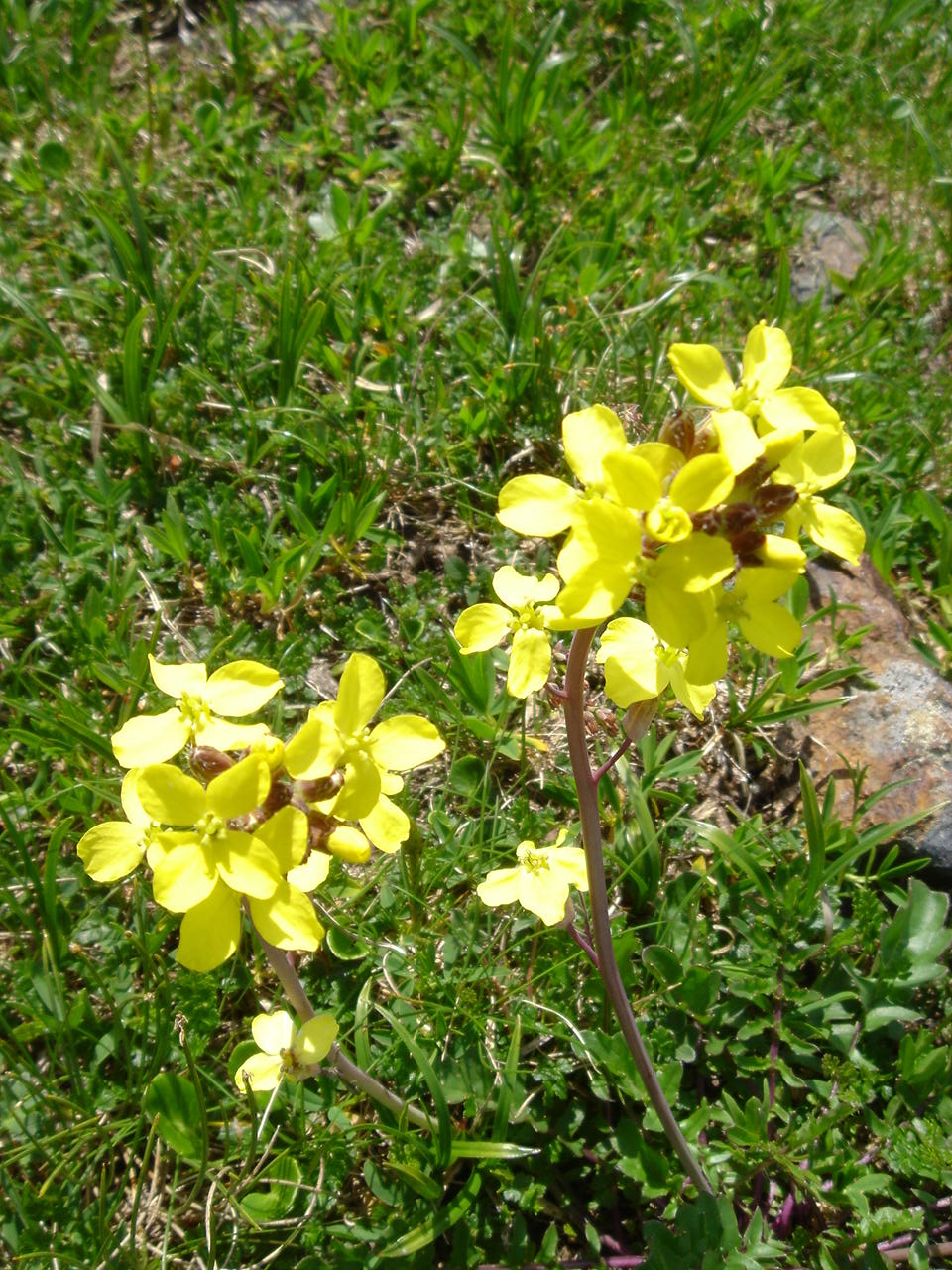
Ghislain118 http://www.fleurs-des-montagnes.net (via Wikimedia Commons) · CC BY-SA
Family: Brassicaceae · Type: Herb · Not Native
Coincya monensis subsp. recurvata (Star mustard) is a non-native California herb in the Brassicaceae family, recognized by European genus with very limited naturalization; this subspecies represents the genus's only established population in California.
Star mustard is a naturalized annual found in northern California coastal areas including Manila and Humboldt County in sandy, disturbed areas at an elevation of 6 meters. Flowering from May to August, this plant produces white to yellow flowers 1.3 to 2.2 centimeters long with narrow petals. Growing with erect to ascending hairy stems 10 to 100 centimeters tall, it can be simple or branched. Its leaves are pinnately lobed with 3 to 9 lobe pairs, basal leaves long-petioled and up to 20 centimeters long, with progressively smaller cauline leaves. The fruit develops as a spreading pod 3 to 9 centimeters long with 20 to 75 small, nearly spherical seeds in its lower segment.
Identification and appearance
Key characters: European genus with very limited naturalization; this subspecies represents the genus's only established population in California
Habitat and range
Habitat: Sandy, disturbed areas
Elevation: 6 m
Outside California: eastern United States, native to Europe, northern Africa
Bloom period
Coincya monensis subsp. recurvata blooms May-Aug.
How to tell it apart
vs Eruca: Coincya's pod beak contains 1-6 seeds; arugula's beak is always empty.; vs Raphanus: Coincya pods are thin and split open; radish pods are thick, corky, and never split.; vs Hesperidanthus: Coincya is annual; Hesperidanthus forms woody perennial base.; vs Sinapis: Coincya has erect green sepals; Sinapis has spreading sepals.; vs Erucastrum: Coincya pods have 3 veins and 40-150 seeds; Erucastrum pods have 1 vein and fewer seeds.
Frequently asked questions
Is Coincya monensis subsp. recurvata native to California?
No. Coincya monensis subsp. recurvata is not native to California (recorded as not native).
When does Coincya monensis subsp. recurvata bloom?
Coincya monensis subsp. recurvata blooms May-Aug.
What plant family does Coincya monensis subsp. recurvata belong to?
Coincya monensis subsp. recurvata is in the Brassicaceae family, genus Coincya.
What habitat does Coincya monensis subsp. recurvata grow in?
Coincya monensis subsp. recurvata grows in Sandy, disturbed areas.
Related species
Other California species in the same genus, family, or bioregion.
Sources: Jepson eFlora · CalPhotos
Last updated 2026-10-07
Data from The California Species Project — 14,000+ California species with verified data from CNPS, CDFW, USFWS, Cal-IPC, and more.