Collomia grandiflora
Large-flowered collomia, Large-Flowered Collomia
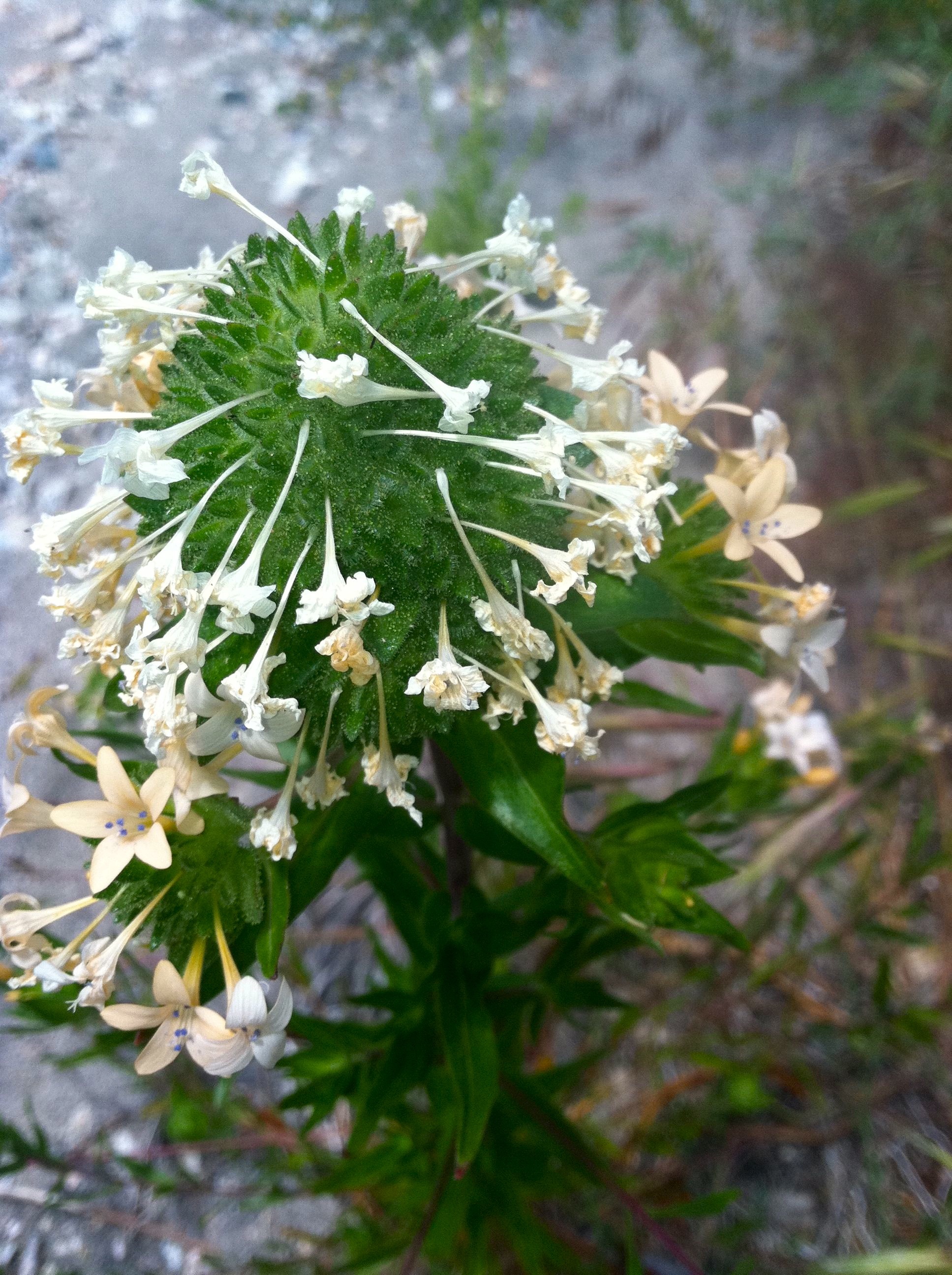
Photo by Chez Brungraber
Family: Polemoniaceae · Type: Herb · Native
Collomia grandiflora (Large-flowered collomia) is a native California herb in the Polemoniaceae family, recognized by distinctive large yellow-orange flowers and blue pollen.
Large-flowered collomia is a California native annual found in the California Floristic Province and Great Basin in open areas at elevations of 120 to 3,050 meters. Flowering from April to June, this plant produces yellow to orange flowers that fade to white, with blooms 15 to 30 millimeters long. Growing with erect stems 15 to 45 centimeters tall, the plant has distinctive internodes with reflexed short white hairs, and becomes branched in robust specimens. Its leaves range from basal lanceolate forms with occasional teeth to cauline leaves that are lanceolate to linear, with lower leaves glabrous and upper leaves developing glandular features with age. The plant's unique characteristics include blue pollen and flowers that can be dramatically different in size, with some cleistogamous flowers measuring less than 5 millimeters long.
Identification and appearance
Key characters: 8 sympatric species; distinctive large yellow-orange flowers and blue pollen
Habitat and range
Habitat: Open areas
Elevation: 120-3050 m
California counties: Fresno, San Diego, Riverside, San Bernardino, Los Angeles, Ventura, Kern, Tulare, Santa Cruz, Calaveras, Lassen, Modoc, Siskiyou, Lake, Trinity, Tuolumne, Mendocino, Plumas, Shasta, Monterey, Placer, Humboldt, Butte, Mono, Amador, El Dorado, Madera, Tehama, Santa Barbara, Nevada, Mariposa, Sonoma, Santa Clara, Inyo, Sierra, San Francisco, Alpine, Glenn, Del Norte, Alameda, Marin, San Benito
Outside California: to British Columbia, Idaho, Colorado, Arizona, naturalized in Europe
Bloom period
Collomia grandiflora blooms Apr-Jun.
How to tell it apart
vs Gilia: Collomia has entire lanceolate leaves and flowers in leafy-bracted terminal heads; Gilia has pinnately lobed or dissected basal leaves and more open inflorescences.; vs Navarretia: Collomia has soft, entire leaves and unarmed bracts; Navarretia (pincushion) has spine-tipped, often pinnately spiny bracts and prickly heads.; vs Allophyllum: Collomia leaves are entire and herbage is not skunky; Allophyllum has lobed to pinnatifid leaves and a skunk-like odor with glandular herbage.; vs Leptosiphon: Collomia has undivided lanceolate leaves; Leptosiphon and Linanthus have palmately dissected, needle-like, finger-whorled leaf lobes.; vs Microsteris: Collomia has funnel-shaped flowers in leafy terminal clusters; Microsteris is a tiny annual with small pink-and-yellow salverform flowers in the leaf axils.
Frequently asked questions
Is Collomia grandiflora native to California?
Yes. Collomia grandiflora is native to California (recorded as native).
When does Collomia grandiflora bloom?
Collomia grandiflora blooms Apr-Jun.
Where in California does Collomia grandiflora grow?
Collomia grandiflora occurs in Fresno, San Diego, Riverside, San Bernardino, Los Angeles, Ventura, Kern, Tulare and other counties, at elevations of 120-3050 m.
What plant family does Collomia grandiflora belong to?
Collomia grandiflora is in the Polemoniaceae family, genus Collomia.
What habitat does Collomia grandiflora grow in?
Collomia grandiflora grows in Open areas.
Related species
Other California species in the same genus, family, or bioregion.
Sources: Jepson eFlora · Index of California Plant Names · CalPhotos
Last updated 2026-10-07
Data from The California Species Project — 14,000+ California species with verified data from CNPS, CDFW, USFWS, Cal-IPC, and more.