Comarostaphylis diversifolia subsp. planifolia
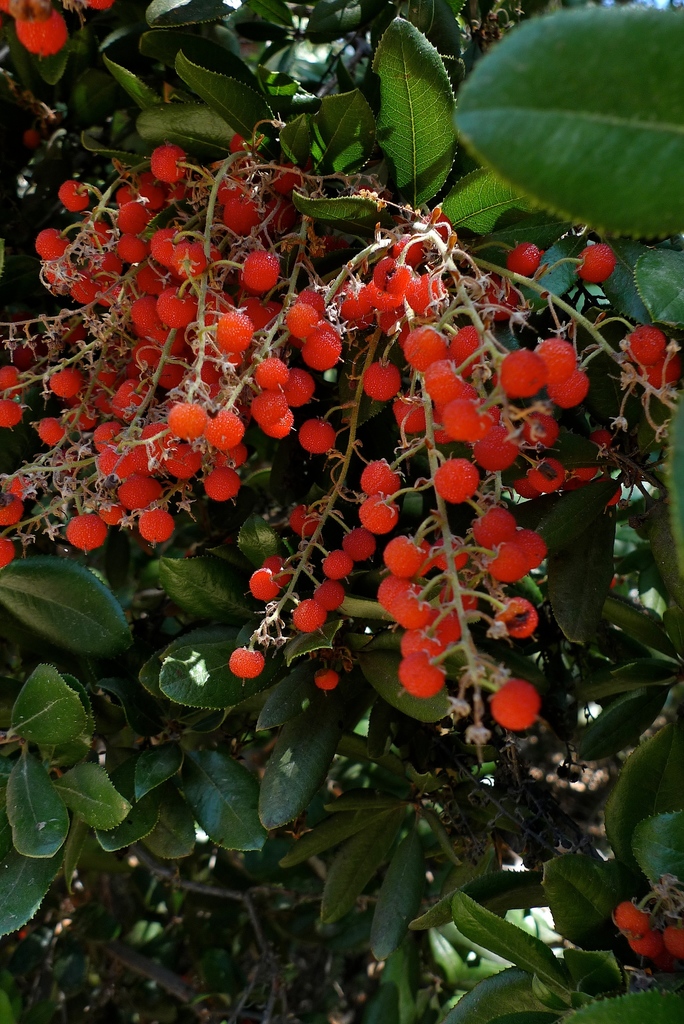
(c) Cliff Hutson, some rights reserved (CC BY) · licence
Family: Ericaceae · Type: Shrub / Tree · Native
Comarostaphylis diversifolia subsp. planifolia is a native California shrub / tree in the Ericaceae family, recognized by differentiated by inflorescence length and island/WTR distribution.
San Miguel Island serviceberry is a California native shrub found in the Channel Islands, including Santa Rosa, Santa Cruz, and Santa Catalina, and western Transverse Ranges in chaparral at elevations of 100 to 600 meters. Flowering from March to May, this plant produces white flowers in clusters 6 to 14 centimeters long. Growing as a dense, spreading shrub with multiple stems, it forms compact thickets in its rugged island habitats. Its leathery, evergreen leaves are arranged alternately, varying in shape and size across the plant's growth. The fruit is a small, fleshy drupe typical of its serviceberry relatives.
Identification and appearance
Key characters: 1 sympatric species; differentiated by inflorescence length and island/WTR distribution
Habitat and range
Habitat: Uncommon. Chaparral
Elevation: 100-600 m
California counties: Los Angeles, Santa Barbara, San Diego, Ventura, Yolo, Alameda, Santa Cruz, Orange
Bloom period
Comarostaphylis diversifolia subsp. planifolia blooms Mar-May.
How to tell it apart
vs Arbutus: Comarostaphylis is a shrub with single-stoned drupes; Arbutus is a tree with multi-seeded berries.; vs Heteromeles: Comarostaphylis has urn-shaped flowers and smooth drupes; Heteromeles has flat flower clusters and pome fruits.; vs Xylococcus: Comarostaphylis fruits are juicy drupes; Xylococcus fruits are completely dry.; vs Pittosporum: Comarostaphylis has urn-shaped flowers; Pittosporum has tubular flowers with spreading petals.; vs Arctostaphylos: Comarostaphylis fruits are juicy single-stoned drupes; Arctostaphylos fruits are dry and mealy.
Frequently asked questions
Is Comarostaphylis diversifolia subsp. planifolia native to California?
Yes. Comarostaphylis diversifolia subsp. planifolia is native to California (recorded as native).
When does Comarostaphylis diversifolia subsp. planifolia bloom?
Comarostaphylis diversifolia subsp. planifolia blooms Mar-May.
Where in California does Comarostaphylis diversifolia subsp. planifolia grow?
Comarostaphylis diversifolia subsp. planifolia occurs in Los Angeles, Santa Barbara, San Diego, Ventura, Yolo, Alameda, Santa Cruz, Orange, at elevations of 100-600 m.
What plant family does Comarostaphylis diversifolia subsp. planifolia belong to?
Comarostaphylis diversifolia subsp. planifolia is in the Ericaceae family, genus Comarostaphylis.
What habitat does Comarostaphylis diversifolia subsp. planifolia grow in?
Comarostaphylis diversifolia subsp. planifolia grows in Uncommon. Chaparral.
Related species
Other California species in the same genus, family, or bioregion.
Sources: Jepson eFlora · Index of California Plant Names · CalPhotos
Last updated 2026-10-07
Data from The California Species Project — 14,000+ California species with verified data from CNPS, CDFW, USFWS, Cal-IPC, and more.