Comarum palustre
Marsh cinquefoil, Marsh Cinquefoil
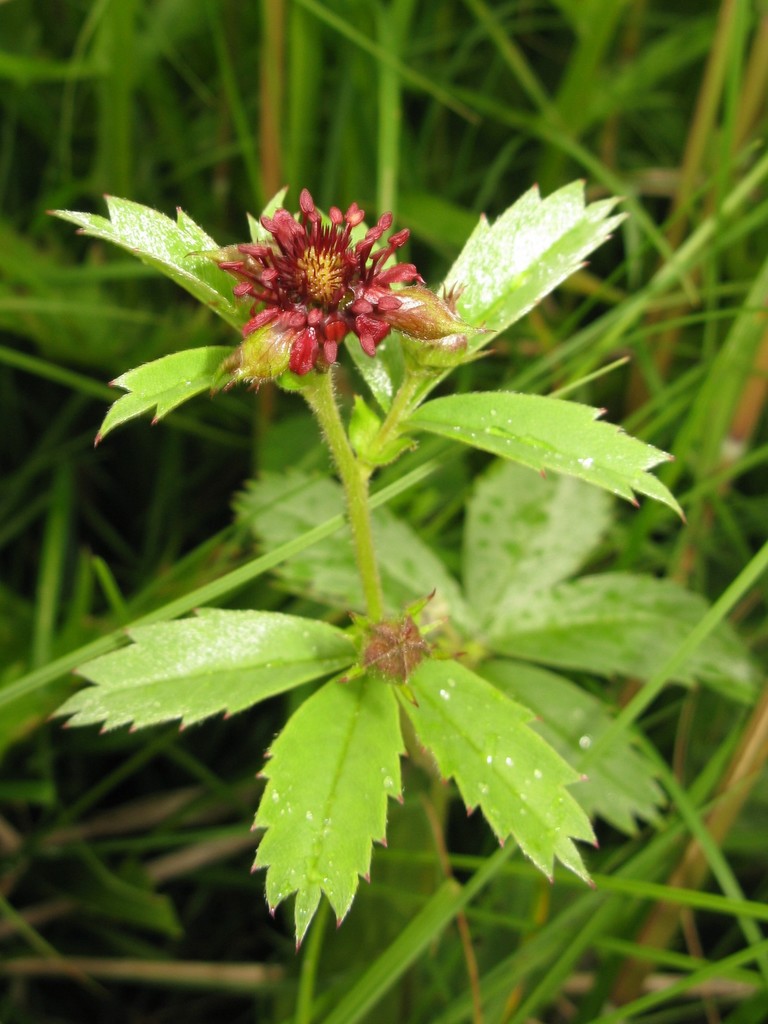
(c) Qwert1234, some rights reserved (CC BY-SA) · licence
Family: Rosaceae · Type: Herb · Native
Comarum palustre (Marsh cinquefoil) is a native California herb in the Rosaceae family, recognized by Only representative of Comarum in California, a genus recently segregated from Potentilla based on molecular studies.
Marsh cinquefoil is a native perennial found in northern coastal California, northern California high country, northern Sierra Nevada, Sacramento Valley, and Warner Mountains in bogs and marshes at elevations up to 2,400 meters. Flowering from May to August, this plant produces dark red flowers small and delicate, approximately 2 to 6 millimeters long. Growing with erect to ascending stems 20 to 50 centimeters tall that are creeping and often floating or rooting at nodes, it forms an openly matted habit. Its compound leaves have 4 to 6 total leaflets, each 15 to 70 millimeters long, oblanceolate-elliptic with toothed edges, primarily glabrous to sparsely hairy. The fruit develops as tiny, glossy brown achenes that sometimes remain attached to a spongy receptacle.
Identification and appearance
Key characters: Only representative of Comarum in California, a genus recently segregated from Potentilla based on molecular studies
Habitat and range
Habitat: Bogs, marshes
Elevation: < 2400 m
California counties: Humboldt, Modoc, Sierra, Alpine, Del Norte, Mendocino, Nevada, Shasta, El Dorado, Plumas, Lassen, Sacramento
Outside California: circumboreal
Bloom period
Comarum palustre blooms May-Aug.
How to tell it apart
vs Drymocallis: Comarum has dark red petals smaller than sepals in wetlands; Drymocallis has yellow-white petals in drier sites.; vs Potentilla: Comarum has dark red petals and strictly wetland habitat; Potentilla has yellow-white petals in varied habitats.; vs Ivesia: Comarum has normal flat leaves and dark red flowers; Ivesia has cylindrical bottlebrush leaves.; vs Horkelia: Comarum has dark red petals smaller than sepals; Horkelia has white-pink petals larger than sepals.; vs Horkeliella: Comarum has dark red petals and simple leaves; Horkeliella has white petals and extremely fine leaflets.
Frequently asked questions
Is Comarum palustre native to California?
Yes. Comarum palustre is native to California (recorded as native).
When does Comarum palustre bloom?
Comarum palustre blooms May-Aug.
Where in California does Comarum palustre grow?
Comarum palustre occurs in Humboldt, Modoc, Sierra, Alpine, Del Norte, Mendocino, Nevada, Shasta and other counties, at elevations of < 2400 m.
What plant family does Comarum palustre belong to?
Comarum palustre is in the Rosaceae family, genus Comarum.
What habitat does Comarum palustre grow in?
Comarum palustre grows in Bogs, marshes.
Related species
Other California species in the same genus, family, or bioregion.
Sources: Jepson eFlora · Index of California Plant Names · CalPhotos
Last updated 2026-10-07
Data from The California Species Project — 14,000+ California species with verified data from CNPS, CDFW, USFWS, Cal-IPC, and more.