Condea emoryi
Desert lavender, Desert Lavender
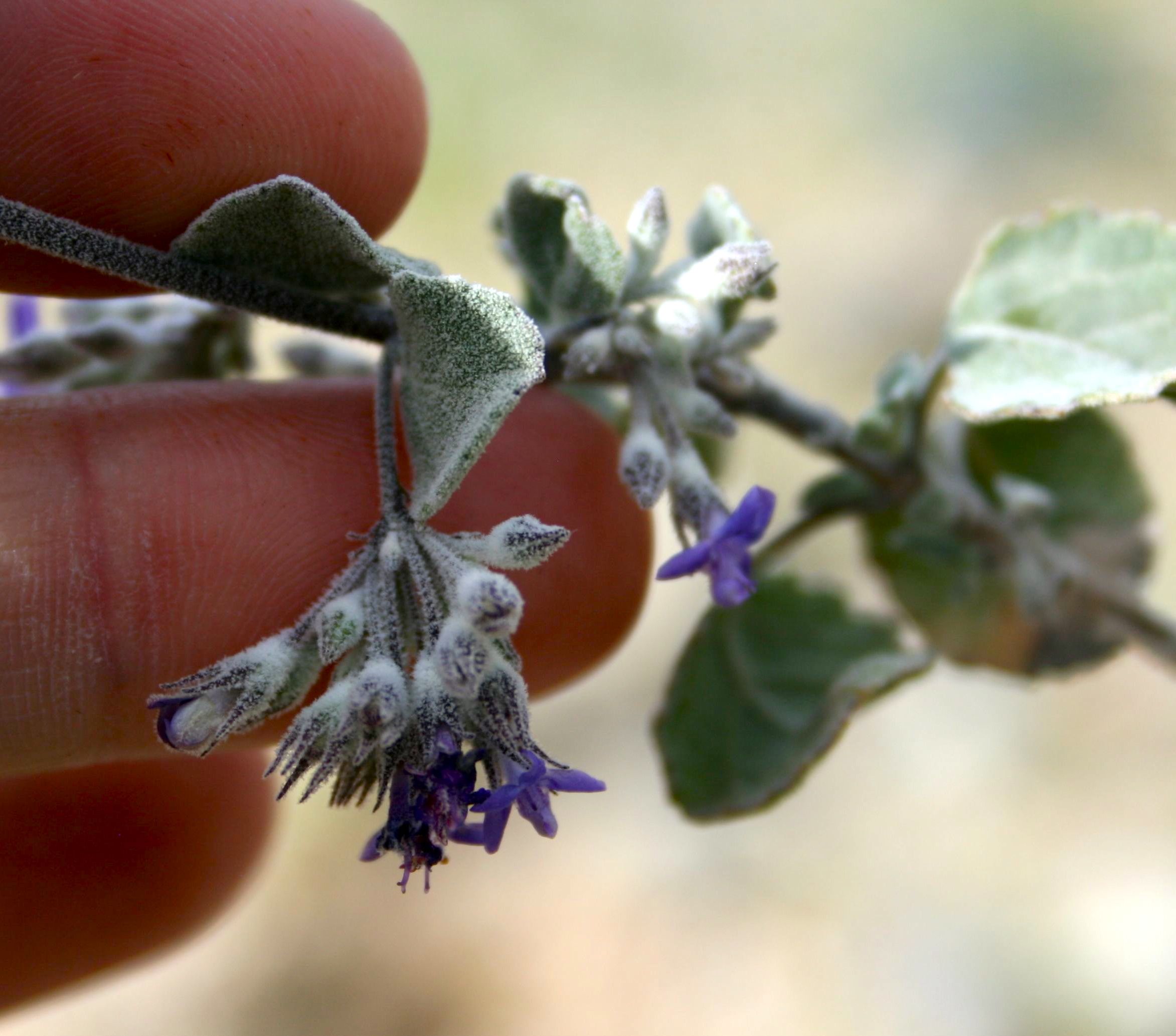
Photo by Chez Brungraber
Family: Lamiaceae · Type: Shrub · Native
Condea emoryi (Desert lavender) is a native California shrub in the Lamiaceae family, recognized by Only Condea species in California, recently segregated from Hyptis based on molecular studies.
Desert lavender is a California native shrub found in southern Desert Mountains and Desert Sonoran regions in gravelly, sandy washes, canyons, and desert scrub at elevations below 1,000 meters. Flowering from January to May, this plant produces violet flowers in loose clusters with small bracts, creating delicate spheric inflorescences. Growing 1 to 4 meters tall with erect to spreading branches covered in dense, branched white hairs that become smoother with age. Its leaves are small, generally 1 to 3 centimeters long, ovate to nearly round with slightly toothed edges and short petioles. The plant's dense white hairiness and compact form make it a distinctive component of its arid desert habitat.
Identification and appearance
Key characters: Only Condea species in California, recently segregated from Hyptis based on molecular studies
Habitat and range
Habitat: Gravelly, sandy washes, canyons, desert scrub
Elevation: < 1000 m
California counties: Imperial, Riverside, San Bernardino, San Diego
Outside California: Arizona, northwestern Mexico
Bloom period
Condea emoryi blooms Jan-May.
How to tell it apart
vs Salvia: Condea has 4 fertile stamens and flowers in loose spherical clusters; Salvia (sage) has only 2 stamens on a distinctive lever-arm connective.; vs Monardella: Condea is a tall (1-4 m) open, gray-tomentose shrub with small loose flower clusters; Monardella is a low subshrub with flowers in a single dense terminal head subtended by bracts.; vs Poliomintha: Condea has ovate, crenate leaves on a tall open shrub; Poliomintha is a lower, rounded shrub with narrow, mostly entire leaves.; vs Lepechinia: Condea has small (1-3 cm) crenate leaves and tiny 4-5 mm flowers; Lepechinia (pitcher sage) has large leaves and large, inflated calyces with showy flowers.; vs Trichostema: Condea has round-crenate leaves and short-exserted stamens in loose spherical clusters; Trichostema (bluecurls) has narrow entire leaves and very long, arching, exserted stamens.
Frequently asked questions
Is Condea emoryi native to California?
Yes. Condea emoryi is native to California (recorded as native).
When does Condea emoryi bloom?
Condea emoryi blooms Jan-May.
Where in California does Condea emoryi grow?
Condea emoryi occurs in Imperial, Riverside, San Bernardino, San Diego, at elevations of < 1000 m.
What plant family does Condea emoryi belong to?
Condea emoryi is in the Lamiaceae family, genus Condea.
What habitat does Condea emoryi grow in?
Condea emoryi grows in Gravelly, sandy washes, canyons, desert scrub.
Related species
Other California species in the same genus, family, or bioregion.
Sources: Jepson eFlora · Index of California Plant Names · CalPhotos
Last updated 2026-10-07
Data from The California Species Project — 14,000+ California species with verified data from CNPS, CDFW, USFWS, Cal-IPC, and more.