Convolvulus arvensis
Bindweed, orchard morning-glory, Orchard Morning-Glory
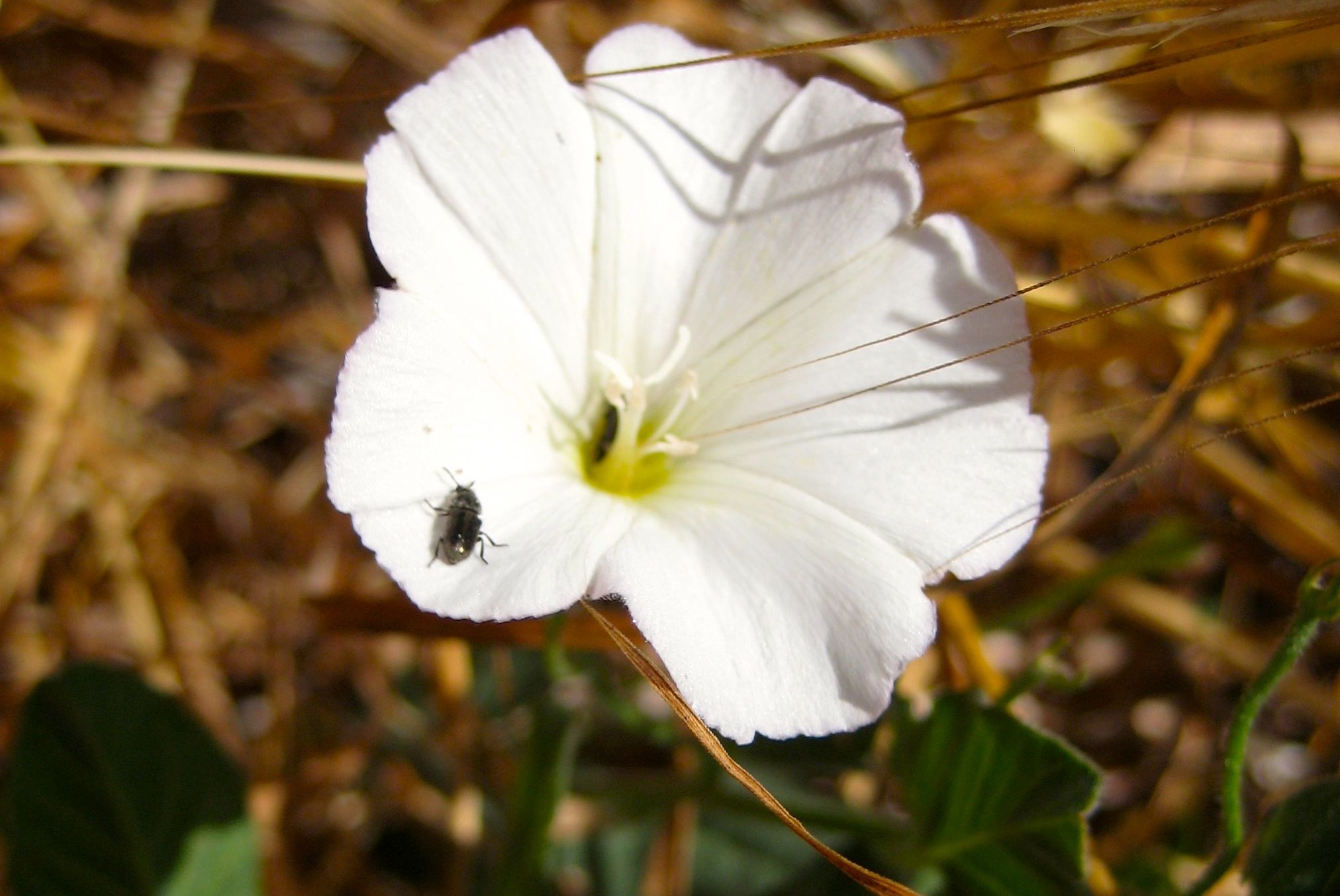
Photo by Chez Brungraber
Family: Convolvulaceae · Type: Vine · Not Native
Convolvulus arvensis (Bindweed) is a non-native California vine in the Convolvulaceae family, recognized by arrowhead leaves and white funnel flowers.
Bindweed is a naturalized perennial herb found in roadsides and open areas across California, occurring in Great Basin and desert regions at elevations up to 2,610 meters. Flowering from March to October, this plant produces white flowers with a hint of pink, funnel-shaped and approximately 2 to 2.5 centimeters long. Growing with prostrate, tufted, or twining stems, it spreads extensively through a deep and persistent root system. Its leaves are distinctive, typically 2 to 3 centimeters long with a hastate shape and rounded tips. The plant forms dense, sprawling patches with slender stems that can climb or spread across the ground.
Identification and appearance
Key characters: 3 sympatric species; key features are arrowhead leaves and white funnel flowers
Habitat and range
Habitat: Roadsides, open areas in many plant communities
Elevation: < 2610 m
California counties: Los Angeles, Ventura, Riverside, Merced, Mariposa, San Bernardino, Fresno, Orange, Mendocino, Butte, Santa Barbara, Kern, Imperial, Alameda, San Francisco, Santa Clara, Inyo, San Luis Obispo, Monterey, Sonoma, San Diego, Santa Cruz, Sutter, Lake, Yolo, Siskiyou, Tulare, Colusa, El Dorado, Humboldt, Tuolumne, San Mateo, Nevada, Mono, Calaveras, Alpine, Sacramento, Yuba, Placer, Kings, Glenn, Amador, San Joaquin, Modoc, Marin, Solano, Madera, Lassen, Contra Costa, Tehama, Shasta, Plumas, Sierra, Napa, Stanislaus, Trinity, San Benito
Outside California: native to Europe
Bloom period
Convolvulus arvensis blooms Mar-Oct.
How to tell it apart
vs Calystegia: Calystegia has larger flowers and blunt, paddle-shaped stigma lobes; Convolvulus has pointed stigma lobes.; vs Ipomoea: Ipomoea stigma is a single rounded knob; Convolvulus stigma splits into two pointed lobes.; vs Oenothera: Oenothera has four separate petals and cross-shaped stigma; Convolvulus has fused funnel petals.; vs Evolvulus: Evolvulus flowers have separate petals almost to base; Convolvulus petals form clear funnel.; vs Petunia: Petunia has star-shaped throat pattern; Convolvulus flowers lack central star pattern.
Frequently asked questions
Is Convolvulus arvensis native to California?
No. Convolvulus arvensis is not native to California (recorded as not native).
When does Convolvulus arvensis bloom?
Convolvulus arvensis blooms Mar-Oct.
Where in California does Convolvulus arvensis grow?
Convolvulus arvensis occurs in Los Angeles, Ventura, Riverside, Merced, Mariposa, San Bernardino, Fresno, Orange and other counties, at elevations of < 2610 m.
What plant family does Convolvulus arvensis belong to?
Convolvulus arvensis is in the Convolvulaceae family, genus Convolvulus.
What habitat does Convolvulus arvensis grow in?
Convolvulus arvensis grows in Roadsides, open areas in many plant communities.
Related species
Other California species in the same genus, family, or bioregion.
Sources: Jepson eFlora · Index of California Plant Names · CalPhotos
Last updated 2026-10-07
Data from The California Species Project — 14,000+ California species with verified data from CNPS, CDFW, USFWS, Cal-IPC, and more.