Cordylanthus tenuis subsp. brunneus
Serpentine bird's-beak, Serpentine Bird's-Beak
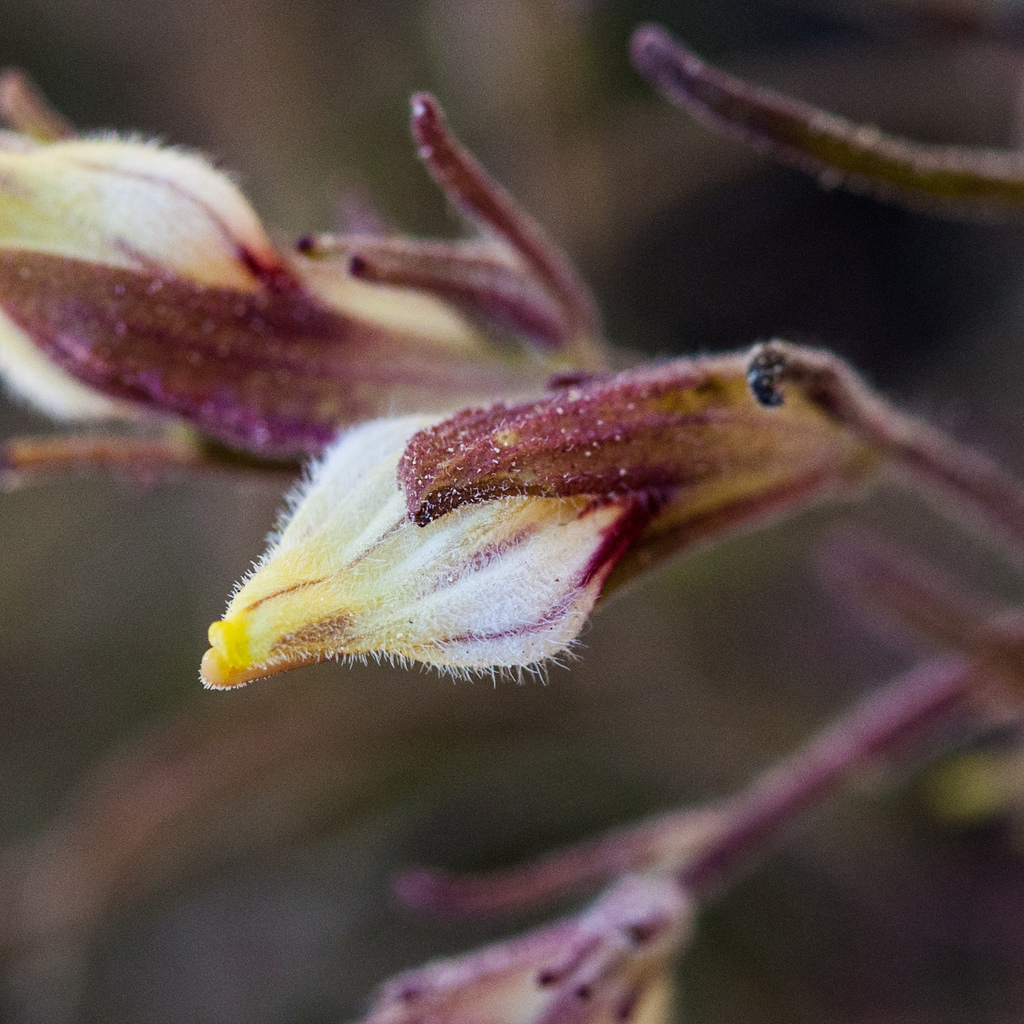
(c) Ken-ichi Ueda, some rights reserved (CC BY) · licence
Family: Orobanchaceae · Type: Herb · Native
Conservation status: CNPS 4.3
Cordylanthus tenuis subsp. brunneus (Serpentine bird's-beak) is a native California herb in the Orobanchaceae family, recognized by serpentine habitat and thread-like entire bracts diagnostic.
Serpentine bird's-beak is a rare (CNPS 4.3) California native annual found in southern North Coast Ranges in Lake, Sonoma, and Napa counties, occurring in serpentine mixed-evergreen forest and chaparral at elevations generally below 1,350 meters. Flowering from June to July, this plant produces delicate flowers approximately 12 to 15 millimeters long with subtle coloration. Growing with slender stems that are sparsely glandular-hairy, especially near the flower clusters, it reaches a modest height with a delicate, thread-like appearance. Its leaves are exceptionally narrow, thread-like, and typically folded or channeled, creating a distinctive thread-like profile across the plant. The flower clusters are loosely arranged, containing one to four individual flowers with entire, thread-like outer bracts.
Identification and appearance
Key characters: 5 sympatric species; serpentine habitat and thread-like entire bracts diagnostic
Habitat and range
Habitat: Serpentine in mixed-evergreen forest, chaparral
Elevation: generally < 1350 m
Bloom period
Cordylanthus tenuis subsp. brunneus blooms Jun-Jul.
Conservation status
CNPS 4.3
How to tell it apart
vs Dicranostegia: Cordylanthus has flowers in short dense spikes under 2cm; Dicranostegia has flowers scattered singly along stem.; vs Castilleja: Cordylanthus has closed hood with rolled lower lip; Castilleja has open beak without rolled lip.; vs Dittrichia: Cordylanthus has tubular two-lipped flowers; Dittrichia has yellow daisy flowers with many ray petals.; vs Chloropyron: Cordylanthus has palmately divided leaves; Chloropyron has succulent undivided leaves in salt marsh habitat.; vs Deinandra: Cordylanthus has tubular two-lipped flowers; Deinandra has yellow daisy flowers with notched ray petals.
Frequently asked questions
Is Cordylanthus tenuis subsp. brunneus native to California?
Yes. Cordylanthus tenuis subsp. brunneus is native to California (recorded as native).
When does Cordylanthus tenuis subsp. brunneus bloom?
Cordylanthus tenuis subsp. brunneus blooms Jun-Jul.
What plant family does Cordylanthus tenuis subsp. brunneus belong to?
Cordylanthus tenuis subsp. brunneus is in the Orobanchaceae family, genus Cordylanthus.
Is Cordylanthus tenuis subsp. brunneus rare or endangered?
Cordylanthus tenuis subsp. brunneus carries California Rare Plant Rank 4.3, state rank S3.
What habitat does Cordylanthus tenuis subsp. brunneus grow in?
Cordylanthus tenuis subsp. brunneus grows in Serpentine in mixed-evergreen forest, chaparral.
Related species
Other California species in the same genus, family, or bioregion.
Sources: Jepson eFlora · CalPhotos · CDFW CNDDB
Last updated 2026-10-07
Data from The California Species Project — 14,000+ California species with verified data from CNPS, CDFW, USFWS, Cal-IPC, and more.