Cordyline australis
New zealand cabbage tree, New Zealand Cabbage Tree
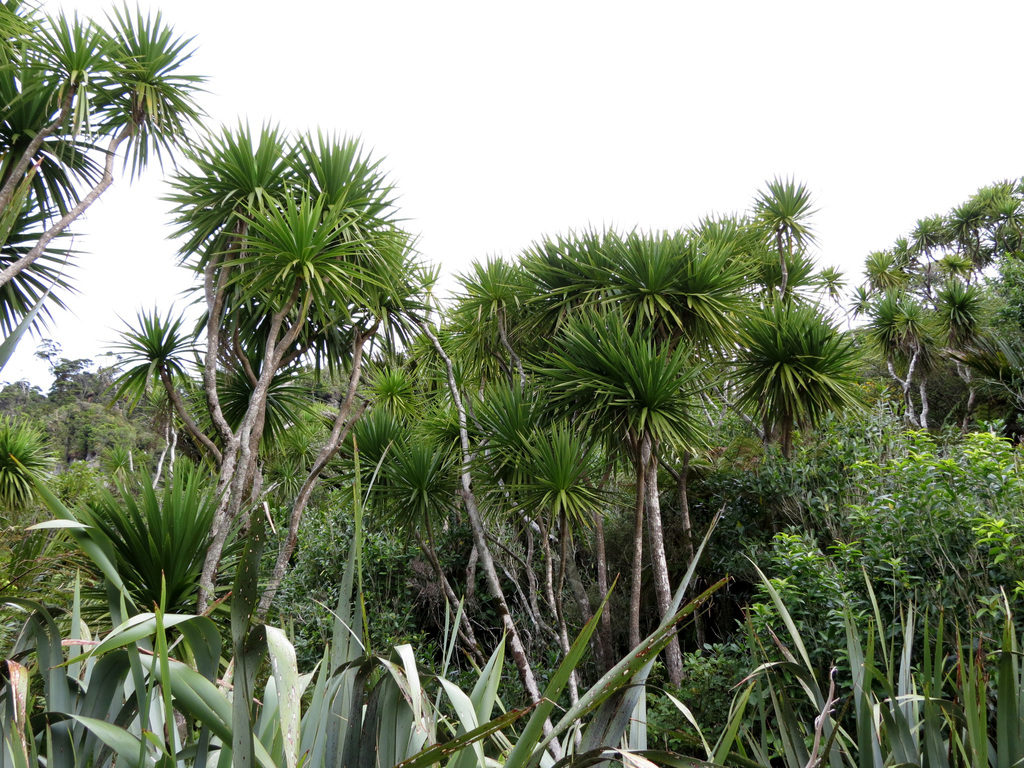
(c) Katja Schulz, some rights reserved (CC BY), uploaded by Katja Schulz · licence
Family: Laxmanniaceae · Type: Tree · Not Native
Cordyline australis (New zealand cabbage tree) is a non-native California tree in the Laxmanniaceae family, recognized by Only Cordyline in California, representing an Australasian genus naturalizing from cultivation.
New zealand cabbage tree is a naturalized perennial found in coastal California regions including North Coast, Central Coast, and Presidio of San Francisco in disturbed and formerly cultivated areas at elevations below 50 meters. Flowering from April to June, this plant produces white flowers approximately 6 to 10 millimeters wide that are notably fragrant. Growing up to 2 to 15 meters tall with a distinctive tree-like form, it develops stiff, elongated stems. Its leaves are long and dramatic, reaching 80 to 100 centimeters in length and 2.5 to 5 centimeters wide, with sharp acute to acuminate tips and a flat, rigid structure. The fruit is white, contributing to the plant's ornamental appearance.
Identification and appearance
Key characters: Only Cordyline in California, representing an Australasian genus naturalizing from cultivation
Habitat and range
Habitat: Disturbed and/or formerly cultivated areas
Elevation: < 50 m
Outside California: New Zealand
Bloom period
Cordyline australis blooms Apr-Jun.
How to tell it apart
vs Yucca: Cordyline has soft-flexible, flat sword leaves and small white flowers in a large open panicle followed by fleshy white berries; Yucca has rigid, often sharp-tipped leaves, large bell-shaped flowers, and a dry capsule.; vs Phormium: Cordyline develops a distinct woody trunk topped by a leaf crown; Phormium (New Zealand flax) is trunkless with leaves fanning up from the ground.; vs Nolina: Cordyline leaves are broad, flat sword-shaped (2.5-5 cm wide); Nolina and Dasylirion have narrow, grass-like leaves crowded in a basal rosette.; vs Agave: Cordyline forms a leafy trunk and flowers repeatedly; Agave forms a stemless rosette of thick succulent leaves and dies after a single massive bloom.; vs Washingtonia: Cordyline leaves are simple, undivided straps in a tuft; palms have fan- or feather-divided fronds.
Frequently asked questions
Is Cordyline australis native to California?
No. Cordyline australis is not native to California (recorded as not native).
When does Cordyline australis bloom?
Cordyline australis blooms Apr-Jun.
What plant family does Cordyline australis belong to?
Cordyline australis is in the Laxmanniaceae family, genus Cordyline.
What habitat does Cordyline australis grow in?
Cordyline australis grows in Disturbed and/or formerly cultivated areas.
Related species
Other California species in the same genus, family, or bioregion.
Sources: Jepson eFlora · CalPhotos
Last updated 2026-10-07
Data from The California Species Project — 14,000+ California species with verified data from CNPS, CDFW, USFWS, Cal-IPC, and more.