Cornus sessilis
Blackfruit dogwood
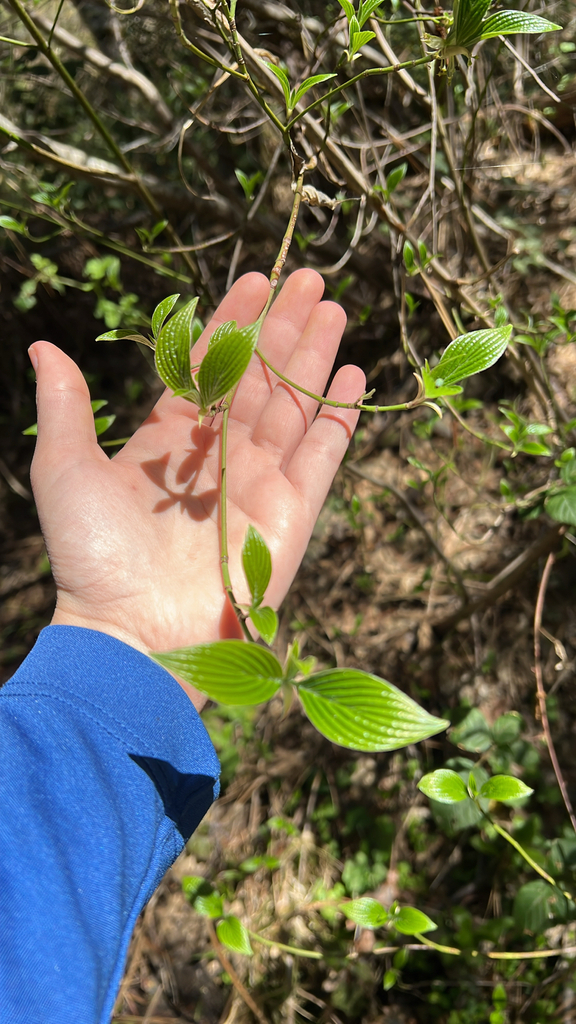
(c) Katy Swiere, some rights reserved (CC BY) · licence
Family: Cornaceae · Type: Shrub / Tree · Native
Cornus sessilis (Blackfruit dogwood) is a native California shrub / tree in the Cornaceae family, recognized by Co-occurs with 5 other species; distinctive color-changing fruit sequence.
Blackfruit dogwood is a California native shrub found in northwestern California, the Cascade Range, and northern Sierra Nevada along streambanks at elevations below 1,550 meters. Flowering from March to April, this plant produces subtle yellow flowers in small umbel-like clusters with four brown bracts featuring yellow margins. Growing as a small shrub or tree up to 5 meters tall with gray or yellow-brown stems, it has a distinctive branching structure. Its leaves are obovate to elliptic, 4.5 to 9 centimeters long, with soft strigose undersides and vein axils that are slightly woolly. The fruit transforms dramatically through color stages, beginning green-white, then yellow, then red, before finally becoming a shiny purple-black at maturity.
Identification and appearance
Key characters: Co-occurs with 5 other species; distinctive color-changing fruit sequence is diagnostic
Habitat and range
Habitat: Streambanks
Elevation: < 1550 m
California counties: San Luis Obispo, Humboldt, Trinity, Nevada, Tehama, Placer, Sierra, Butte, El Dorado, Calaveras, Amador, Siskiyou, Yuba, Shasta, Plumas, Del Norte
Bloom period
Cornus sessilis blooms Mar-Apr.
How to tell it apart
vs Prunus: Cornus has opposite leaves and 4-parted flowers; cherry has alternate leaves and 5-parted flowers.; vs Sambucus: Cornus has simple opposite leaves; elderberry has opposite compound leaves with 5-9 leaflets.; vs Rhamnus: Cornus has 4-parted flowers; buckthorn has 5-parted flowers with petals often smaller than sepals.; vs Philadelphus: Cornus has 4-parted flowers and opposite simple leaves; mock orange has 4-5 petals and shredding bark.; vs Magnolia: Cornus has opposite leaves and small 4-parted flowers; magnolia has alternate leaves and large showy flowers.
Frequently asked questions
Is Cornus sessilis native to California?
Yes. Cornus sessilis is native to California (recorded as native).
When does Cornus sessilis bloom?
Cornus sessilis blooms Mar-Apr.
Where in California does Cornus sessilis grow?
Cornus sessilis occurs in San Luis Obispo, Humboldt, Trinity, Nevada, Tehama, Placer, Sierra, Butte and other counties, at elevations of < 1550 m.
What plant family does Cornus sessilis belong to?
Cornus sessilis is in the Cornaceae family, genus Cornus.
What habitat does Cornus sessilis grow in?
Cornus sessilis grows in Streambanks.
Related species
Other California species in the same genus, family, or bioregion.
Sources: Jepson eFlora · Index of California Plant Names · CalPhotos
Last updated 2026-10-07
Data from The California Species Project — 14,000+ California species with verified data from CNPS, CDFW, USFWS, Cal-IPC, and more.