Cortaderia selloana
Pampas grass, Pampas Grass
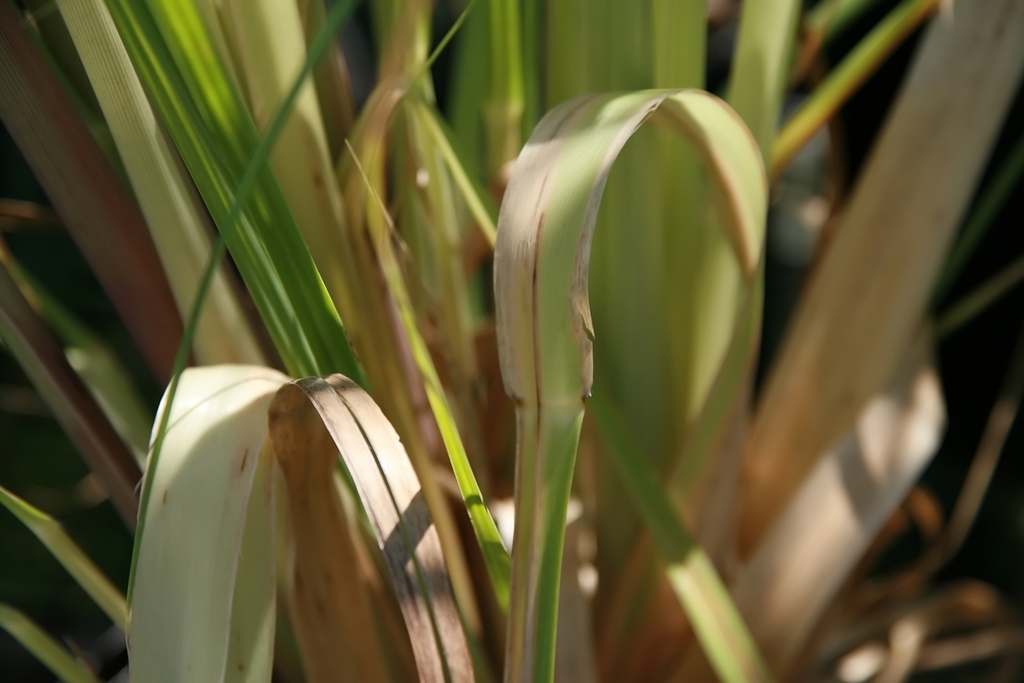
(c) Photo by David J. Stang, some rights reserved (CC BY-SA) · licence
Family: Poaceae · Type: Grass · Not Native
Conservation status: Cal-IPC Yes
Cortaderia selloana (Pampas grass) is a non-native California grass in the Poaceae family, recognized by . Key features: non-violet inflorescence, blue-green glaucous leaf surfaces.
Pampas grass is a naturalized perennial found in coastal, northern Sierra Nevada, northern Sacramento Valley, central western California, southern California, Channel Islands, and western Transverse Ranges in disturbed sites at elevations below 300 meters. Flowering from September to March, this grass produces variously colored plume-like flower clusters that can reach 3 to 13 decimeters long. Growing with robust stems 2 to 4 meters tall, it forms large, dramatic clumps with distinctive blue-green to dark green foliage. Its leaves are 3 to 12 millimeters wide, with a small tuft of short hairs at the base and a blue-green surface. The plant reproduces sexually and can form dense, ornamental stands in disturbed landscapes.
Identification and appearance
Key characters: 1 sympatric species. Key features: non-violet inflorescence, blue-green glaucous leaf surfaces
Habitat and range
Habitat: Disturbed sites
Elevation: < 300 m
California counties: Los Angeles, Monterey, Orange, San Diego, San Luis Obispo, Santa Barbara, San Bernardino, Ventura, Riverside, Yolo, Santa Cruz, San Mateo, Marin, Contra Costa, Sacramento, Stanislaus, Butte, Humboldt, Alameda, Mendocino, Solano, Nevada
Outside California: southern United States, native to eastern South America
Bloom period
Cortaderia selloana blooms Sep-Mar.
Conservation status
Cal-IPC Yes
How to tell it apart
vs Cenchrus: Cortaderia has huge silvery plumes up to 3 feet; Cenchrus has small spiky seed heads.; vs Miscanthus: Cortaderia forms massive 10-foot clumps with 3-foot plumes; Miscanthus is smaller with smaller seed heads.; vs Carex: Cortaderia has enormous feathery plumes; Carex has small brownish spikelets without showy plumes.; vs Leymus: Cortaderia has massive clumps with huge feathery plumes; Leymus has wheat-like spikes.; vs Muhlenbergia: Cortaderia forms 10-foot clumps with 3-foot plumes; Muhlenbergia is much smaller and delicate.
Frequently asked questions
Is Cortaderia selloana native to California?
No. Cortaderia selloana is not native to California (recorded as not native).
When does Cortaderia selloana bloom?
Cortaderia selloana blooms Sep-Mar.
Where in California does Cortaderia selloana grow?
Cortaderia selloana occurs in Los Angeles, Monterey, Orange, San Diego, San Luis Obispo, Santa Barbara, San Bernardino, Ventura and other counties, at elevations of < 300 m.
What plant family does Cortaderia selloana belong to?
Cortaderia selloana is in the Poaceae family, genus Cortaderia.
Is Cortaderia selloana invasive in California?
Cortaderia selloana is listed by Cal-IPC with an invasiveness rating of Yes.
Related species
Other California species in the same genus, family, or bioregion.
Sources: Jepson eFlora · Index of California Plant Names · CalPhotos
Last updated 2026-10-07
Data from The California Species Project — 14,000+ California species with verified data from CNPS, CDFW, USFWS, Cal-IPC, and more.