Corylus cornuta subsp. californica
California hazel, California Hazel
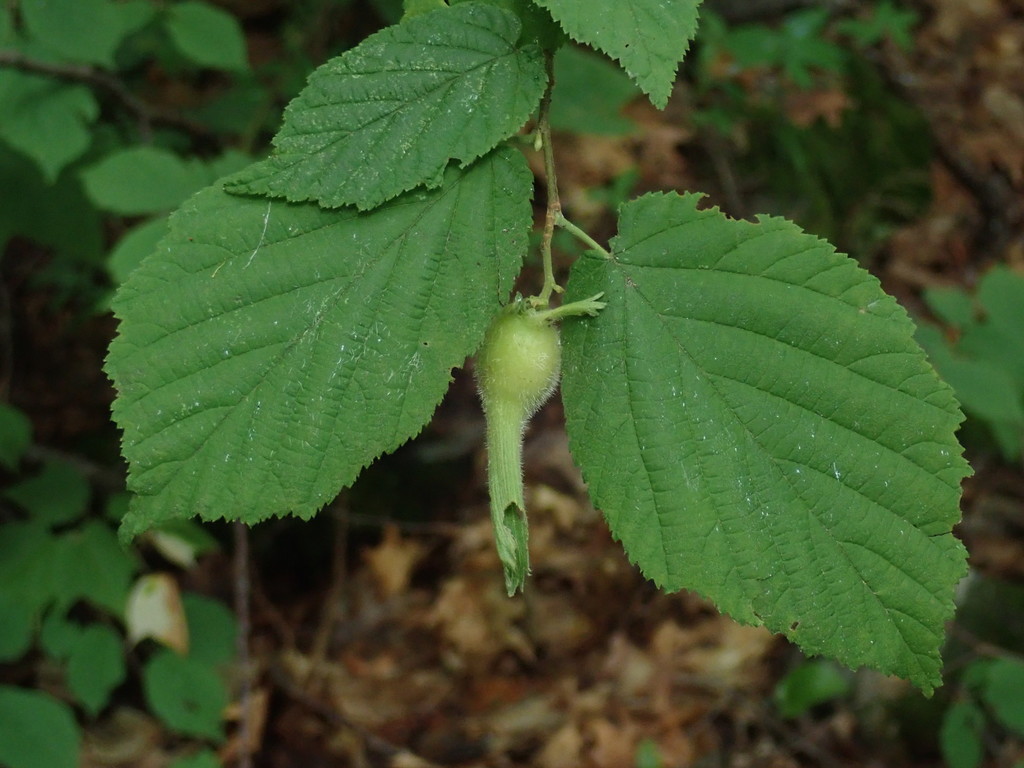
no rights reserved, uploaded by Lynn Harper · CC0
Family: Betulaceae · Type: Shrub / Tree · Native
Corylus cornuta subsp. californica (California hazel) is a native California shrub / tree in the Betulaceae family, recognized by Only Corylus in California, representing the native western North American hazelnut.
California hazel is a native shrub found in northwestern California, the California Cascade Range, Sierra Nevada, central coastal California, and San Francisco Bay Area in many habitats, especially moist, shady places at elevations below 2,100 meters. Flowering from January to March, this shrub produces small pale yellow to cream-colored flowers in delicate, dangling clusters. Growing with multiple trunks up to 4 meters tall, it develops a spreading, multi-stemmed structure with flexible branches. Its leaves are soft and velvety-hairy, with heart-shaped bases and pointed tips, measuring approximately 5 to 10 centimeters long. The fruit is an edible nut enclosed in a distinctive vase-shaped involucre 2 to 3 centimeters long.
Identification and appearance
Key characters: Only Corylus in California, representing the native western North American hazelnut
Habitat and range
Habitat: Common. Many habitats, especially moist, shady places
Elevation: < 2100 m
California counties: Humboldt, Santa Cruz, Tulare, Amador, Calaveras, Lake, Monterey, Plumas, Sierra, Alameda, Contra Costa, Del Norte, El Dorado, Fresno, Marin, Mariposa, Mendocino, Napa, Nevada, San Francisco, San Mateo, Santa Clara, Shasta, Sonoma, Siskiyou, Trinity, Tuolumne, Tehama, Madera, Butte, Placer
Outside California: to British Columbia
Bloom period
Corylus cornuta subsp. californica blooms Jan-Mar.
How to tell it apart
vs Alnus: Corylus produces 1-2 nuts in papery husks; Alnus produces tiny winged seeds from persistent woody cone-like catkins.; vs Holodiscus: Corylus has large heart-shaped leaves and nuts; Holodiscus has small lobed leaves and tiny dry capsules in cascading clusters.; vs Sambucus: Corylus has simple alternate leaves and nuts in husks; Sambucus has opposite compound leaves and juicy berry clusters.; vs Rubus: Corylus has simple leaves and nuts; Rubus has compound leaves (or simple lobed) and aggregate berry fruits.; vs Ulmus: Corylus has lopsided heart-shaped leaves and nuts in husks; Ulmus has asymmetric oval leaves and flat papery winged fruits.
Frequently asked questions
Is Corylus cornuta subsp. californica native to California?
Yes. Corylus cornuta subsp. californica is native to California (recorded as native).
When does Corylus cornuta subsp. californica bloom?
Corylus cornuta subsp. californica blooms Jan-Mar.
Where in California does Corylus cornuta subsp. californica grow?
Corylus cornuta subsp. californica occurs in Humboldt, Santa Cruz, Tulare, Amador, Calaveras, Lake, Monterey, Plumas and other counties, at elevations of < 2100 m.
What plant family does Corylus cornuta subsp. californica belong to?
Corylus cornuta subsp. californica is in the Betulaceae family, genus Corylus.
What habitat does Corylus cornuta subsp. californica grow in?
Corylus cornuta subsp. californica grows in Common. Many habitats, especially moist, shady places.
Related species
Other California species in the same genus, family, or bioregion.
Sources: Jepson eFlora · Index of California Plant Names · CalPhotos
Last updated 2026-10-07
Data from The California Species Project — 14,000+ California species with verified data from CNPS, CDFW, USFWS, Cal-IPC, and more.