Crassula aquatica
Aquatic pygmy weed
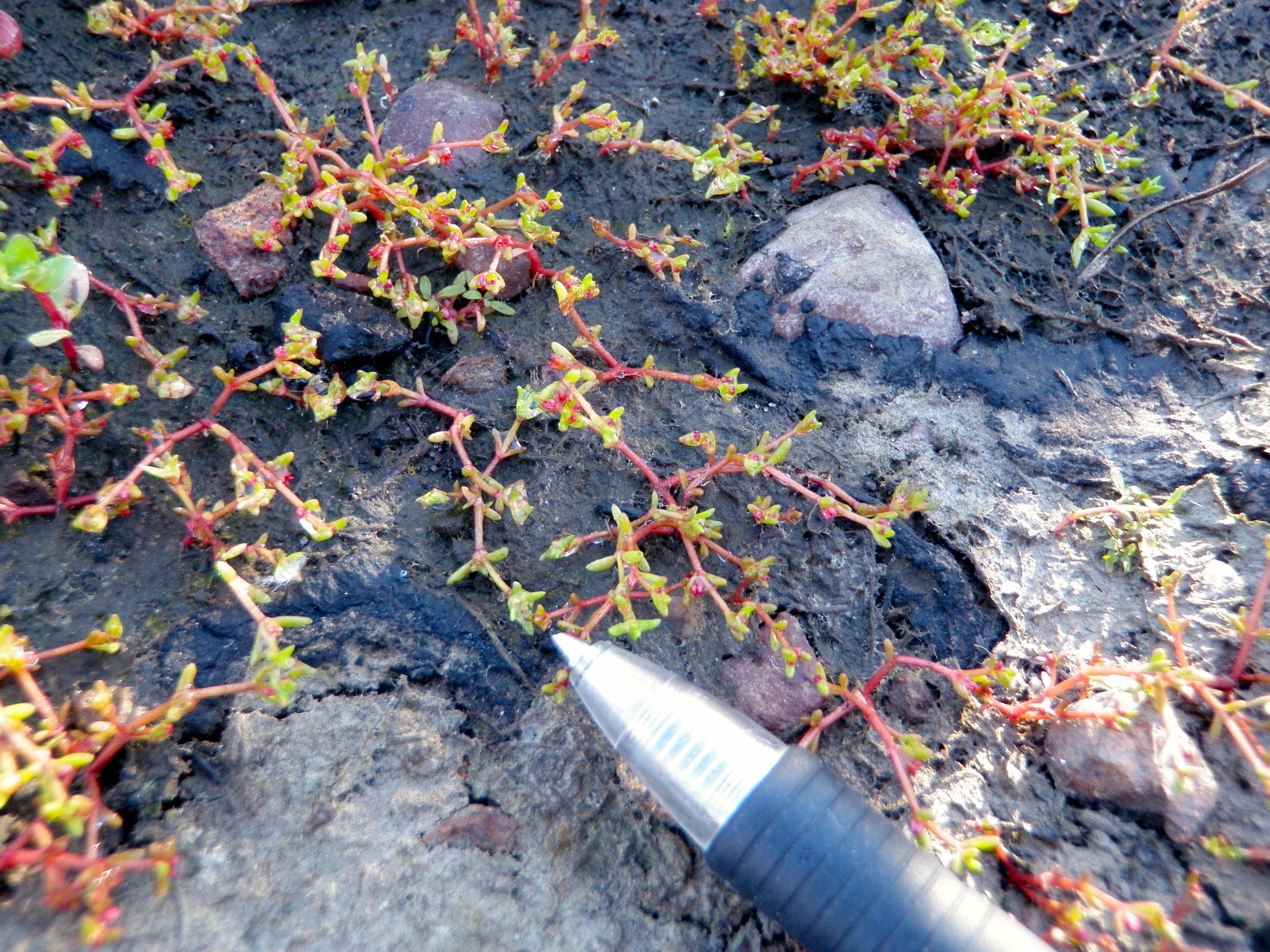
Photo by Chez Brungraber
Family: Crassulaceae · Type: Herb · Native
Crassula aquatica (Aquatic pygmy weed) is a native California herb in the Crassulaceae family, recognized by aquatic habitat and rooting nodes.
Aquatic pygmy weed is a native annual found in coastal, California Range, Sierra Nevada, Central Valley, Central Western, and Southwestern California bioregions in salt marshes, vernal pools, and lake margins at elevations below 3,000 meters. Flowering from March to June, this small plant produces tiny white or pinkish flowers less than 2 millimeters long at each stem node. Growing with decumbent stems that root at nodes and branch at the base, the plant forms low, spreading clusters typically 5 to 10 centimeters wide. Its leaves are small and narrow, measuring 2 to 6 millimeters long, with oblanceolate to linear shapes and acute tips. When stranded in drying habitats, the plant can grow more upright, developing compact clusters of minute flowers and seeds.
Identification and appearance
Key characters: 7 sympatric species; aquatic habitat and rooting nodes are diagnostic
Habitat and range
Habitat: Salt marshes, vernal pools, margins of lakes, ponds
Elevation: < 3000 m
California counties: San Luis Obispo, Riverside, Humboldt, Santa Cruz, Ventura, Fresno, San Diego, Orange, Plumas, Modoc, Contra Costa, Lake, Monterey, San Mateo, Los Angeles, Alameda, Santa Clara, Sonoma, Amador, Calaveras, Glenn, Madera, Marin, Mendocino, Nevada, Sacramento, Tulare, San Francisco, San Joaquin, Santa Barbara, Sutter, Butte, Merced, Tehama, Yuba, Lassen, Napa, Stanislaus, San Benito, Kern, Mono, Solano, Yolo, Alpine, Tuolumne
Outside California: North America, Mexico, northern Eurasia
Bloom period
Crassula aquatica blooms Mar-Jun(Aug).
How to tell it apart
vs Sedum: Sedum leaves are alternate or scattered; Crassula leaves are strictly opposite with fused bases.; vs Cotyledon: Cotyledon has large, fleshy leaves without fused bases; Crassula leaves clasp stem with fused bases.; vs Aeonium: Aeonium forms rosettes with many leaves per node; Crassula has two opposite leaves per node.; vs Kalanchoe: Kalanchoe has clusters of showy flowers; Crassula has tiny single flowers in leaf joints.; vs Portulacaria: Portulacaria has round, flat leaves on woody stems; Crassula has succulent opposite clasping leaves.
Frequently asked questions
Is Crassula aquatica native to California?
Yes. Crassula aquatica is native to California (recorded as native).
When does Crassula aquatica bloom?
Crassula aquatica blooms Mar-Jun(Aug).
Where in California does Crassula aquatica grow?
Crassula aquatica occurs in San Luis Obispo, Riverside, Humboldt, Santa Cruz, Ventura, Fresno, San Diego, Orange and other counties, at elevations of < 3000 m.
What plant family does Crassula aquatica belong to?
Crassula aquatica is in the Crassulaceae family, genus Crassula.
What habitat does Crassula aquatica grow in?
Crassula aquatica grows in Salt marshes, vernal pools, margins of lakes, ponds.
Related species
Other California species in the same genus, family, or bioregion.
Sources: Jepson eFlora · Index of California Plant Names · CalPhotos
Last updated 2026-10-07
Data from The California Species Project — 14,000+ California species with verified data from CNPS, CDFW, USFWS, Cal-IPC, and more.