Crepis runcinata subsp. andersonii
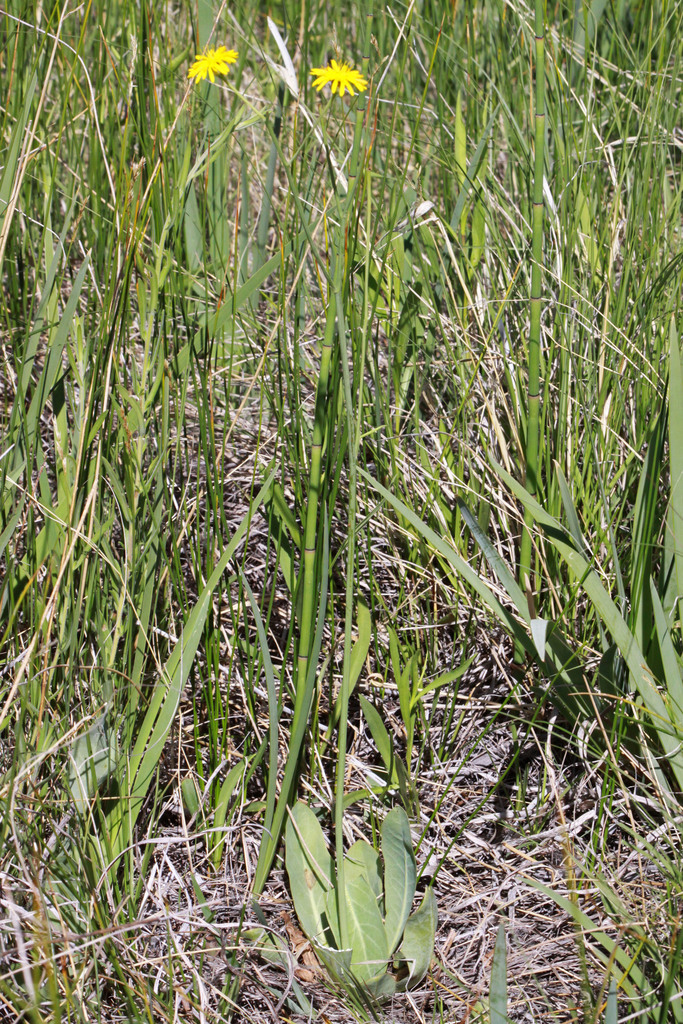
(c) Andrey Zharkikh, some rights reserved (CC BY) · licence
Family: Asteraceae · Type: Herb · Native
Conservation status: CNPS 2B.2
Crepis runcinata subsp. andersonii is a native California herb in the Asteraceae family, recognized by Sierra Valley location, white-tipped leaf teeth, and beaked fruits.
Anderson's meadow hawksbeard is a rare California native perennial ranked 2B.2 by CNPS, found in southern Modoc Plateau in Sierra Valley, southeastern Plumas County in alkaline seeps and grassland valleys at elevations of 1,200 to 1,500 meters. Flowering from May to July, this plant produces yellow flowers with inner phyllaries that are widely lanceolate or elliptic. Growing 25 to 50 centimeters tall with erect stems, it develops a distinctive rosette of leaves. Its oblanceolate leaves are 2 to 3 centimeters wide, strongly and closely dentate with conspicuously white-tipped teeth, presenting a striking green appearance. The mature plant develops fruits with a notably distinct beak, adding to its unique botanical character.
Identification and appearance
Key characters: 14 sympatric species; distinguished by Sierra Valley location, white-tipped leaf teeth, and beaked fruits
Habitat and range
Habitat: Alkaline seeps, grassland, valleys
Elevation: 1200-1500 m
Outside California: Nevada
Bloom period
Crepis runcinata subsp. andersonii blooms May-Jul.
Conservation status
CNPS 2B.2
How to tell it apart
vs Hypochaeris: Hypochaeris has mostly leafless stems with tiny bracts; Crepis has well-developed leaves up the stem.; vs Taraxacum: Taraxacum has all leaves basal with leafless stems; Crepis has leaves ascending the branched stem.; vs Agoseris: Agoseris has leafless flower stems from basal rosettes; Crepis has leafy branched stems.; vs Sonchus: Sonchus has clasping stem leaves with spiny margins; Crepis leaves are typically not clasping or spiny.; vs Helminthotheca: Helminthotheca has bristly leaves and bracts; Crepis typically lacks the dense bristly covering.
Frequently asked questions
Is Crepis runcinata subsp. andersonii native to California?
Yes. Crepis runcinata subsp. andersonii is native to California (recorded as native).
When does Crepis runcinata subsp. andersonii bloom?
Crepis runcinata subsp. andersonii blooms May-Jul.
What plant family does Crepis runcinata subsp. andersonii belong to?
Crepis runcinata subsp. andersonii is in the Asteraceae family, genus Crepis.
Is Crepis runcinata subsp. andersonii rare or endangered?
Crepis runcinata subsp. andersonii carries California Rare Plant Rank 2B.2, state rank S3.
What habitat does Crepis runcinata subsp. andersonii grow in?
Crepis runcinata subsp. andersonii grows in Alkaline seeps, grassland, valleys.
Related species
Other California species in the same genus, family, or bioregion.
Sources: Jepson eFlora · CalPhotos
Last updated 2026-10-07
Data from The California Species Project — 14,000+ California species with verified data from CNPS, CDFW, USFWS, Cal-IPC, and more.