Crossosoma californicum
Catalina crossosoma, Catalina Crossosoma
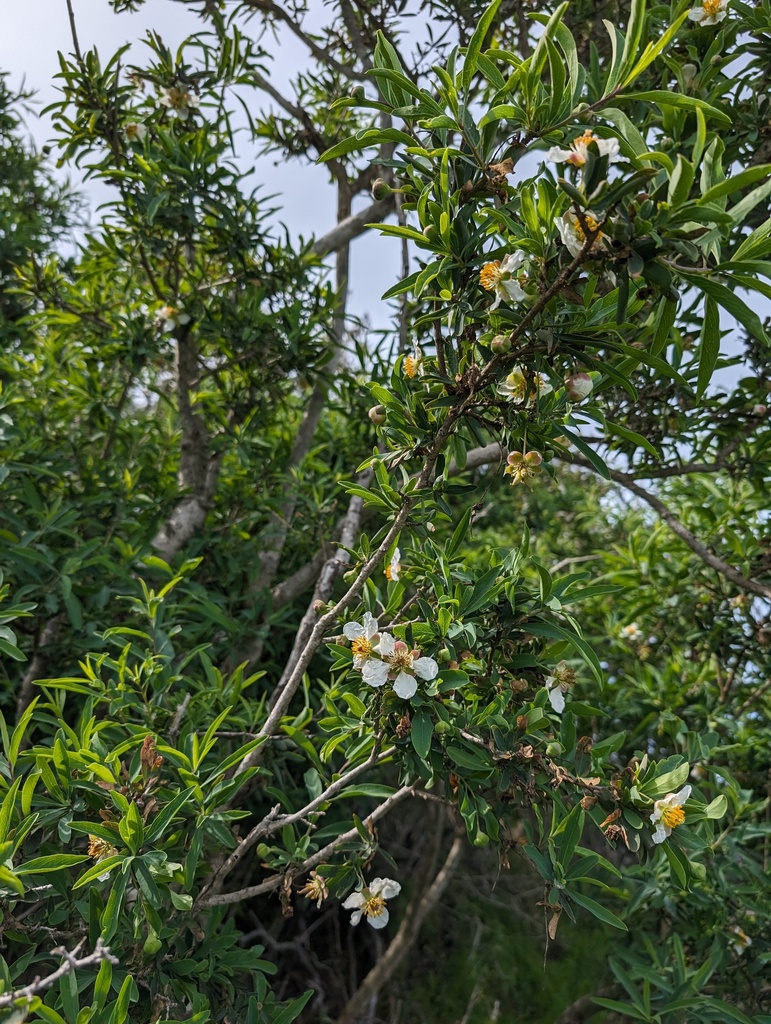
(c) Trevor Van Loon, some rights reserved (CC BY) · licence
Family: Crossosomataceae · Type: Shrub · Native
Conservation status: CNPS 1B.2
Crossosoma californicum (Catalina crossosoma) is a native California shrub in the Crossosomataceae family, recognized by No sympatric species - geographically isolated to coastal areas and Channel Islands.
Catalina crossosoma is a rare (CNPS 1B.2) California native shrub found in central Southern California coastal areas and southern Channel Islands, including Palos Verdes Peninsula, San Clemente, and Santa Catalina islands on dry, rocky slopes and in canyons at elevations below 610 meters. Flowering from February to May, this plant produces white, round petals 12 to 15 millimeters long with a delicate claw-like base. Growing 1 to 5 meters tall with distinctively thorny branchlets, it forms a rugged, sculptural shrub with intricate branching. Its leaves are oblong to obovate or spoon-shaped, creating a unique textural appearance across rocky landscapes. The plant produces 2 to 9 fruits 15 to 20 millimeters long with slightly recurved tips, each containing more than 20 seeds approximately 2.5 millimeters in diameter.
Identification and appearance
Key characters: No sympatric species - geographically isolated to coastal areas and Channel Islands
Habitat and range
Habitat: Dry, rocky slopes, canyons
Elevation: < 610 m
California counties: Los Angeles, Alameda, Contra Costa, Santa Barbara
Outside California: Baja California (Guadalupe Island)
Bloom period
Crossosoma californicum blooms Feb-May.
Conservation status
CNPS 1B.2
How to tell it apart
vs Carpenteria: Crossosoma has 5 petals and multiple separate seed pods; Carpenteria has many petals and one capsule.; vs Ceanothus: Crossosoma has large white flowers with many stamens; Ceanothus has tiny blue or white flowers in dense clusters.; vs Glossopetalon: Crossosoma flowers are at branch tips with 15-50 stamens; Glossopetalon flowers are along stems with 4-10 stamens.
Frequently asked questions
Is Crossosoma californicum native to California?
Yes. Crossosoma californicum is native to California (recorded as native).
When does Crossosoma californicum bloom?
Crossosoma californicum blooms Feb-May.
Where in California does Crossosoma californicum grow?
Crossosoma californicum occurs in Los Angeles, Alameda, Contra Costa, Santa Barbara, at elevations of < 610 m.
What plant family does Crossosoma californicum belong to?
Crossosoma californicum is in the Crossosomataceae family, genus Crossosoma.
Is Crossosoma californicum rare or endangered?
Crossosoma californicum carries California Rare Plant Rank 1B.2, state rank S3.
Related species
Other California species in the same genus, family, or bioregion.
Sources: Jepson eFlora · CNPS Rare Plant Inventory · Index of California Plant Names · CalPhotos · CDFW CNDDB
Last updated 2026-10-07
Data from The California Species Project — 14,000+ California species with verified data from CNPS, CDFW, USFWS, Cal-IPC, and more.