Croton setiger
Doveweed, turkey-mullein, Turkey-Mullein
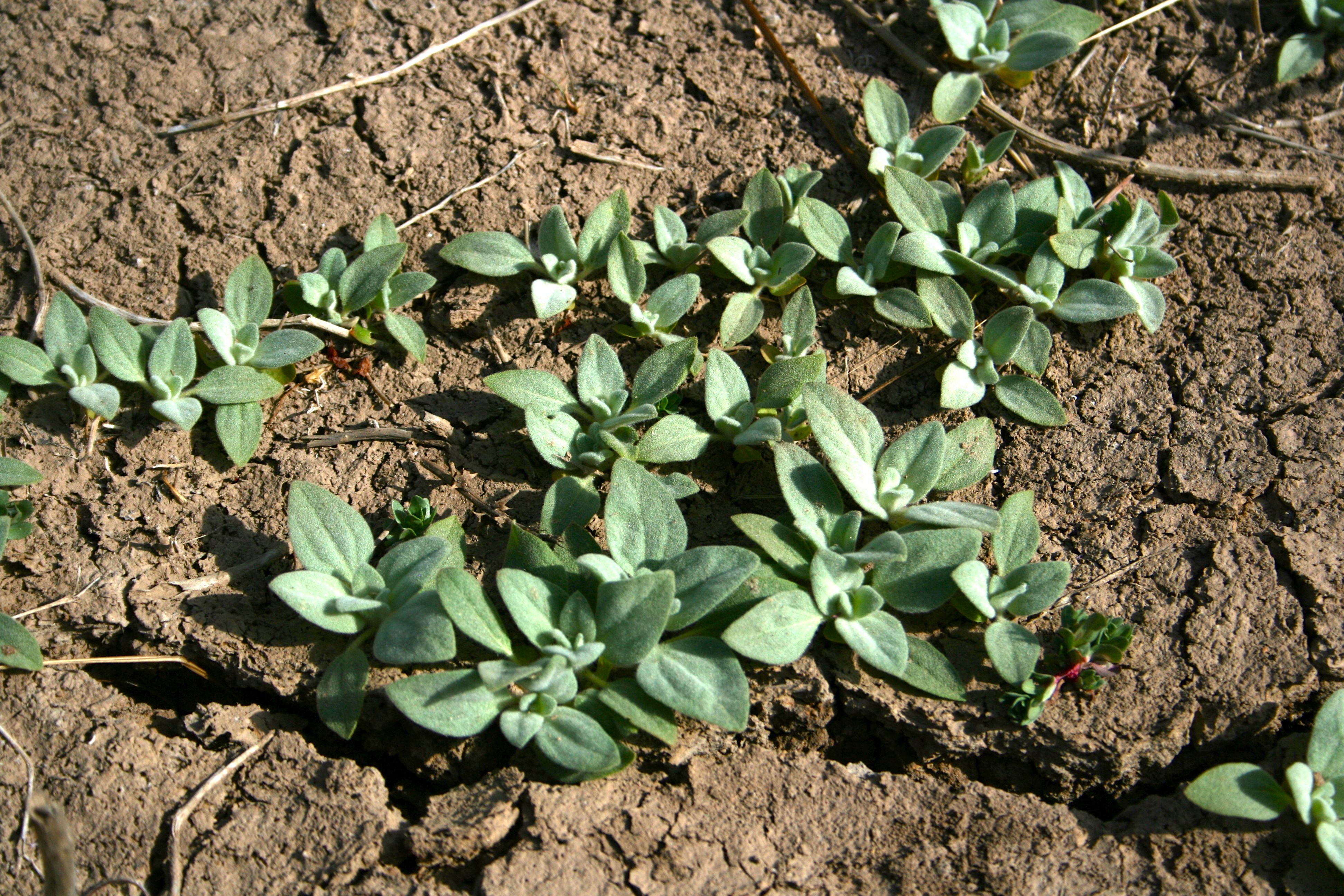
Photo by Chez Brungraber
Family: Euphorbiaceae · Type: Herb · Native
Croton setiger (Doveweed) is a native California herb in the Euphorbiaceae family, recognized by (C. californicus); key differences are growth form (mounded vs upright) and life cycle (annual vs perennial).
Doveweed is a California native annual found in the California Floristic Province and western deserts in dry, open, often disturbed areas at elevations below 1,000 meters. Flowering from May to October, this plant produces small greenish flowers in terminal and axillary clusters with male and female flowers on the same plant. Growing as a low, spreading mound-like plant up to 20 centimeters tall and 80 centimeters wide, it has ascending stems with a delicate, sprawling habit. Its leaves are ovate, 1 to 6 centimeters long with rounded tips, carried on slender petioles 1 to 5 centimeters in length. The fruit is approximately 4 millimeters in diameter, containing a single smooth or slightly ridged seed.
Identification and appearance
Key characters: 1 sympatric species (C. californicus); key differences are growth form (mounded vs upright) and life cycle (annual vs perennial)
Habitat and range
Habitat: Dry, open, often disturbed areas
Elevation: < 1000 m
California counties: Mendocino, Nevada, Kern, Tuolumne, Colusa, Orange, San Luis Obispo, Los Angeles, San Diego, San Bernardino, Inyo, Imperial, Tulare, Riverside, Merced, Ventura, Santa Barbara, Stanislaus, Placer, Trinity, Madera, El Dorado, Sacramento, Calaveras, Sutter, San Joaquin, Yuba, Amador, Butte, Glenn, Tehama, Modoc, San Mateo, Marin, Contra Costa, Yolo, Santa Clara, Fresno, Monterey, Plumas, Napa, Lassen, San Benito, Humboldt, Shasta, Lake, Siskiyou, Del Norte, Sonoma, Mariposa, Sierra, Solano, Santa Cruz, Alameda
Outside California: to Washington
Bloom period
Croton setiger blooms May-Oct.
How to tell it apart
vs Tidestromia: Croton leaves feel scurfy from star-hairs; Tidestromia leaves are smooth and succulent-like.; vs Encelia: Croton has 3-part capsule fruits; Encelia has daisy-like flower heads with ray petals.; vs Eriogonum: Croton has alternate leaves; buckwheat leaves are whorled or basal rosettes.; vs Verbascum: Croton has smooth leaf edges; mullein leaves have wavy or toothed edges.; vs Marrubium: Croton stems are round; horehound stems are square with opposite leaves.
Frequently asked questions
Is Croton setiger native to California?
Yes. Croton setiger is native to California (recorded as native).
When does Croton setiger bloom?
Croton setiger blooms May-Oct.
Where in California does Croton setiger grow?
Croton setiger occurs in Mendocino, Nevada, Kern, Tuolumne, Colusa, Orange, San Luis Obispo, Los Angeles and other counties, at elevations of < 1000 m.
What plant family does Croton setiger belong to?
Croton setiger is in the Euphorbiaceae family, genus Croton.
What habitat does Croton setiger grow in?
Croton setiger grows in Dry, open, often disturbed areas.
Related species
Other California species in the same genus, family, or bioregion.
Sources: Jepson eFlora · Index of California Plant Names · CalPhotos
Last updated 2026-10-07
Data from The California Species Project — 14,000+ California species with verified data from CNPS, CDFW, USFWS, Cal-IPC, and more.