Cuniculotinus gramineus
Panamint rock goldenrod
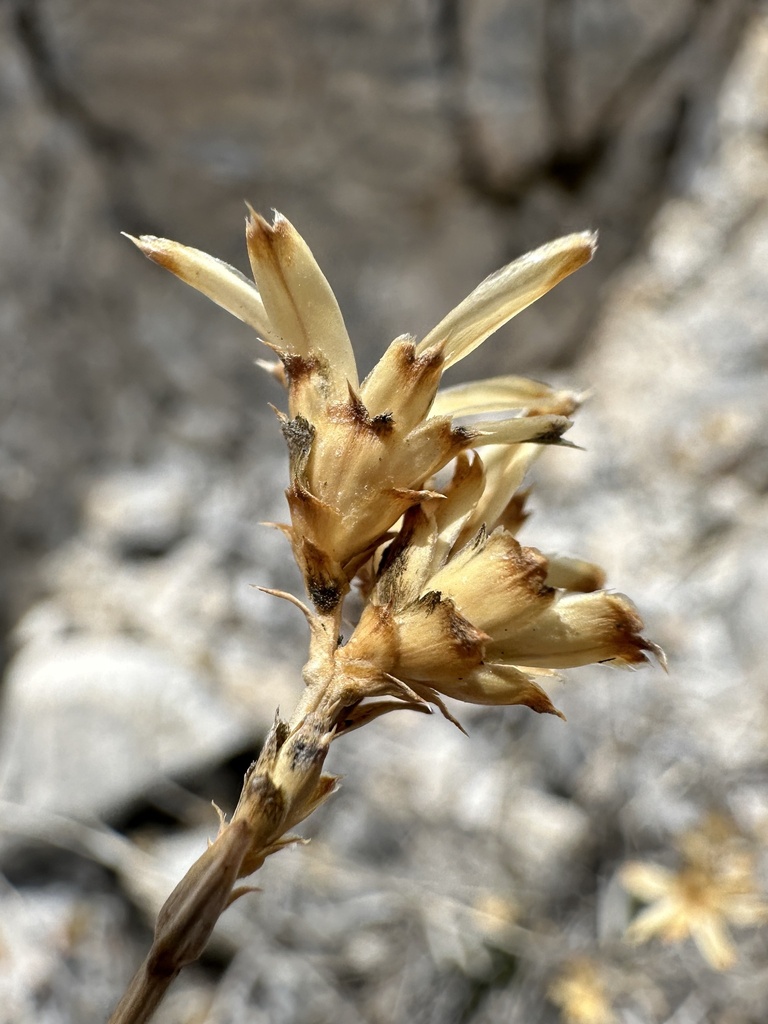
(c) Matt Berger, some rights reserved (CC BY) · licence
Family: Asteraceae · Type: Subshrub · Native
Conservation status: CNPS 2B.3
Cuniculotinus gramineus (Panamint rock goldenrod) is a native California subshrub in the Asteraceae family, recognized by Recently segregated from Ericameria, endemic to Panamint Range with limited distribution in Nevada.
Panamint rock goldenrod is a rare (CNPS 2B.3) California native shrub found in southern White and Inyo Mountains and northern Desert Mountains (Panamint Range) in pinyon and juniper woodland and bristlecone-pine forest at elevations of 2,200 to 2,900 meters. Flowering from July to August, this plant produces yellow flowers in small discoid heads with distinctive irregularly toothed phyllary tips. Growing 2 to 6 decimeters tall with a woody, branched base and slightly ridged stems, it has an upright, sparse form. Its leaves are alternate, ascending, and lanceolate, measuring 30 to 85 millimeters long and 3 to 9 millimeters wide, with prominent three to five veins and finely rough-hairy margins. The fruit is 7 to 9 millimeters long with a pappus approximately equal to the corolla.
Identification and appearance
Key characters: Recently segregated from Ericameria, endemic to Panamint Range with limited distribution in Nevada
Habitat and range
Habitat: Pinyon/juniper woodland, bristlecone-pine forest
Elevation: 2200-2900 m
California counties: Inyo
Outside California: southern Nevada
Bloom period
Cuniculotinus gramineus blooms Jul-Aug.
Conservation status
CNPS 2B.3
How to tell it apart
vs Ericameria: Cuniculotinus has large flower heads (10-17.5mm) and long leaves; Ericameria has smaller heads and tiny narrow leaves.; vs Chrysothamnus: Cuniculotinus has flower heads 10-17.5mm; Chrysothamnus has smaller heads 5-10mm.; vs Isocoma: Cuniculotinus has large lance-shaped leaves (30-85mm); Isocoma has much smaller narrow leaves.; vs Helichrysum: Cuniculotinus is a native desert mountain shrub; Helichrysum is an introduced plant with papery white/pink bracts.; vs Hazardia: Cuniculotinus has smooth fruits; Hazardia has hairy fruits and coastal/chaparral habitat.
Frequently asked questions
Is Cuniculotinus gramineus native to California?
Yes. Cuniculotinus gramineus is native to California (recorded as native).
When does Cuniculotinus gramineus bloom?
Cuniculotinus gramineus blooms Jul-Aug.
Where in California does Cuniculotinus gramineus grow?
Cuniculotinus gramineus occurs in Inyo, at elevations of 2200-2900 m.
What plant family does Cuniculotinus gramineus belong to?
Cuniculotinus gramineus is in the Asteraceae family, genus Cuniculotinus.
Is Cuniculotinus gramineus rare or endangered?
Cuniculotinus gramineus carries California Rare Plant Rank 2B.3, state rank S3.
Related species
Other California species in the same genus, family, or bioregion.
Sources: Jepson eFlora · CNPS Rare Plant Inventory · Index of California Plant Names · CalPhotos · CDFW CNDDB
Last updated 2026-10-07
Data from The California Species Project — 14,000+ California species with verified data from CNPS, CDFW, USFWS, Cal-IPC, and more.