Cycladenia humilis var. venusta
Sacramento waxydogbane
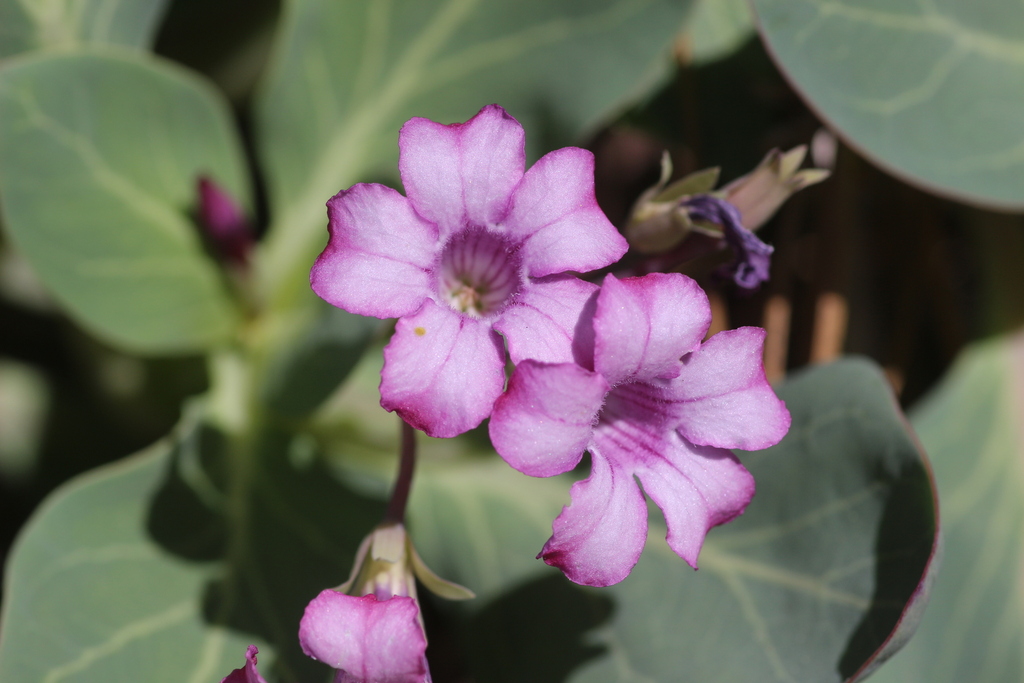
Photo: parent species Cycladenia humilis · no rights reserved · CC0
Family: Apocynaceae · Type: Herb · Native
Cycladenia humilis var. venusta (Sacramento waxydogbane) is a native California herb in the Apocynaceae family, recognized by larger corolla lobes and consistent glabrous habit.
Sacramento waxydogbane is a California native perennial found in the Santa Lucia Range, San Gabriel Mountains, and eastern Sierra Nevada in talus, loose gravel, and dry ground in light shade of pines and chaparral at elevations of 1,550 to 2,500 meters. Flowering from May to July, this plant produces pale flowers with corolla lobes 8 to 12 millimeters long, sparse-hairy on the inner surface. Growing with a glabrous, glaucous appearance and erect stems, it forms clusters in rocky, open terrain. Its leaves are smooth and bluish-green, blending into the sparse, rocky habitats where it grows. The plant has a distinctive perianth with hairs that are not tightly interwoven, giving it a delicate and sparse texture.
Identification and appearance
Key characters: 1 sympatric species; distinguished by larger corolla lobes and consistent glabrous habit
Habitat and range
Habitat: Talus, loose gravel, dry ground in light shade of pines, chaparral
Elevation: 1550-2500 m
California counties: San Bernardino, Monterey, Los Angeles, San Diego, Inyo, Ventura
Bloom period
Cycladenia humilis var. venusta blooms May-Jul.
How to tell it apart
vs Diplacus: Cycladenia has thick waxy opposite leaves and trumpet flowers with five equal lobes; Diplacus has thin leaves and two-lipped snapdragon flowers.; vs Mirabilis: Cycladenia has fleshy waxy leaves and tubular flowers with five petals; Mirabilis has thin leaves and petalless flowers with colored sepals.; vs Koenigia: Cycladenia has large showy trumpet flowers and opposite leaves; Koenigia has tiny flowers and alternate leaves.; vs Vinca: Cycladenia has thick succulent leaves and grows upright; Vinca has thin glossy leaves and trails on ground.; vs Amsonia: Cycladenia has thick waxy opposite leaves; Amsonia has thin alternate leaves spiraling up stem.
Frequently asked questions
Is Cycladenia humilis var. venusta native to California?
Yes. Cycladenia humilis var. venusta is native to California (recorded as native).
When does Cycladenia humilis var. venusta bloom?
Cycladenia humilis var. venusta blooms May-Jul.
Where in California does Cycladenia humilis var. venusta grow?
Cycladenia humilis var. venusta occurs in San Bernardino, Monterey, Los Angeles, San Diego, Inyo, Ventura, at elevations of 1550-2500 m.
What plant family does Cycladenia humilis var. venusta belong to?
Cycladenia humilis var. venusta is in the Apocynaceae family, genus Cycladenia.
What habitat does Cycladenia humilis var. venusta grow in?
Cycladenia humilis var. venusta grows in Talus, loose gravel, dry ground in light shade of pines, chaparral.
Related species
Other California species in the same genus, family, or bioregion.
Sources: Jepson eFlora · Index of California Plant Names · CalPhotos
Last updated 2026-10-07
Data from The California Species Project — 14,000+ California species with verified data from CNPS, CDFW, USFWS, Cal-IPC, and more.