Cylindropuntia bigelovii
Teddy-bear cholla
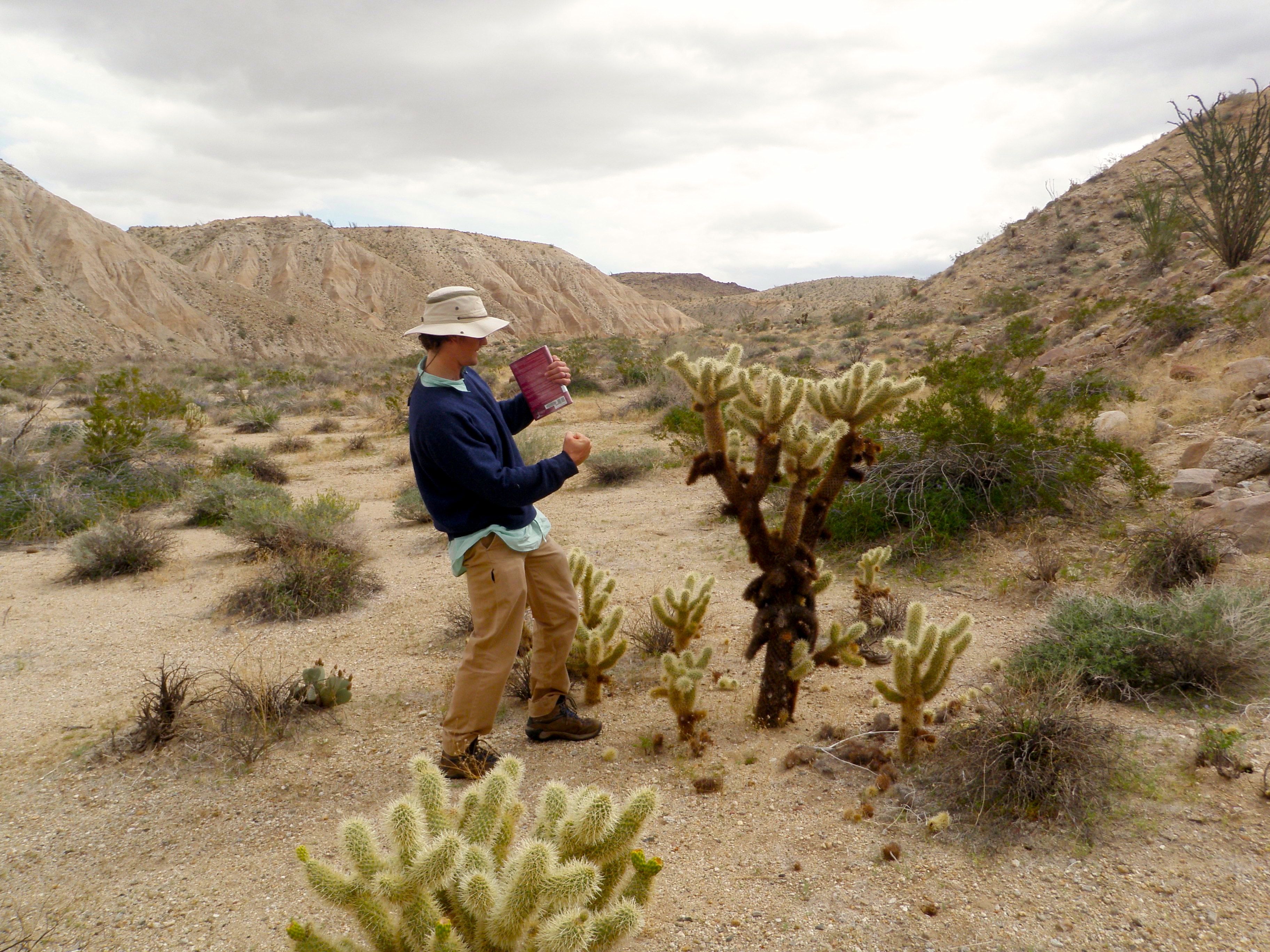
Photo by Chez Brungraber
Family: Cactaceae · Type: Shrub · Native
Cylindropuntia bigelovii (Teddy-bear cholla) is a native California shrub in the Cactaceae family, recognized by extremely distinctive dense pale spines and easily detached segments.
Teddy-bear cholla is a native shrub found in the Mojave Desert, including Kelso Dunes, and Sonoran Desert regions on rocky fans and creosote-bush scrub at elevations below 1,000 meters. Flowering from March to May, this distinctive cactus produces pale yellow to light green flowers with green filaments. Growing 1 to 2 meters tall, the plant forms a single trunk with few short, spreading branches and distinctive terminal segments that easily detach. Its spines are 4 to 12 in number, initially pale yellow-brown and darkening to brown with age, covering the plant in a dense, bristly coat that gives it a fuzzy, "teddy-bear" like appearance. The plant's terminal segments, about 3 to 5 centimeters in diameter, are designed to break off easily, helping the cactus propagate by allowing segments to root where they fall.
Identification and appearance
Key characters: 9 sympatric species; extremely distinctive dense pale spines and easily detached segments
Habitat and range
Habitat: Rocky fans, benches, creosote-bush scrub
Elevation: < 1000 m
California counties: San Diego, Riverside, San Bernardino, Imperial, Inyo
Outside California: southern Nevada, Arizona, northern Mexico
Bloom period
Cylindropuntia bigelovii blooms Mar-May.
How to tell it apart
vs Opuntia: Cylindropuntia has cylindrical stem segments; Opuntia has flattened paddle-shaped pads.; vs Austrocylindropuntia: Cylindropuntia has papery spine sheaths that peel away; Austrocylindropuntia lacks spine sheaths entirely.; vs Echinocereus: Cylindropuntia has segmented stems that detach easily; Echinocereus has ribbed continuous stems.; vs Bergerocactus: Cylindropuntia has detachable segments with tubercles; Bergerocactus has continuous ribbed stems.; vs Grusonia: Cylindropuntia has round spines and grows waist-high or taller; Grusonia has flattened spines and stays under 10 inches.
Frequently asked questions
Is Cylindropuntia bigelovii native to California?
Yes. Cylindropuntia bigelovii is native to California (recorded as native).
When does Cylindropuntia bigelovii bloom?
Cylindropuntia bigelovii blooms Mar-May.
Where in California does Cylindropuntia bigelovii grow?
Cylindropuntia bigelovii occurs in San Diego, Riverside, San Bernardino, Imperial, Inyo, at elevations of < 1000 m.
What plant family does Cylindropuntia bigelovii belong to?
Cylindropuntia bigelovii is in the Cactaceae family, genus Cylindropuntia.
What habitat does Cylindropuntia bigelovii grow in?
Cylindropuntia bigelovii grows in Rocky fans, benches, creosote-bush scrub.
Related species
Other California species in the same genus, family, or bioregion.
Sources: Jepson eFlora · Index of California Plant Names · CalPhotos
Last updated 2026-10-07
Data from The California Species Project — 14,000+ California species with verified data from CNPS, CDFW, USFWS, Cal-IPC, and more.