Cynara cardunculus subsp. cardunculus
Artichoke, Artichoke
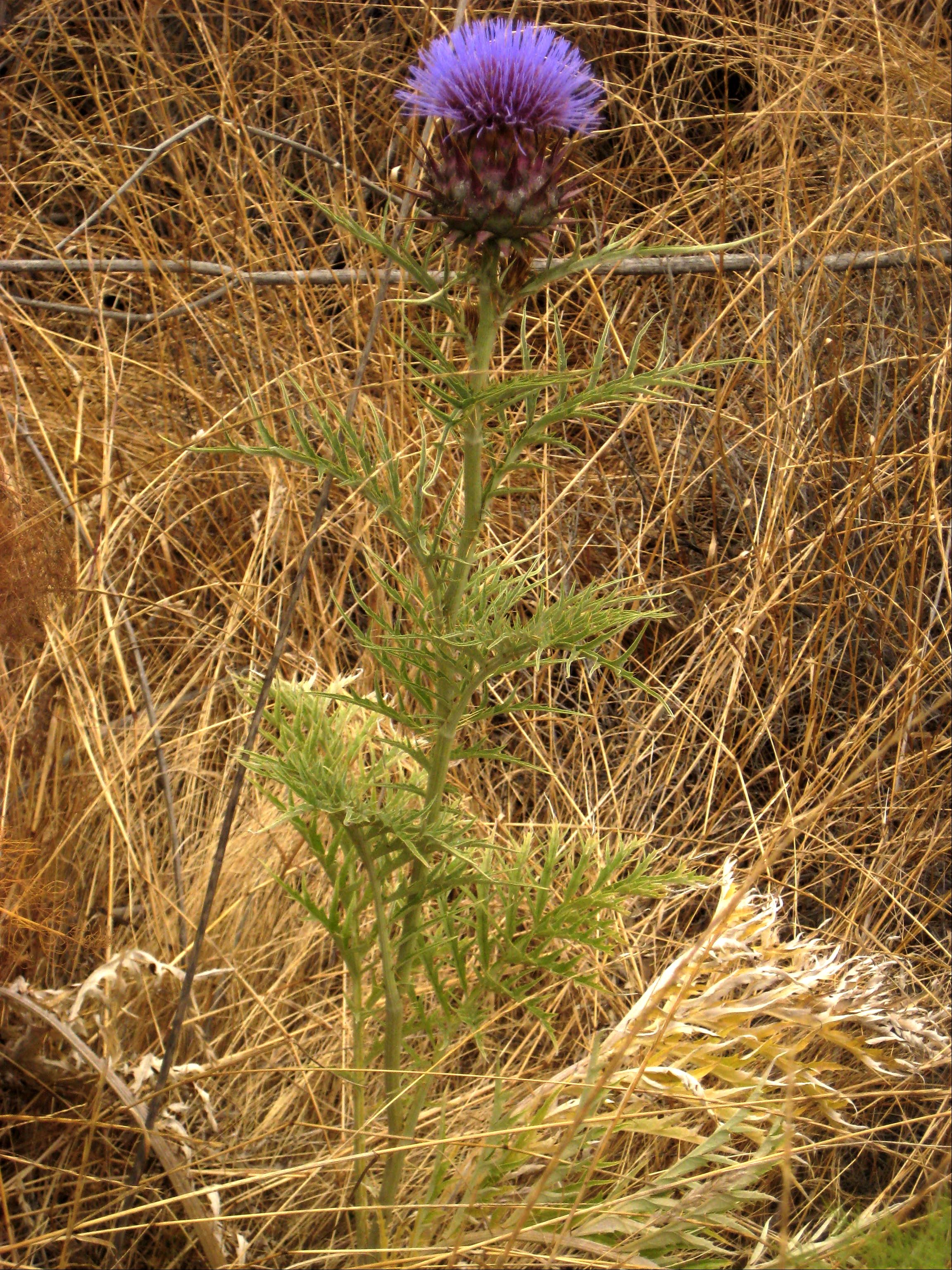
Photo: parent species Cynara cardunculus · Photo by Chez Brungraber
Family: Asteraceae · Type: Perennial · Not Native
Cynara cardunculus subsp. cardunculus (Artichoke) is a non-native California perennial in the Asteraceae family, recognized by 1 sympatric subspecies - differentiated by spine length and plant form.
Artichoke is a naturalized perennial found in southern Sierra Nevada foothills, Great Valley, Central Western, and Southwestern California in disturbed places at elevations below 500 meters. Flowering from April to July, this plant produces distinctive purple-blue flowers in large, impressive heads. Growing with robust stems up to 1 to 2 meters tall, it develops thick, branching growth with prominent leaf structures. Its large leaves have deeply lobed segments with unarmed or minutely spiny edges, some tips ending in needle-like spines up to 3 centimeters long. The plant produces edible flower buds that are traditionally harvested for culinary use.
Identification and appearance
Key characters: 1 sympatric subspecies - differentiated by spine length and plant form
Habitat and range
Habitat: Disturbed places
Elevation: < 500 m
California counties: San Luis Obispo, Santa Clara, Ventura, San Mateo, Merced, Sonoma, San Diego, Santa Barbara
Outside California: native to Mediterranean
Bloom period
Cynara cardunculus subsp. cardunculus blooms Apr-Jul.
How to tell it apart
vs Cirsium: Cynara heads are massive (4-15 cm) with fleshy bases; Cirsium heads are smaller (1-6 cm) without fleshy tissue.; vs Silybum: Cynara has huge artichoke-like heads on short stalks; Silybum has white-marbled leaves and heads on long individual stalks.; vs Stephanomeria: Cynara has massive thistle heads with spine-tipped bracts; Stephanomeria has small dandelion-like flowers with smooth bracts.; vs Heracleum: Cynara is a thistle in Asteraceae with spiny leaves; Heracleum is in Apiaceae with umbrella-shaped white flower clusters.; vs Dipsacus: Cynara has broad overlapping bracts; Dipsacus has a cylindrical spiny head with stiff bracts protruding outward.
Frequently asked questions
Is Cynara cardunculus subsp. cardunculus native to California?
No. Cynara cardunculus subsp. cardunculus is not native to California (recorded as not native).
When does Cynara cardunculus subsp. cardunculus bloom?
Cynara cardunculus subsp. cardunculus blooms Apr-Jul.
Where in California does Cynara cardunculus subsp. cardunculus grow?
Cynara cardunculus subsp. cardunculus occurs in San Luis Obispo, Santa Clara, Ventura, San Mateo, Merced, Sonoma, San Diego, Santa Barbara, at elevations of < 500 m.
What plant family does Cynara cardunculus subsp. cardunculus belong to?
Cynara cardunculus subsp. cardunculus is in the Asteraceae family, genus Cynara.
What habitat does Cynara cardunculus subsp. cardunculus grow in?
Cynara cardunculus subsp. cardunculus grows in Disturbed places.
Related species
Other California species in the same genus, family, or bioregion.
Sources: Jepson eFlora · Index of California Plant Names · CalPhotos
Last updated 2026-09-30
Data from The California Species Project — 14,000+ California species with verified data from CNPS, CDFW, USFWS, Cal-IPC, and more.