Cynosurus cristatus
Crested dogtail grass
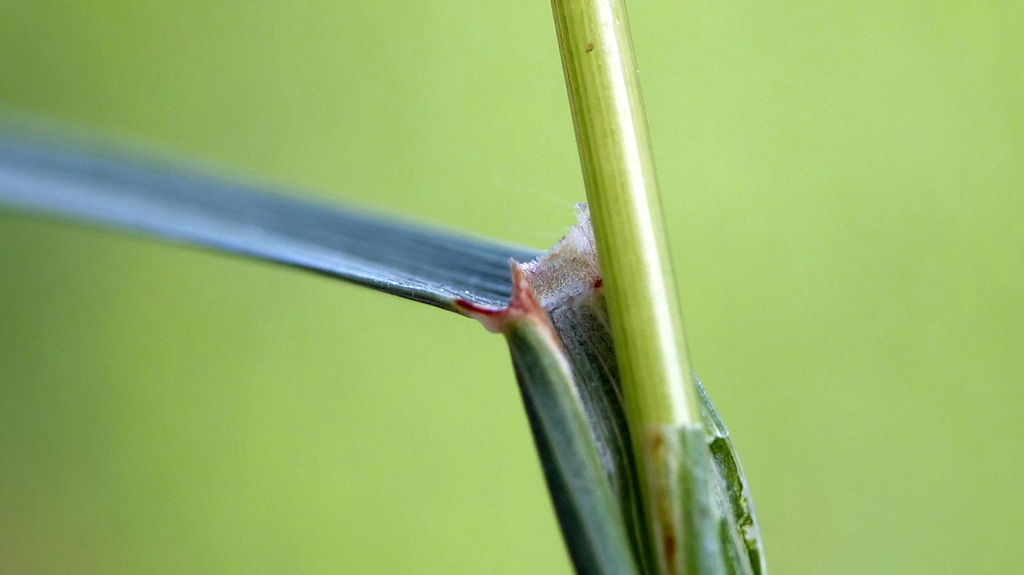
(c) Wolfgang Jauch, some rights reserved (CC BY), uploaded by Wolfgang Jauch · licence
Family: Poaceae · Type: Grass · Not Native
Cynosurus cristatus (Crested dogtail grass) is a non-native California grass in the Poaceae family, recognized by . Key differences: inflorescence width, leaf blade width, axis shape.
Crested dogtail grass is a naturalized perennial grass found in coastal California regions including northern, central, and southern coastal areas in fields and disturbed places at elevations below 300 meters. Flowering from June to August, this grass produces small, delicate flower spikes in compact clusters less than one centimeter wide. Growing with cespitose (tufted) stems 15 to 80 centimeters tall, it has stems that are sometimes abruptly bent at the base. Its leaves are narrow, with blades 0.5 to 2 millimeters wide and truncate ligules measuring 0.5 to 2.5 millimeters long. The inflorescence features a zigzag central axis with fertile spikelets containing 2 to 5 florets and distinctive sterile spikelets with 6 to 11 florets.
Identification and appearance
Key characters: 1 sympatric species. Key differences: inflorescence width, leaf blade width, axis shape
Habitat and range
Habitat: Fields, disturbed places
Elevation: < 300 m
Outside California: to Washington, Montana, also northeastern North America, native to Europe
Bloom period
Cynosurus cristatus blooms Jun-Aug.
How to tell it apart
vs Phleum: Cynosurus has a one-sided, flattened, spike-like panicle with comb-like sterile spikelets; Phleum (timothy) has a dense cylindrical, all-around spike of single-flowered spikelets.; vs Dactylis: Cynosurus spikelets sit in a compact one-sided head with sterile bracteal combs; Dactylis (orchardgrass) has spikelets in dense one-sided clusters at the tips of stiff spreading branches.; vs Lamarckia: Cynosurus head is greenish and firm with mixed fertile and sterile spikelets; Lamarckia (goldentop) head is soft, silky, and golden, drooping to one side.; vs Lolium: Cynosurus florets are in a one-sided spike-like panicle with comb-like sterile spikelets; Lolium (ryegrass) sets spikelets edgewise, alternating along a true two-sided spike.; vs Briza: Cynosurus has a dense one-sided oblong head; Briza (quaking grass) has open panicles of nodding, plump, heart-shaped spikelets on thread-like stalks.
Frequently asked questions
Is Cynosurus cristatus native to California?
No. Cynosurus cristatus is not native to California (recorded as not native).
When does Cynosurus cristatus bloom?
Cynosurus cristatus blooms Jun-Aug.
What plant family does Cynosurus cristatus belong to?
Cynosurus cristatus is in the Poaceae family, genus Cynosurus.
What habitat does Cynosurus cristatus grow in?
Cynosurus cristatus grows in Fields, disturbed places.
Related species
Other California species in the same genus, family, or bioregion.
Sources: Jepson eFlora · CalPhotos
Last updated 2026-10-07
Data from The California Species Project — 14,000+ California species with verified data from CNPS, CDFW, USFWS, Cal-IPC, and more.