Delphinium californicum subsp. californicum
Coast or california larkspur, Coast Or California Larkspur
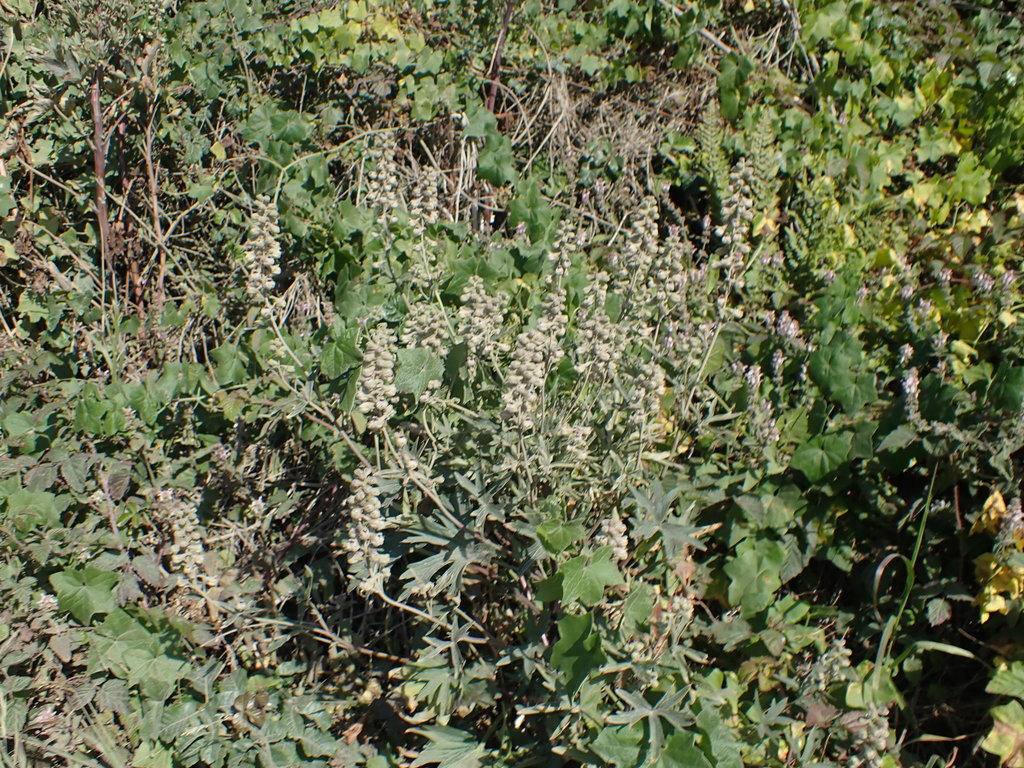
Photo: parent species Delphinium californicum · no rights reserved · CC0
Family: Ranunculaceae · Type: Herb · Native
Delphinium californicum subsp. californicum (Coast or california larkspur) is a native California herb in the Ranunculaceae family, recognized by sepal color/pubescence, petal hairiness, and distinctive scale-covered seeds.
Coast larkspur is a California native perennial found in the central Coast Ranges and western San Francisco Bay Area on slopes in dense chaparral at elevations below 1,000 meters. Flowering from April to June, this plant produces lavender flowers with hairy upper petals, nestled in puberulent inflorescences. Growing with slender stems that are softly hairy, the plant reaches moderate height in its dense chaparral habitat. Its leaves are characterized by puberulent margins and surfaces, with delicate, finely textured edges that contribute to the plant's subtle botanical complexity. The flower sepals are lavender-tinted, with lateral segments 7 to 11 millimeters long and a distinctive spur measuring 7 to 14 millimeters.
Identification and appearance
Key characters: 15 sympatric species; key features are sepal color/pubescence, petal hairiness, and distinctive scale-covered seeds
Habitat and range
Habitat: Generally slopes in dense chaparral, western side of coast ranges
Elevation: < 1000 m
California counties: San Luis Obispo, Contra Costa, Santa Clara, Monterey, San Mateo, Santa Cruz, San Francisco, Marin, Santa Barbara
Bloom period
Delphinium californicum subsp. californicum blooms Apr-Jun.
How to tell it apart
vs Lupinus: Delphinium has backward-pointing spurs on flowers; Lupinus has pea-family flowers with banner-wing-keel structure.; vs Geranium: Delphinium has spurred bilateral flowers; Geranium has radially symmetric 5-petaled flowers with no spur.; vs Epilobium: Delphinium has spurred flowers and palmately divided leaves; Epilobium has unspurred 4-petaled flowers and simple or opposite leaves.; vs Aquilegia: Delphinium has a single spur per flower; Aquilegia has 5 spurs radiating from the center.; vs Aconitum: Delphinium has an open spur with visible stamens; Aconitum has a closed hood hiding the stamens.
Frequently asked questions
Is Delphinium californicum subsp. californicum native to California?
Yes. Delphinium californicum subsp. californicum is native to California (recorded as native).
When does Delphinium californicum subsp. californicum bloom?
Delphinium californicum subsp. californicum blooms Apr-Jun.
Where in California does Delphinium californicum subsp. californicum grow?
Delphinium californicum subsp. californicum occurs in San Luis Obispo, Contra Costa, Santa Clara, Monterey, San Mateo, Santa Cruz, San Francisco, Marin and other counties, at elevations of < 1000 m.
What plant family does Delphinium californicum subsp. californicum belong to?
Delphinium californicum subsp. californicum is in the Ranunculaceae family, genus Delphinium.
What habitat does Delphinium californicum subsp. californicum grow in?
Delphinium californicum subsp. californicum grows in Generally slopes in dense chaparral, western side of coast ranges.
Related species
Other California species in the same genus, family, or bioregion.
Sources: Jepson eFlora · Index of California Plant Names · CalPhotos
Last updated 2026-10-07
Data from The California Species Project — 14,000+ California species with verified data from CNPS, CDFW, USFWS, Cal-IPC, and more.