Delphinium parryi subsp. purpureum
Mount pinos larkspur, Mount Pinos Larkspur
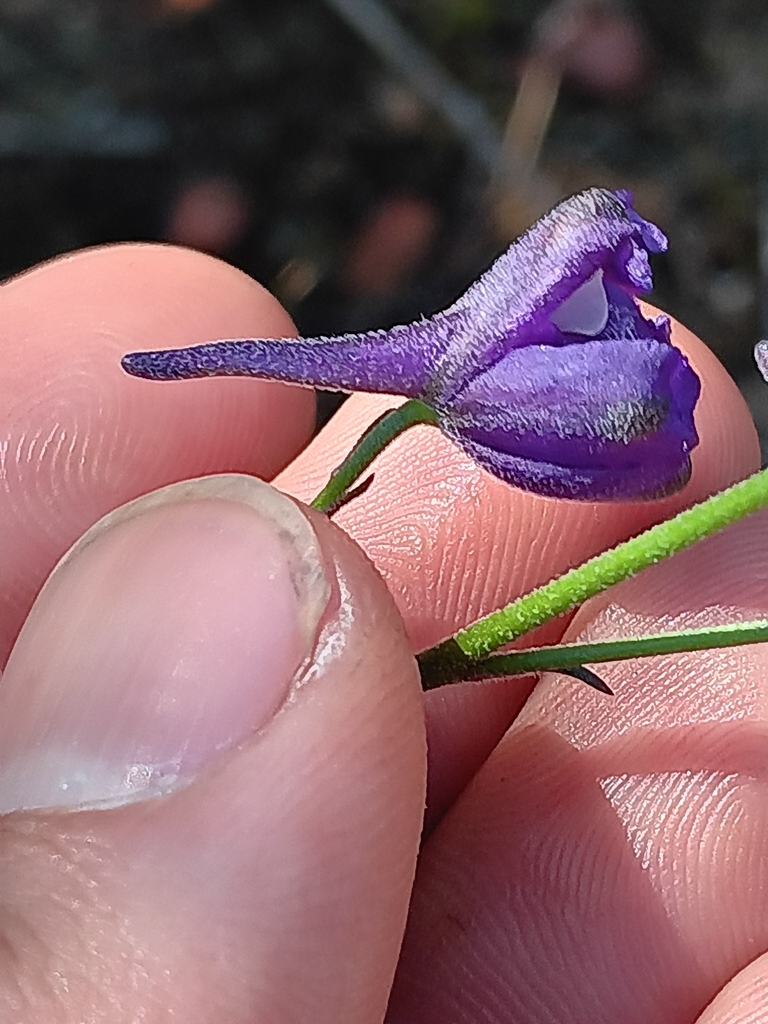
Photo: parent species Delphinium parryi · no rights reserved · CC0
Family: Ranunculaceae · Type: Herb · Native
Conservation status: CNPS 4.3
Delphinium parryi subsp. purpureum (Mount pinos larkspur) is a native California herb in the Ranunculaceae family, recognized by high elevation purple flowers with reflexed sepals.
Mount pinos larkspur is a California native perennial ranked 4.3 by CNPS, found in the Tehachapi, southern Coast Ranges, and western Transverse Ranges in sagebrush scrub and dry chaparral at elevations of 1,000 to 2,600 meters. Flowering from April to June, this plant produces deep purple to dark blue flowers with reflexed sepals and distinctive lateral petals about 3 to 5 millimeters long. Growing with erect stems 10 to 30 centimeters tall, it develops a root system deeper than 10 centimeters. Its leaves are both basal and cauline, concentrated on the lower third of the stem, with 3 to 20 distinctive lobes. The fruit develops 10 to 15 millimeters long, completing the plant's seasonal cycle.
Identification and appearance
Key characters: 20 sympatric species; high elevation purple flowers with reflexed sepals
Habitat and range
Habitat: Sagebrush scrub, dry chaparral
Elevation: 1000-2600 m
California counties: Kern, Ventura, Santa Barbara, Los Angeles, Riverside, Fresno, San Bernardino, San Luis Obispo
Bloom period
Delphinium parryi subsp. purpureum blooms Apr-Jun.
Conservation status
CNPS 4.3
How to tell it apart
vs Lupinus: Delphinium has backward-pointing spurs on flowers; Lupinus has pea-family flowers with banner-wing-keel structure.; vs Geranium: Delphinium has spurred bilateral flowers; Geranium has radially symmetric 5-petaled flowers with no spur.; vs Epilobium: Delphinium has spurred flowers and palmately divided leaves; Epilobium has unspurred 4-petaled flowers and simple or opposite leaves.; vs Aquilegia: Delphinium has a single spur per flower; Aquilegia has 5 spurs radiating from the center.; vs Aconitum: Delphinium has an open spur with visible stamens; Aconitum has a closed hood hiding the stamens.
Frequently asked questions
Is Delphinium parryi subsp. purpureum native to California?
Yes. Delphinium parryi subsp. purpureum is native to California (recorded as native).
When does Delphinium parryi subsp. purpureum bloom?
Delphinium parryi subsp. purpureum blooms Apr-Jun.
Where in California does Delphinium parryi subsp. purpureum grow?
Delphinium parryi subsp. purpureum occurs in Kern, Ventura, Santa Barbara, Los Angeles, Riverside, Fresno, San Bernardino, San Luis Obispo, at elevations of 1000-2600 m.
What plant family does Delphinium parryi subsp. purpureum belong to?
Delphinium parryi subsp. purpureum is in the Ranunculaceae family, genus Delphinium.
Is Delphinium parryi subsp. purpureum rare or endangered?
Delphinium parryi subsp. purpureum carries California Rare Plant Rank 4.3, state rank S4.
Related species
Other California species in the same genus, family, or bioregion.
Sources: Jepson eFlora · CNPS Rare Plant Inventory · Index of California Plant Names · CalPhotos · CDFW CNDDB
Last updated 2026-10-07
Data from The California Species Project — 14,000+ California species with verified data from CNPS, CDFW, USFWS, Cal-IPC, and more.