Dianthus armeria subsp. armeria
Grass pink, deptford pink, Deptford Pink
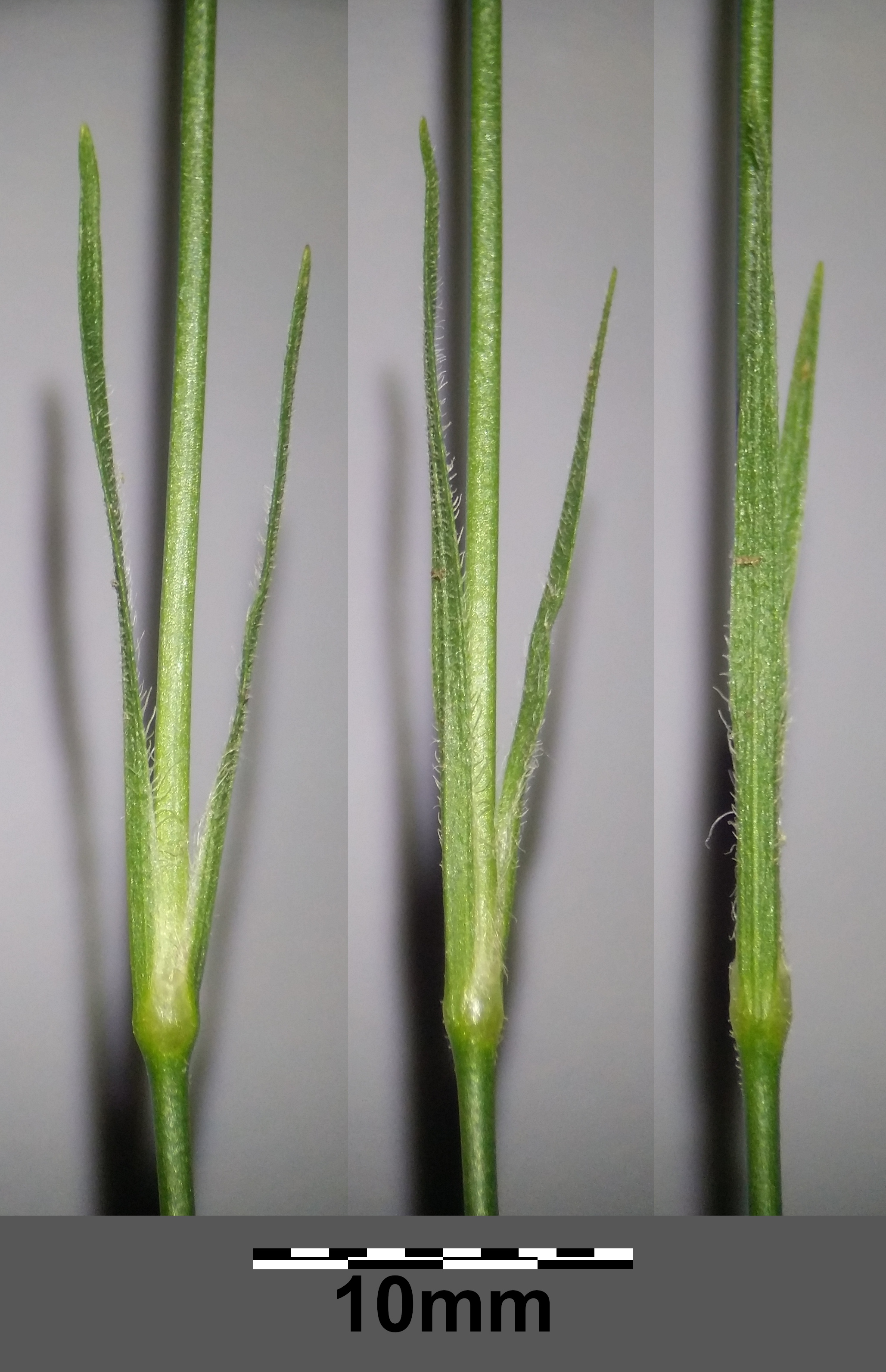
Stefan.lefnaer (via Wikimedia Commons) · CC BY-SA
Family: Caryophyllaceae · Type: Annual · Not Native
Dianthus armeria subsp. armeria (Grass pink) is a non-native California annual in the Caryophyllaceae family, recognized by clustered flowers, long bracts, and hairy calyx.
Grass pink is a naturalized annual found in the Klamath Ranges, northern California Coast Ranges, California Ranges, Cascades, Sierra Nevada, Peninsular Ranges, and Great Basin regions in disturbed areas at elevations of 400 to 2,000 meters. Flowering from spring to summer, this plant produces delicate pink or rose flowers with white dots, 4 to 5 millimeters across, arranged in loose terminal clusters. Growing 15 to 70 centimeters tall with a slender taproot and thin stems, it develops both basal and stem leaves that transition from lanceolate near the base to narrow and linear toward the top. Its leaves range from broader lance-shaped at the base to nearly linear on the stems, creating a distinctive growth pattern. The plant has moderately hairy calyxes with 20 to 25 prominent ribs, giving it a textured appearance in disturbed habitats.
Identification and appearance
Key characters: Co-occurs with 3 species; key features are clustered flowers, long bracts, and hairy calyx
Habitat and range
Habitat: Disturbed areas
Elevation: 400-2000 m
California counties: San Diego, Marin, Butte, Colusa, Tehama, Trinity, Plumas, Inyo, Mariposa, Placer, Siskiyou, Shasta, Tuolumne
Outside California: to British Columbia, Alberta, eastern North America, Texas, native to southern Europe
Bloom period
Dianthus armeria subsp. armeria blooms Spring-summer.
How to tell it apart
vs Rosa: Dianthus has tubular flowers with 5 petals and green bracts; Rosa has flat flowers with many petals and compound leaves.; vs Pelargonium: Dianthus has radially symmetric tubular flowers; Pelargonium has bilaterally symmetric flowers in umbrella-like clusters.; vs Phlox: Dianthus has tubular flowers with green bracts at base; Phlox has flat-faced flowers without bracts and opposite leaves.; vs Clarkia: Dianthus has tubular flowers with many-veined tubes; Clarkia has 4-petaled flowers with inferior ovaries.; vs Portulaca: Dianthus has tubular flowers with green bracts; Portulaca has flat flowers and succulent leaves.
Frequently asked questions
Is Dianthus armeria subsp. armeria native to California?
No. Dianthus armeria subsp. armeria is not native to California (recorded as not native).
When does Dianthus armeria subsp. armeria bloom?
Dianthus armeria subsp. armeria blooms Spring-summer.
Where in California does Dianthus armeria subsp. armeria grow?
Dianthus armeria subsp. armeria occurs in San Diego, Marin, Butte, Colusa, Tehama, Trinity, Plumas, Inyo and other counties, at elevations of 400-2000 m.
What plant family does Dianthus armeria subsp. armeria belong to?
Dianthus armeria subsp. armeria is in the Caryophyllaceae family, genus Dianthus.
What habitat does Dianthus armeria subsp. armeria grow in?
Dianthus armeria subsp. armeria grows in Disturbed areas.
Related species
Other California species in the same genus, family, or bioregion.
Sources: Jepson eFlora · Index of California Plant Names · CalPhotos
Last updated 2026-04-09
Data from The California Species Project — 14,000+ California species with verified data from CNPS, CDFW, USFWS, Cal-IPC, and more.