Dieteria canescens var. canescens
Hoary aster
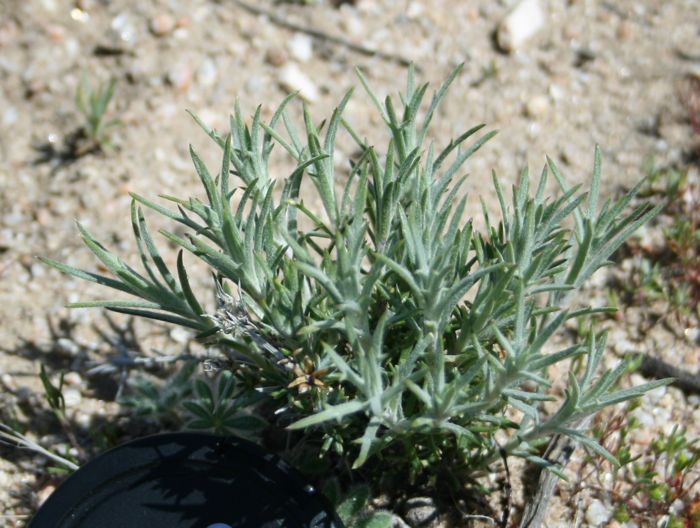
Photo by Chez Brungraber
Family: Asteraceae · Type: Herb · Native
Dieteria canescens var. canescens (Hoary aster) is a native California herb in the Asteraceae family, recognized by presence of fertile ray flowers with developed styles.
Hoary aster is a California native perennial herb found in the northern California Ranges, Sierra Nevada, eastern Southern California, Transverse Ranges, San Jacinto Mountains, Great Basin, and eastern Mojave Desert regions in open montane areas at elevations of 2,000 to 3,000 meters. Flowering from July to September, this plant produces ray flowers with heads 6 to 12 millimeters long, spreading up to 15 millimeters when pressed. Growing with stems 1 to 5 decimeters tall that spread or grow erect, it has loosely spreading to ascending branches. Its leaves and branches are distinctively hoary or grayish, with stems that branch widely and create an open, airy structure. The flower heads feature multiple series of phyllaries, creating a complex and textured appearance typical of aster-like plants.
Identification and appearance
Key characters: 5 sympatric species; key feature is presence of fertile ray flowers with developed styles
Habitat and range
Habitat: Open montane areas
Elevation: 2000-3000 m
California counties: Mono, San Bernardino, Inyo, Kern, Los Angeles, San Diego, Tulare, Plumas, Alpine, Fresno, Madera, Nevada, Siskiyou, Tuolumne, Ventura, El Dorado, Lassen, Sierra, Trinity, Santa Clara, Modoc, Imperial, Riverside, Amador
Outside California: to Washington, central Canada, Colorado, Arizona
Bloom period
Dieteria canescens var. canescens blooms Jul-Sep.
How to tell it apart
vs Corethrogyne: Dieteria has small heads under 3cm; Corethrogyne typically larger heads.; vs Symphyotrichum: Dieteria has shorter rays (6-20mm); Symphyotrichum typically longer rays.; vs Erigeron: Dieteria heads under 3cm with 6-20mm rays; Erigeron often smaller with narrower, more numerous rays.; vs Machaeranthera: Dieteria has simple entire to toothed leaves; Machaeranthera has fern-like dissected leaves.; vs Xylorhiza: Dieteria has small heads under 3cm; Xylorhiza has large showy heads over 3cm.
Frequently asked questions
Is Dieteria canescens var. canescens native to California?
Yes. Dieteria canescens var. canescens is native to California (recorded as native).
When does Dieteria canescens var. canescens bloom?
Dieteria canescens var. canescens blooms Jul-Sep.
Where in California does Dieteria canescens var. canescens grow?
Dieteria canescens var. canescens occurs in Mono, San Bernardino, Inyo, Kern, Los Angeles, San Diego, Tulare, Plumas and other counties, at elevations of 2000-3000 m.
What plant family does Dieteria canescens var. canescens belong to?
Dieteria canescens var. canescens is in the Asteraceae family, genus Dieteria.
What habitat does Dieteria canescens var. canescens grow in?
Dieteria canescens var. canescens grows in Open montane areas.
Related species
Other California species in the same genus, family, or bioregion.
Sources: Jepson eFlora · Index of California Plant Names · CalPhotos
Last updated 2026-10-07
Data from The California Species Project — 14,000+ California species with verified data from CNPS, CDFW, USFWS, Cal-IPC, and more.