Diospyros virginiana
Common persimmon, possumwood
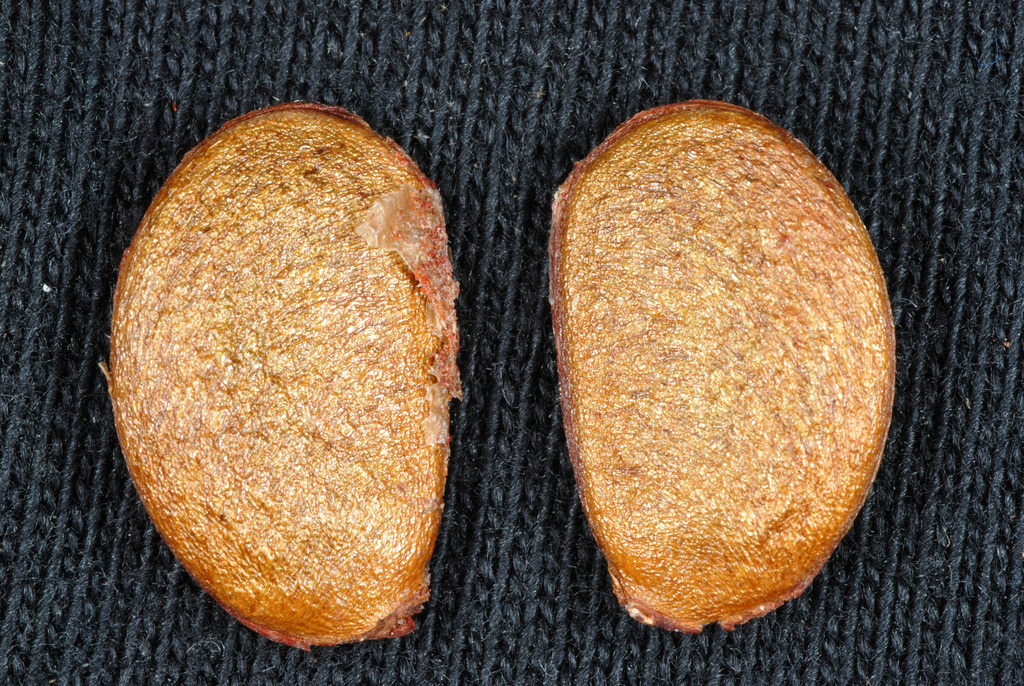
(c) Douglas Goldman, some rights reserved (CC BY-SA), uploaded by Douglas Goldman · licence
Family: Ebenaceae · Type: Tree
Diospyros virginiana (Common persimmon) is a California tree in the Ebenaceae family, recognized by Only species in the ebony family naturalized in California, spreading from abandoned cultivated plantings.
Common persimmon is a naturalized shrub found near watercourses, likely spreading from abandoned plantings. Flowering from March to June, this plant produces white to cream flowers in small clusters, with delicate urn-shaped blossoms. Growing up to 15 to 30 meters tall with a spreading habit, it develops a distinctive dark reddish-brown bark deeply furrowed with age. Its leaves are widely ovate to elliptic, measuring 6 to 15 centimeters long, with a slightly hairy or smooth undersurface. The fruit is a spherical to ovoid yellow, orange, or red drupe approximately 3 to 5 centimeters in diameter, containing reddish-brown to dark brown seeds.
Identification and appearance
Key characters: Only species in the ebony family naturalized in California, spreading from abandoned cultivated plantings
Habitat and range
Habitat: Near watercourses, probably spreading from abandoned plantings
Outside California: native to central and eastern United States
Bloom period
Diospyros virginiana blooms Mar-Jun.
Frequently asked questions
When does Diospyros virginiana bloom?
Diospyros virginiana blooms Mar-Jun.
What plant family does Diospyros virginiana belong to?
Diospyros virginiana is in the Ebenaceae family, genus Diospyros.
What habitat does Diospyros virginiana grow in?
Diospyros virginiana grows in Near watercourses, probably spreading from abandoned plantings.
Related species
Other California species in the same genus, family, or bioregion.
Sources: Jepson eFlora · CalPhotos
Last updated 2026-10-07
Data from The California Species Project — 14,000+ California species with verified data from CNPS, CDFW, USFWS, Cal-IPC, and more.