Distichlis littoralis
Shore grass
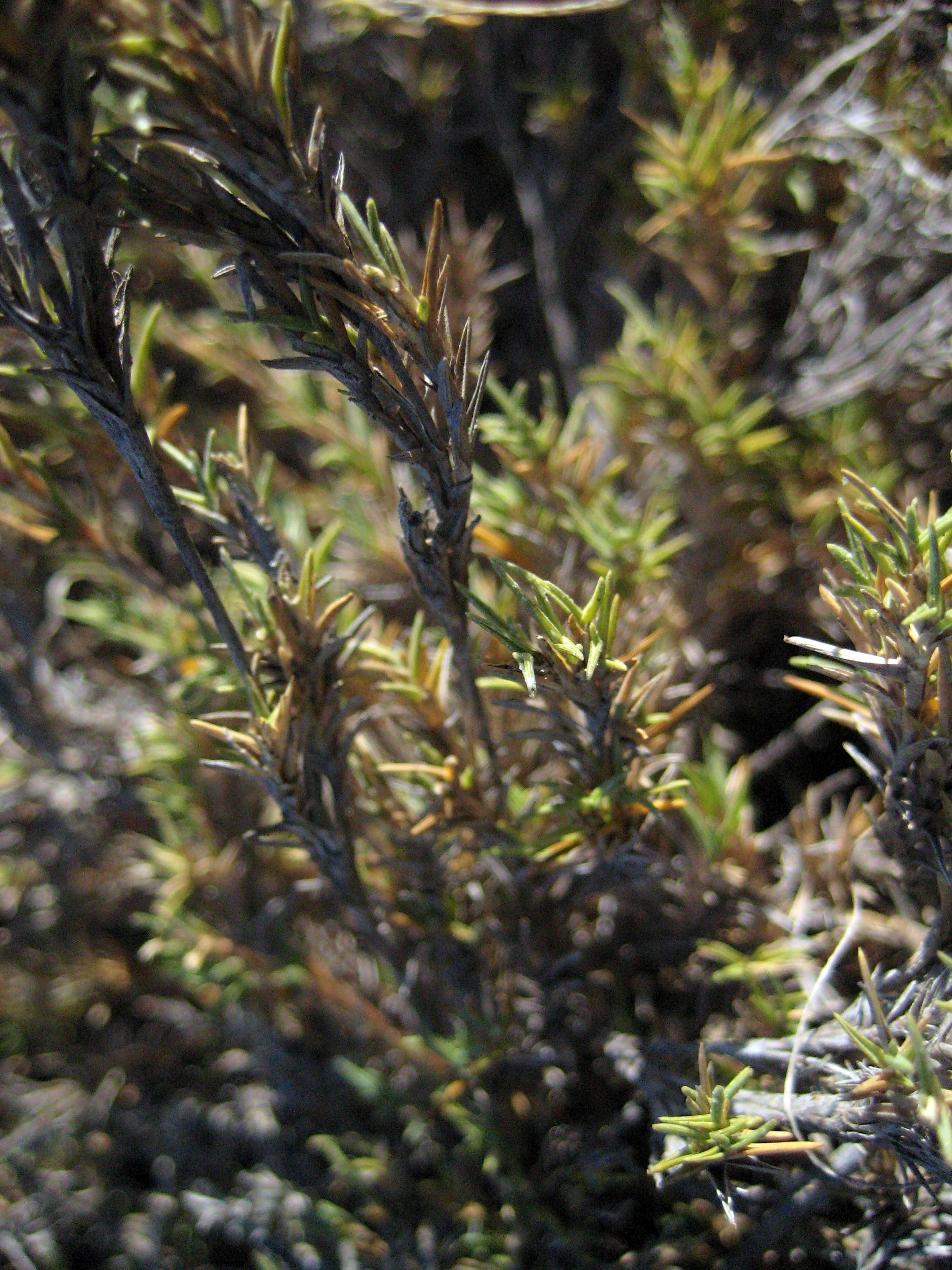
Photo by Chez Brungraber
Family: Poaceae · Type: Grass · Native
Conservation status: CNPS 4.2
Distichlis littoralis (Shore grass) is a native California grass in the Poaceae family, recognized by . Key distinguishing features: prostrate habit, concealed spikelets, shorter folded leaves.
Shore grass is a California native perennial found in southern California coastal regions, Channel Islands, and the Salton Sea area in salt marshes at sea level. Flowering from April to August, this plant produces small, inconspicuous flowers nestled within its dense, prostrate foliage. Growing as a low-spreading mat with stems extending 3 to 8 decimeters long, it forms extensive ground-covering patches in saline environments. Its leaves are distinctive, measuring 4 to 12 millimeters long and sharply folded, creating a compact, tightly structured appearance. The plant's spikelets are typically concealed by leaves, with 3 to 5 florets and intricate leaf venation.
Identification and appearance
Key characters: 1 sympatric species. Key distinguishing features: prostrate habit, concealed spikelets, shorter folded leaves
Habitat and range
Habitat: Salt marshes
Elevation: +- 0 m.
California counties: San Diego, Orange, Los Angeles, Santa Barbara, Ventura
Outside California: to Texas, Florida, Cuba, Mexico
Bloom period
Distichlis littoralis blooms Apr-Aug.
Conservation status
CNPS 4.2
How to tell it apart
vs Spartina: Distichlis is short (< 5 dm) with stiff, strongly 2-ranked leaves and dioecious, flattened many-flowered spikelets; Spartina (cordgrass) is tall with one-sided, spike-like inflorescence branches.; vs Monanthochloe: Distichlis has flat 2-ranked blades and a contracted panicle of several-flowered spikelets; Monanthochloe (shoregrass) has short clustered fleshy leaves and reduced few-flowered spikelets.; vs Puccinellia: Distichlis spreads by stout scaly yellow rhizomes and is dioecious with leathery flattened spikelets; Puccinellia is a tufted, non-dioecious alkali grass with soft open panicles.; vs Leymus: Distichlis is low with stiff, sharply 2-ranked leaves on saltflats; Leymus (wildrye) is tall and cane-like with a true spike inflorescence.; vs Cynodon: Distichlis has a contracted panicle of flattened spikelets over scaly rhizomes; Cynodon (Bermuda grass) sends up finger-like clusters of spreading slender spikes.
Frequently asked questions
Is Distichlis littoralis native to California?
Yes. Distichlis littoralis is native to California (recorded as native).
When does Distichlis littoralis bloom?
Distichlis littoralis blooms Apr-Aug.
Where in California does Distichlis littoralis grow?
Distichlis littoralis occurs in San Diego, Orange, Los Angeles, Santa Barbara, Ventura, at elevations of +- 0 m..
What plant family does Distichlis littoralis belong to?
Distichlis littoralis is in the Poaceae family, genus Distichlis.
Is Distichlis littoralis rare or endangered?
Distichlis littoralis carries California Rare Plant Rank 4.2, state rank S3.
Related species
Other California species in the same genus, family, or bioregion.
Sources: Jepson eFlora · CNPS Rare Plant Inventory · Index of California Plant Names · CalPhotos · CDFW CNDDB
Last updated 2026-10-07
Data from The California Species Project — 14,000+ California species with verified data from CNPS, CDFW, USFWS, Cal-IPC, and more.